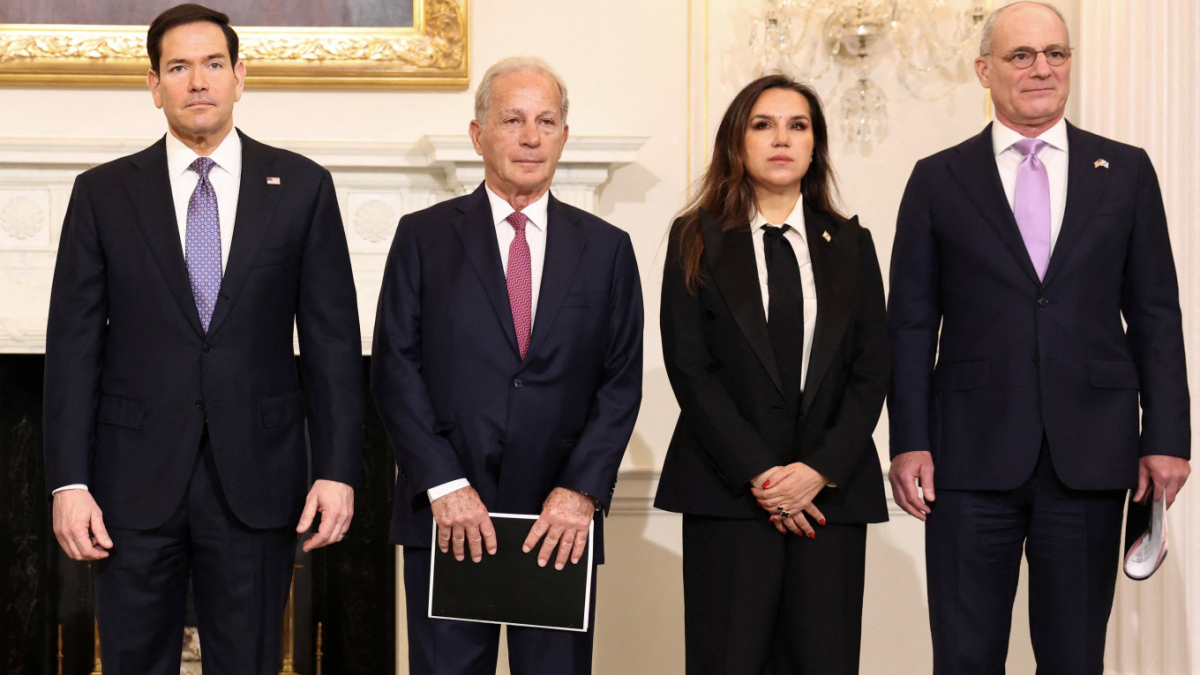
United States Secretary of State Marco Rubio hosted the first direct talks between Israel and Lebanon in decades on Tuesday (14 April), though no clear progress towards a peace framework was confirmed.
Both sides described the meeting as positive, but it remains unclear whether any tangible agreement was reached.
The talks marked a rare face-to-face meeting between representatives of countries technically in conflict since Israel’s establishment in 1948. The two delegations arrived with sharply opposing positions. Israel ruled out discussing a near-term ceasefire in southern Lebanon, instead calling for the disarmament of Hezbollah. Lebanon insisted its mandate was limited to securing an immediate ceasefire.
The U.S. State Department struck a cautious tone, saying the sides held “productive discussions on steps toward launching direct negotiations”. However, it did not confirm any substantive agreement. “All sides agreed to launch direct negotiations at a mutually agreed time and venue,” the statement said, without providing a timeline.
Conflicting agendas at the negotiating table
Speaking after the two-hour meeting in Washington, Yechiel Leiter offered an upbeat assessment. He said Lebanon had signalled an intention to reduce Hezbollah’s influence.
“What gives me hope is the fact that the Lebanese Government made it very clear that they will no longer be 'occupied' by Hezbollah... This is an opportunity. This is the first time our two countries are sitting together in over three decades,” Leiter said.
He did not say whether Israel would halt its ongoing air and ground operations in Lebanon.
Lebanese Ambassador Nada Moawad described the talks as “constructive”. In a statement to Reuters, she said her focus was on an immediate ceasefire, the return of displaced civilians, and addressing Lebanon’s humanitarian crisis.
Regional tensions frame the talks
The meeting comes at a critical moment, one week into a fragile ceasefire involving the U.S., Israel and Iran. The current escalation began after U.S.–Israeli strikes on Iran on 28 February. Hezbollah responded by firing on northern Israel on 2 March, prompting a large-scale Israeli offensive.
More than 2,000 people have been killed and around 1.2 million displaced in Lebanon, according to authorities in Beirut.
Washington's role and pressure
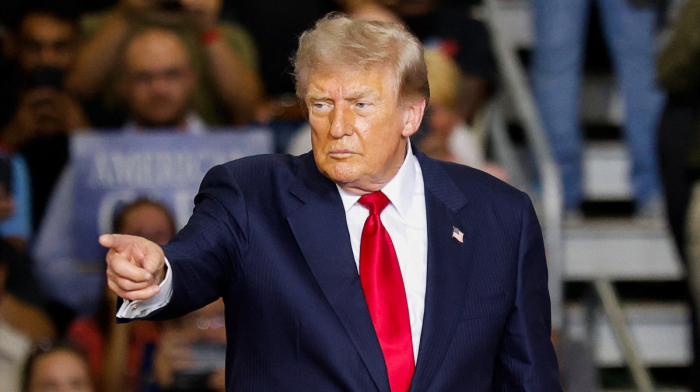
Rubio’s presence underscored Washington’s push for progress. The administration of Donald Trump has urged Israel to scale back its operations, amid concerns a prolonged conflict could destabilise the wider ceasefire with Iran.
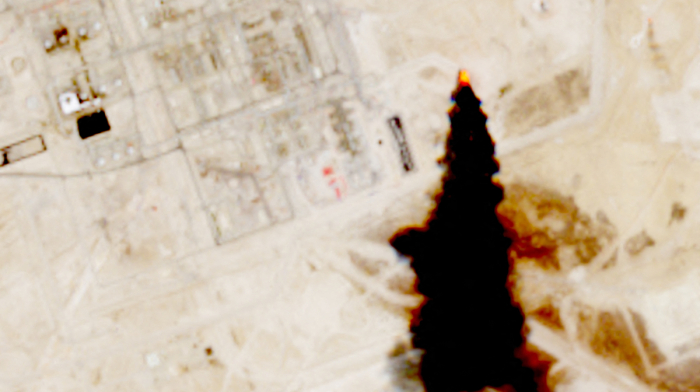
The broader conflict has already disrupted global oil supplies, increasing pressure on Washington to find a diplomatic solution.
Iran has insisted that Israel’s campaign against Hezbollah must end as part of any wider agreement, complicating parallel negotiations reportedly mediated by Pakistan. The U.S. has rejected any linkage between the separate talks.
At the start of the meeting, Rubio acknowledged the talks would not resolve “all of the complexities” but said they could help establish a basis for future negotiations.
Lebanon's internal tensions
Lebanon’s domestic situation adds further uncertainty. The government, led by President Joseph Aoun and Prime Minister Nawaf Salam, has backed negotiations with Israel despite opposition from Hezbollah.
Beirut has long sought to disarm the group, but officials fear that doing so by force could trigger internal conflict. The country remains sensitive to such risks following its 1975–1990 civil war.
Tensions have risen since the government banned Hezbollah’s military wing after it launched attacks on Israel last month.
Lebanese officials said ahead of the talks that Moawad’s mandate was limited to discussing a ceasefire. Israel, by contrast, ruled out even considering one at this stage, highlighting the gap between the two sides.
Future talks uncertain
Despite the divisions, both sides indicated the talks were the start of a broader process. Leiter said further meetings could take place in the coming weeks, possibly in Washington.
"There were a few proposals, a few recommendations. We will of course bring these recommendations to our governments... and we will return in the next few weeks, we will continue to sit together. We will probably continue the talks in Washington," Leiter stated.
Diplomatic optics in focus
The talks also drew attention in Washington amid questions about Rubio’s role in parallel negotiations with Iran. Over the weekend, President Trump sent Vice President JD Vance to Islamabad to lead discussions with Iranian officials.
While Vance was in Pakistan announcing no breakthrough, Rubio was photographed with Trump in Florida at a mixed martial arts event.
Senior U.S. officials attending Tuesday’s talks included State Department counsellor Michael Needham, U.S. Ambassador to the United Nations Mike Waltz, and U.S. Ambassador to Lebanon Michel Issa.














What is your opinion on this topic?
Leave the first comment