live Yemen’s Houthis warn airlines and travellers against using Saudi airports
Yemen's Houthis renewed warning to airlines, airport workers, and travellers against using Saudi airports, say...
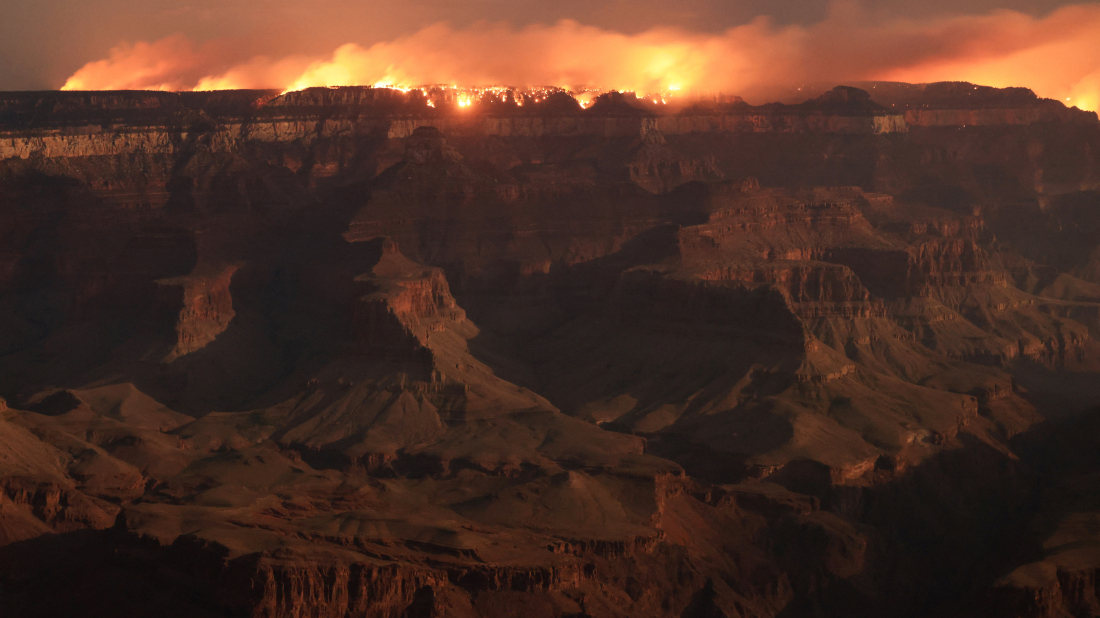
A wildfire on the North Rim of the Grand Canyon has expanded by roughly 50%, after being left to burn for a week before full firefighting efforts began.
The Dragon Bravo Fire began on 4 July due to a lightning strike and has now grown to 8,570 acres (3,468 hectares), destroying the historic Grand Canyon Lodge and about 70 other structures, including staff housing and tourist cabins, according to fire officials.
Local media reports indicate that around 280 National Park Service employees have lost their homes in the fire.
The dry conditions, especially low moisture levels in the area’s ponderosa pine and fir forests, created ideal conditions for the blaze according to officials.
"It's just like perfect tinder-dry for a fire", said incident spokesperson Stefan La-Sky.
Arizona Governor Katie Hobbs has called for an independent inquiry into why park officials allowed the fire to continue burning during the driest period of the year.
The National Park Service had initially implemented a "confine and contain" approach to reduce fuel loads and promote ecosystem health. However, after strong northwest winds on 11 July pushed the flames toward critical infrastructure, the strategy shifted to full suppression, according to the InciWeb wildfire database.
This marks the second time in two decades that a managed fire on the North Rim has spiralled out of control. In 2006, the Warm Fire also started by lightning was permitted to burn for weeks before winds caused it to surge, forcing evacuations of people from the area and ultimately burning 59,000 acres.
The North Rim will now remain closed for the rest of the 2025 season, with inner canyon trails and campgrounds also shut indefinitely.
However, the South Rim, which receives about five million visitors each year, remains open to the public.

The explosion at King Khalid International Airport in Riyadh on Saturday afternoon killed at least 12 people and injured a further 309, according to Saudi Arabia’s Civil Aviation Authority. The airport remains closed until further notice.
Yemen's Houthis renewed warning to airlines, airport workers, and travellers against using Saudi airports, saying the warning should be taken seriously and that the kingdom “bore responsibility for failed interceptions”, a day after an attack on Riyadh's international airport that killed 12 people.
Russian President Vladimir Putin expressed surprise after Donald Trump mediated the Armenia-Azerbaijan peace agreement in 2025, the U.S. President said at a rally in New York state on Friday.
The United Nations has condemned a sharp rise in attacks on civilians in Ukraine, reporting that more than 100 people were killed and at least 429 injured in a single week as Russian strikes hit residential areas, passenger buses and critical infrastructure.
Turkic states are assessing the feasibility of passport-free travel between countries using national ID cards, Kürşad Zorlu, the Deputy Chairman of Türkiye’s ruling AK Party said on Saturday.
Türkiye’s COP31 presidency has unveiled an action agenda designed to turn climate commitments into concrete projects and measurable results, focusing on clean energy, waste reduction, resilient cities and industrial decarbonisation.
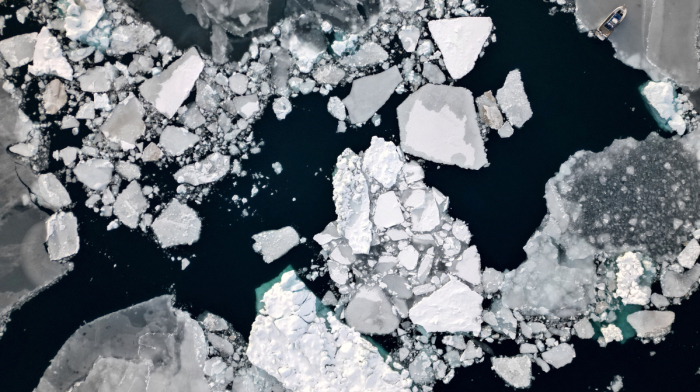
Greenland and Antarctica have shed a combined 11.3 trillion tonnes of ice since 1979, according to the most comprehensive satellite study of the planet's ice sheets to date, with researchers warning the pace of loss has accelerated sharply in recent decades.
The European Union will continue allowing large-scale plastic waste exports to Türkiye despite concerns over recycling rates, environmental damage and the risk of illegal waste trafficking.
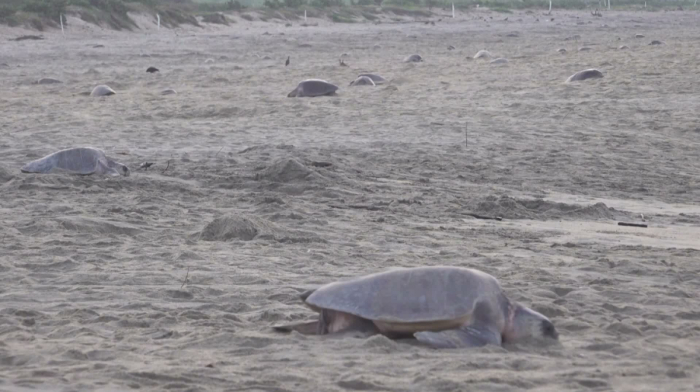
Hundreds of thousands of deep-diving turtles, known as olive ridley sea turtles, have arrived on Mexico’s southern coast for one of nature’s most striking nesting events. But conservation officials warn that climate change is making it increasingly difficult for their eggs to hatch.
August 2026 tied as the hottest month ever recorded globally, pushing average temperatures above the critical 1.5°C threshold as extreme weather swept across several regions, the EU’s Copernicus Climate Change Service said.
You can download the AnewZ application from Play Store and the App Store.
What is your opinion on this topic?
Leave the first comment