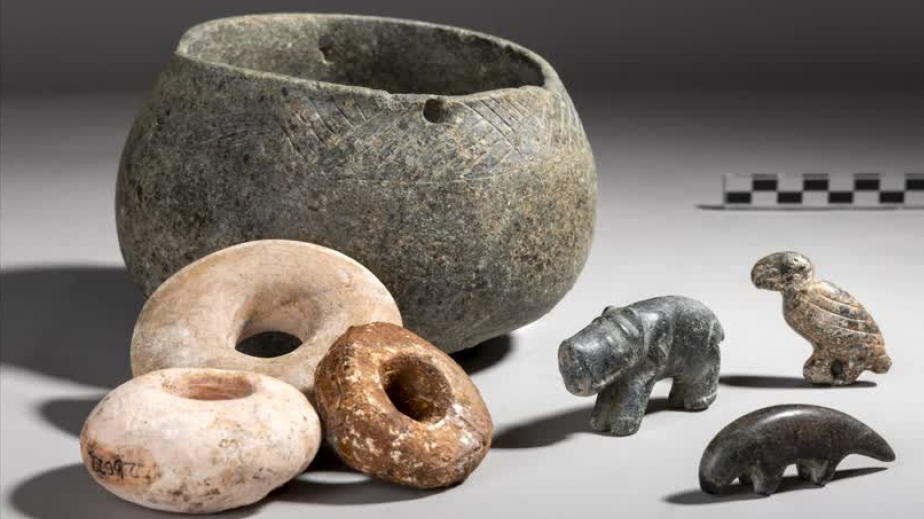
Archaeologists in south eastern Türkiye have unearthed carved stone animals that shed new light on how prehistoric people told stories. A fox, a vulture, and a wild boar—each about 3.5 cm tall—date back some 11,500 years.
They were found in a small container covered with a stone lid, with each figurine’s head placed inside a limestone ring.
Archaeologists believe the trio, discovered at the Karahantepe archaeological site, is the first known example of objects being deliberately arranged to convey a narrative.
Head of excavations at Karahantepe, Necmi Karul said they items explain.
“Telling a story undoubtedly brings to mind storytellers. Engraving them on stone reveals the existence of masters and artists. But perhaps most importantly, it proves that the communities who knew those stories had a shared memory."
"Undoubtedly, the most important outcome of this method is perhaps that, assuming that a new order of life, or rather a new social order, sedentism, that replaced the hunter-gatherer, wanderer lifestyle that had continued for millions of years, gave rise to a new social order," he added.
Unearthed late last year, the artifacts are now on display for the first time at the Presidential Complex in Türkiye’s capital, Ankara, alongside other items found at Karahantepe, which dates back to 9,500 BC. The discovery highlights the sophistication of prehistoric art.
“When modern people compare themselves to the past, they always place themselves at the top with this progressive approach, as the most modern. Consequently, they approach their predecessors with a somewhat disdainful gaze. This is one of the most unhealthy aspects of modern societies. Places like Karahantepe and Göbeklitepe offer a good opportunity to remind us of this. They demonstrate just how accomplished people were in art and narrative 12,000 years ago.”
Karahantepe is one of the earliest settlements of the Neolithic period. Nearby Göbeklitepe, a UNESCO World Heritage Site, is believed to be the world’s oldest.
Both are part of the broader Tas Tepeler project, which includes multiple Neolithic settlements across Türkiye’s Sanliurfa province where excavations are ongoing.
"Modern people always place themselves at the pinnacle when compared to the past," he said. "Karahantepe shows us how successful people were in art and storytelling 11,000-12,000 years ago."
Russia's health watchdog said on Tuesday that no cases of plague had been detected among anyone who had come into contact with a Siberian plague institutelaboratory worker who died last week, and locals said their lives had barely been disrupted.
Russia struck Ukraine overnight in one of the biggest attacks of the conflict, killing at least 19 people, Kyiv's Foreign Ministry said on Wednesday. Around 70 missiles were fired at Ukraine during the attack, as well as drones, the Ministry said.
An Azerbaijani citizen died and another is missing after a cargo ship was attacked by a drone in the Black Sea, near the coast of Romania on Monday, 5 October, Baku's Foreign Ministry has said.
A large Ukrainian drone attack on Moscow and the surrounding region has killed two people, damaged homes and sparked a major fire at a key fuel facility, according to Russian officials and military bloggers.
The German-Azerbaijani Connectivity Conference 2026 commenced on 6 October in Baku under the title “Mobilising Finance for Infrastructure, Transport, Logistics, Green Energy, and Digitalisation along the Middle Corridor.”
Kazakhstan has hosted its first Astana AI Film Festival on attracting more than 8,000 entries from 125 countries and emerging as the world’s largest international competition dedicated to AI-generated films.
Exiled Russian filmmaker Andrey Zvyagintsev confronts conscription and moral compromise in wartime Russia in Minotaur, a drama released nearly five years after Moscow launched its full-scale invasion of Ukraine.
As Ethiopia's rainy season retreats and the landscape turns green beneath clearer skies, millions of Oromo people gather to celebrate Irreecha, a festival of thanksgiving, renewal and community.
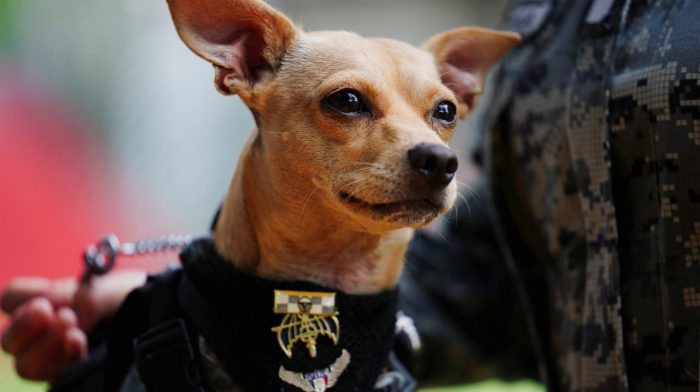
A 13-month-old Chihuahua named Comando is helping Mexico’s National Guard connect with the public, becoming its smallest canine member and an unusual addition to the country’s K9 force.
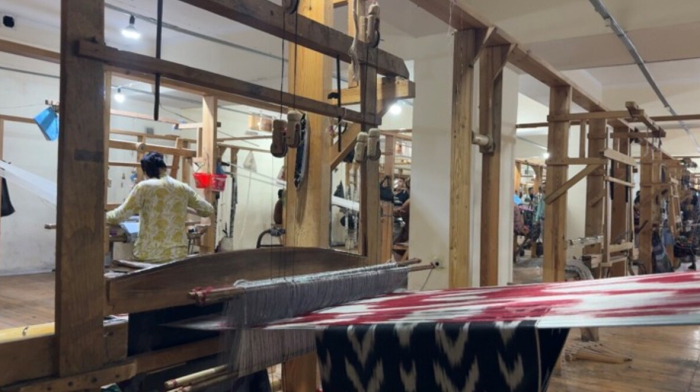
In a workshop in Margilan, in eastern Uzbekistan's Fergana Region, silk threads are still being transformed into brightly coloured atlas and adras fabrics using techniques passed down through generations.
Download the AnewZ app
You can download the AnewZ application from Play Store and the App Store.






















What is your opinion on this topic?
Leave the first comment