Saudi Arabia intercepts drone over Riyadh amid rising Houthi attacks
Saudi Arabia’s air defences have intercepted and destroyed a hostile drone over the Riyadh region, according to the Saudi-led coalition fight...
Chinese companies are rapidly adopting DeepSeek’s latest AI model to improve productivity and services after its impressive debut earlier this year. The artificial intelligence model is being integrated into tech, telecom, finance, healthcare, and energy sectors.
DeepSeek has rapidly gained global attention with the release of its AI model, DeepSeek-R1—praised for its strong performance, cost-effectiveness, and open-source advantages. Major Chinese tech and telecom firms are embedding it into platforms, from social media to cloud services. But its reach is extending further—revolutionizing industries like energy, manufacturing, finance, and healthcare.
One sector already seeing major benefits is energy, where China’s National Oil and Gas Pipeline Network Group, PipeChina, has integrated DeepSeek to optimize operations, enhance pipeline safety, and improve energy transmission accuracy. According to Xu Kun, deputy general manager of a PipeChina subsidiary, AI has already produced tangible results. "The time it takes to generate production plans at the oil and gas control center has been reduced from four hours to just minutes, with a 10-percent improvement in accuracy," he said. AI has also accelerated the simulation of gas storage space in salt caverns—from several days to just one hour.
The manufacturing sector is also embracing the AI breakthrough. Telecom giant ZTE has embedded DeepSeek into its smartphones, allowing users to access multiple AI functions within a single interface. Ni Fei, president of ZTE’s Terminal Business Unit, explained, "By integrating DeepSeek, we have developed a function akin to a 'multi-expert system', where each AI expert is responsible for a specific task. Users can access various AI functionalities without having to switch between multiple apps."
In healthcare, hospitals are using DeepSeek to generate diagnostic opinions in seconds, while pharmaceutical companies are leveraging the AI model to accelerate drug development.
The financial sector is also tapping into its potential—using it for market forecasting, risk assessment, and fraud detection, ensuring a more secure investment environment.
Meanwhile, cities like Shenzhen and Guangzhou are incorporating DeepSeek into their government systems, improving data management and public services.
Experts say AI is at the heart of a new technological revolution—and China is integrating it at full speed.
The U.S. has approved the sale of 500 Patriot PAC-3 missiles to Ukraine in a deal worth an estimated $2.1 billion, but Kyiv could face years of delays before receiving the weapons it urgently needs to defend against intensifying Russian attacks.
Iranian Supreme Leader Ayatollah Khamenei has ordered Iran's armed forces to respond to any threat immediately and without geographical limits in statements posted to social media platforms on Saturday (31 October).
Demonstrators carrying Iranian flags and placards supporting the hijab gathered outside the Azerbaijani Embassy in London.
A Chinese-made AI chip has matched Nvidia’s H200 in tests conducted by its developer, marking a potential breakthrough in China’s efforts to reduce its dependence on foreign technology.
A hacking group linked to North Korea is widely believed to be behind the theft of $6.3 billion from cryptocurrency giant Binance, a cyberattack that experts describe as the largest cryptocurrency heist on record.
Cryptocurrencies are volatile, and their crashes make headlines. But does a slump in digital coins ever spill over into the pounds, dollars and euros in people's bank accounts? The short answer is not directly, but indirectly it can, and regulators are increasingly worried about how.
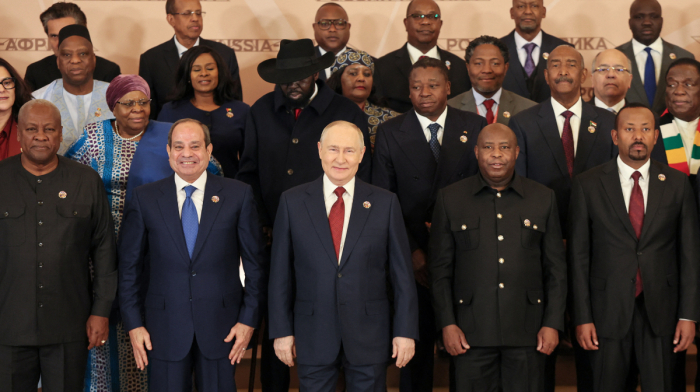
Russian President Vladimir Putin has praised record trade with Egypt as Moscow seeks to use its economic ties with Cairo to expand its influence across Africa, with a focus on manufacturing, infrastructure and energy.
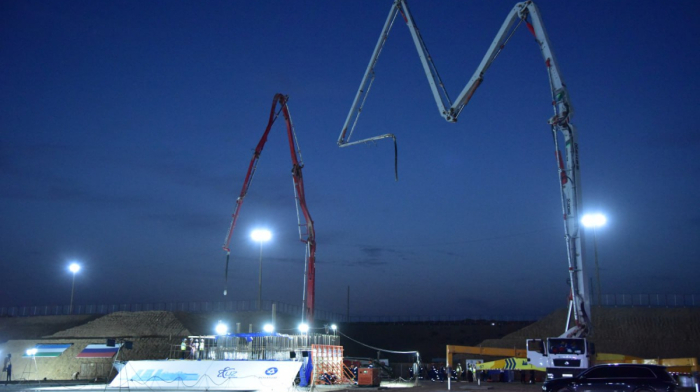
Kazakhstan could begin building its first nuclear power plant in 2027, President Kassym-Jomart Tokayev said on 28 October, according to Azertac. But as Central Asia steps up its energy ambitions, which countries are investing in nuclear power and which are pursuing alternatives?
Apple's latest iPhone 18 Pro series has outperformed its predecessor in early global sales, even as rising manufacturing costs and weaker demand in some markets put pressure on the smartphone industry, according to Counterpoint Research data released on Tuesday (27 October).
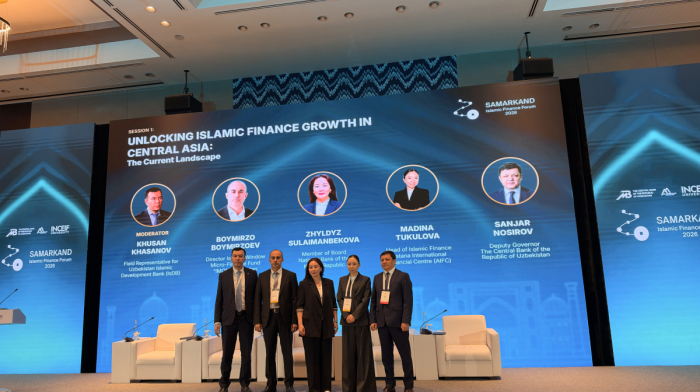
Uzbekistan is moving into a new phase in the development of Islamic finance, with the country’s first Islamic banking licence issued shortly before a regional forum in Samarkand brought together industry players to discuss how the sector can expand across Central Asia.
You can download the AnewZ application from Play Store and the App Store.
What is your opinion on this topic?
Leave the first comment