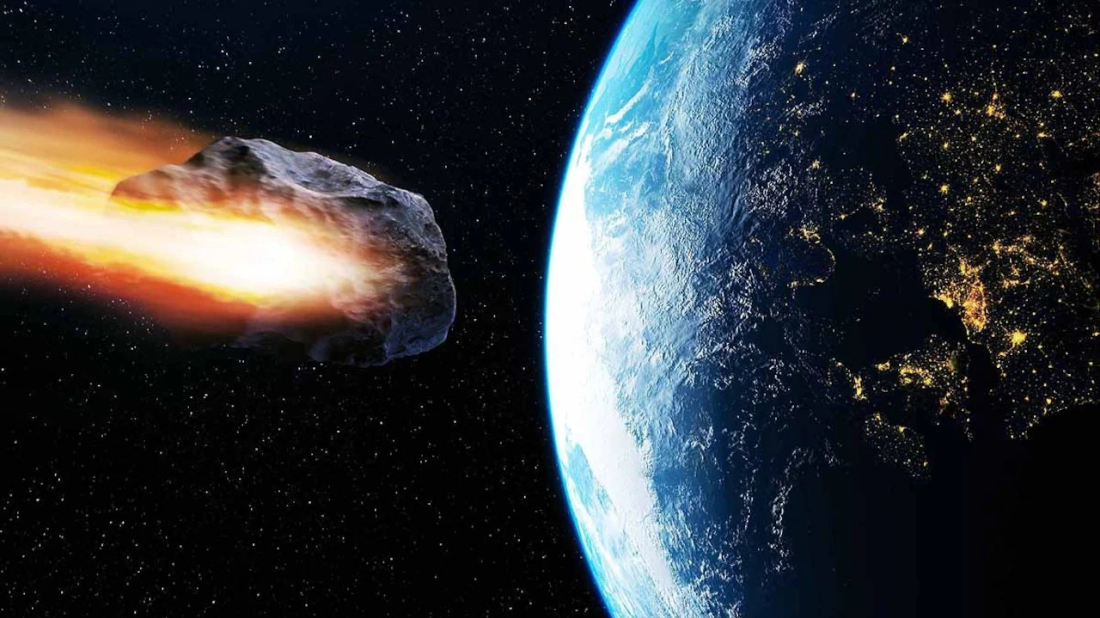
NASA has raised the probability of asteroid 2024 YR4 striking Earth in 2032 to 3.1%, making it the most threatening space rock recorded in modern forecasting. While the risk is still low, experts emphasize the need for continued monitoring.
NASA has raised concerns over asteroid 2024 YR4, with the latest data indicating a 3.1% chance of it striking Earth on December 22, 2032. This makes the asteroid the most potentially hazardous space rock ever recorded by modern forecasting. While the rising probability has captured attention, experts urge the public not to panic, emphasizing that ongoing monitoring is essential to understanding the risk.
First detected on December 27, 2024, by the El Sauce Observatory in Chile, asteroid 2024 YR4 is estimated to be between 130 and 300 feet (40 to 90 meters) wide. Its brightness suggests a typical composition, rather than a rare metal-rich structure. The asteroid’s increasing risk has been tracked by the International Asteroid Warning Network (IAWN), a collaborative global effort dedicated to planetary defense. The IAWN issued a memo on January 29, 2025, after the asteroid’s impact probability exceeded one percent. Since then, the chances have continued to fluctuate but have generally trended upward.
While the odds of an impact remain low, experts stress the importance of further observation. "I'm not panicking," Bruce Betts, chief scientist for the Planetary Society, told AFP. "Naturally, when you see the percentages go up, it doesn't make you feel warm and fuzzy and good," he added. However, he explained that as astronomers collect more data, the probability is likely to rise before dropping again.
The James Webb Space Telescope is set to observe 2024 YR4 next month, providing crucial data to refine its trajectory and further assess the risk. According to NASA’s latest calculations, the asteroid has a 3.1% chance of impacting Earth, equating to odds of approximately one in 32—comparable to correctly guessing the outcome of five consecutive coin tosses.
This potential threat brings to mind the case of asteroid Apophis in 2004, which briefly had a 2.7% chance of striking Earth in 2029. However, subsequent observations ruled out the possibility. The situation with 2024 YR4 remains fluid, and astronomers continue to monitor its path closely.
Though the risk is real, experts remain confident that the probability will likely decrease over time as more data is gathered and analyzed. The global scientific community continues to prioritize planetary defense, underscoring the importance of collaboration and continued research to protect Earth from potential threats.
As monitoring continues, the focus remains on understanding the asteroid’s behavior and refining predictions. While there is no immediate cause for alarm, the situation serves as a reminder of the importance of space monitoring and the need for preparedness in the face of cosmic risks.





















What is your opinion on this topic?
Leave the first comment