Uzbekistan braces for near-record power demand as extreme heat pushes electricity use higher
Uzbekistan is preparing for one of its hottest weeks of the year, with electricity demand expected to approach a record as temperatures are forecast t...
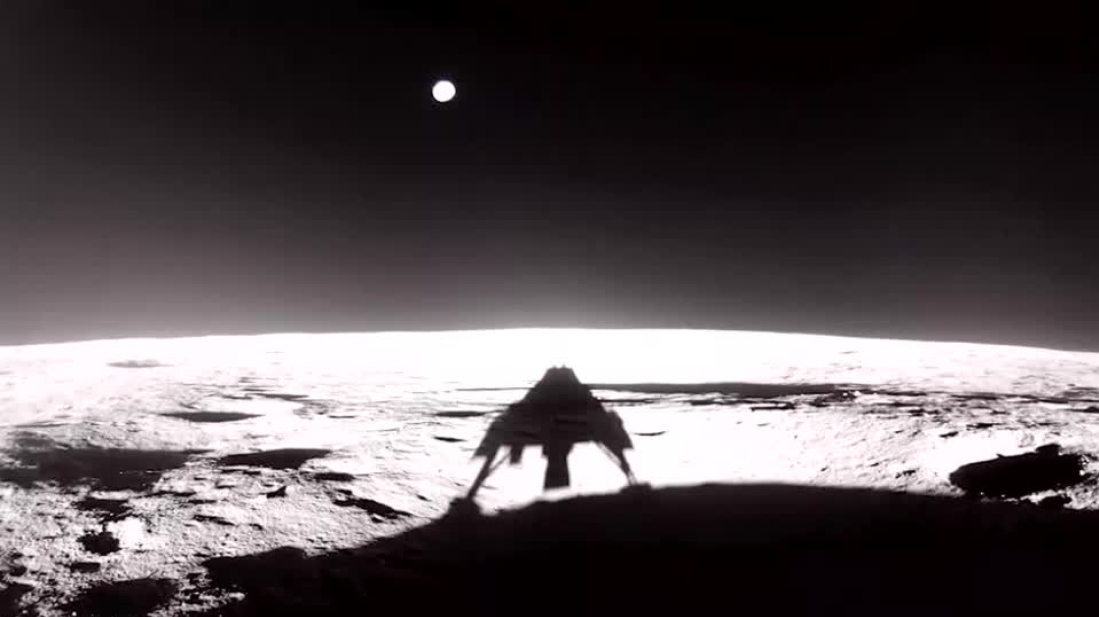
NASA officials on Tuesday said the agency's first crewed flight in its Artemis programme - a trip around the moon and back - is on track for launch in April and could potentially be moved up to February 2026.
The space agency's Artemis programme is the flagship U.S. effort to return humans to the moon, a multibillion dollar series of missions that rivals a similar effort by China, which is aiming for a 2030 astronaut moon landing.
Artemis 2, a 10-day flight in which a crew of four astronauts will fly around the moon and back, is a precursor test to the agency's first astronaut moon landing since 1972.
That mission, Artemis 3, is a far more ambitious and complex endeavor currently planned for 2027 and involving a moon lander variant of SpaceX's Starship rocket.
Artemis 2 involves NASA's Space Launch System rocket, built by Boeing and Northrop Grumman, and its Orion capsule, built by Lockheed Martin. Last year, NASA delayed the mission by several months to April 2026.
"We intend to keep that commitment," Lakiesha Hawkins, an acting senior official in NASA's exploration unit, said during a news conference on Tuesday of the 2026 date.
She added that the readiness of NASA's and Orion spacecraft could potentially warrant an earlier launch date, but that safety considerations will ultimately guide when the mission launches.
The Orion capsule will ride atop the giant, 98 metres (322-foot-tall) SLS rocket from NASA's Kennedy Space Center in Florida, the first time the spacecraft duo will fly with humans.
Artemis 2 will fly astronauts Reid Wiseman, the mission's commander who last flew on a Russian Soyuz rocket to the International Space Station in 2014; Victor Glover, the pilot who flew to space in 2020 on a SpaceX ISS mission; Christina Koch, a mission specialist who flew on a Soyuz ISS mission in 2019; and Canadian astronaut Jeremy Hansen, another mission specialist who will fly to space for the first time.
Hansen's inclusion will mark the first Canadian to fly in the vicinity of the moon.

The 4th Shusha Global Media Forum will bring together nearly 160 media leaders, experts and officials from 54 countries in Azerbaijan's historic city of Shusha on 13-14 July, to discuss journalism’s role in peacebuilding, restoring public trust and tackling challenges.
The U.S. has launched fresh strikes on Iran after Tehran targeted a container ship and said it had again closed the Strait of Hormuz. Iran also claimed to have expanded attacks on U.S. military facilities across the Gulf.
Typhoon Bavi, the strongest storm to hit the eastern coast of mainland China this year, brought heavy rain, strong winds, flooding and landslides after making landfall in Zhejiang province on Sunday. More than 2.8 million people were evacuated to safety ahead of the storm.
President Ilham Aliyev is holding his annual question-and-answer session with international journalists at the 4th Shusha Global Media Forum in Azerbaijan.
Qatar is mourning the death of its former ruler, Sheikh Hamad bin Khalifa Al Thani, who has passed away at the age of 74.
China has successfully tested an experimental rocket recovery system using a net attached to an offshore platform, marking a major step in its efforts to develop reusable rockets and compete with U.S. space technology.
OpenAI on Thursday unveiled ChatGPT Work, a new artificial intelligence agent designed to help professionals create documents, presentations and websites using advanced coding capabilities without requiring programming expertise.
A Swiss humanoid robot capable of displaying the faces of world leaders and business executives was showcased at the AI for Good Global Summit in Geneva on Tuesday (7 July). Developers said the technology could make human-machine interactions more natural and expressive.
United Nations Secretary-General Antonio Guterres has warned that artificial intelligence is developing faster than governments and regulators can manage, calling for globally coordinated rules to reduce risks and ensure the technology is used safely, particularly by children.
Humanoid robots stumbled, collided and recovered as they battled for the RoboCup 2026 football title on Sunday (5 July), showcasing the latest advances in robotics and artificial intelligence at the world's largest competition of its kind.
You can download the AnewZ application from Play Store and the App Store.
What is your opinion on this topic?
Leave the first comment