For more than 4,000 years, Egypt’s pyramids have stood as marvels of human ambition, but new research raises a tantalising question: did humans really build them alone, or did ancient engineers wield technologies we are only beginning to understand?
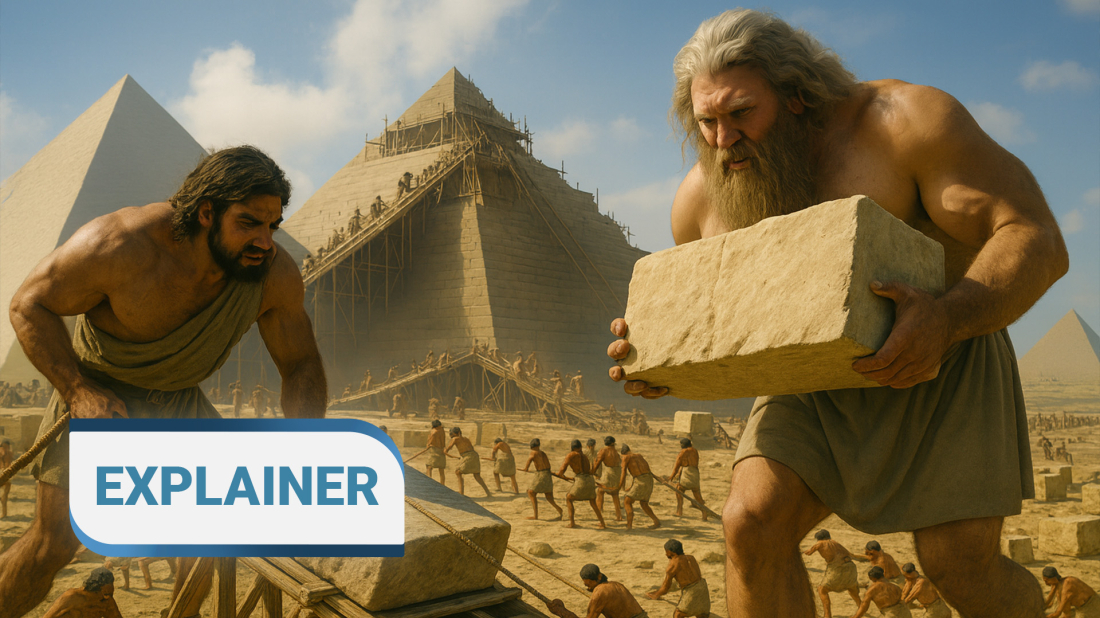
Egypt’s pyramids have fascinated the world. The sheer size of the stones, some weighing tens of tons, has long made people wonder: could humans of that era really have moved them without cranes, trucks, or modern machinery? The question isn’t just about brute force, it’s about ingenuity, engineering, and perhaps knowledge that we are only beginning to understand.
Rethinking human capability
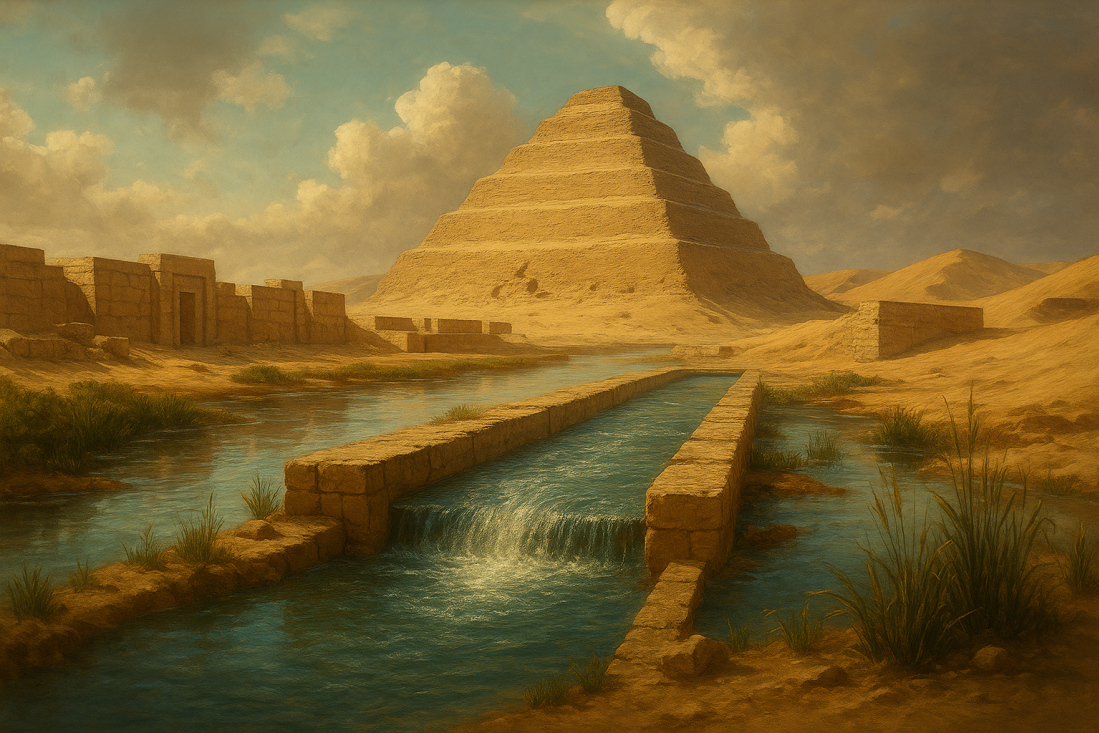
Most studies focus on smaller, better-documented pyramids from the Middle and New Kingdoms. But the Old Kingdom pyramids, such as the Step Pyramid of Djoser (2675–2130 BC), are enormous.
“While human strength and ramps may be enough for smaller structures, larger pyramids might have required additional methods,” said Dr. Xavier Landreau, lead author and CEO of Paleotechnic, a research institute in Paris.
A new study proposes a radical idea: a water-powered elevator. Using the pyramid’s internal shaft and a system of floats, heavy stones could theoretically be lifted inside the structure, a technique previously unknown in ancient engineering.
A watery secret beneath the desert
For most of us, Egypt evokes sand, sun, and arid deserts. But thousands of years ago, the Sahara looked very different. Paleoclimatology, the study of ancient climates, suggests the region was once closer to a savannah, with seasonal streams and more regular rainfall.
The team behind the study analysed these water systems and proposed that ancient streams flowed from the west of the Saqqâra plateau into a network of trenches and reservoirs. The massive Gisr el-Mudir, a rectangular limestone structure spanning 650 by 350 metres, may not have been a fortress or cattle enclosure as previously thought. Instead, it could have functioned as a check dam, storing water and filtering sediment so that construction channels remained clear.
“This system could control water during floods while also supplying construction or irrigation needs,” explained Dr. Guillaume Piton, co-author and researcher at France’s INRAE. But sceptics question whether there was enough water.
“Even during the wet period of the 3rd Dynasty, the seasonal rains were limited,” said Dr. Fabian Welc, director at the Institute of Archaeology in Warsaw.
Landreau counters: “The Egyptians weren’t relying on constant rainfall. They could have timed construction with seasonal floods.”
Inside the Step Pyramid
The Step Pyramid itself holds further clues. Its internal shaft connects to a 200-metre tunnel and a granite box near the centre, traditionally considered King Djoser’s burial chamber. The study proposes a bold alternative: it might have functioned as a valve, opening and closing to fill the shaft with water and operate the lift.
“If correct, stones weighing 50 to 100 tons could have been raised without human muscle alone,” Landreau said. “It may hold the key to uncovering how the largest monoliths, in pyramids like Khufu or Khephren, were moved.”
Yet the idea is controversial. “The Egyptians were ingenious, but ramps and scaffolding alone could explain the construction,” said Dr. Judith Bunbury, a geoarchaeologist at Cambridge University. “There’s no visual or textual evidence of a water-powered device, though that doesn’t rule it out entirely.”
Experimentation, innovation, and mystery
The Step Pyramid was an experimental structure. Originally a mastaba (a flat tomb), it was built upward in a series of steps, making it the world’s first pyramid. Later pyramids, including the Great Pyramid of Giza, added ventilation shafts and other features whose purposes remain debated.
“The internal shafts could have served multiple purposes: ventilation, lighting, pressure relief — or, perhaps, hydraulic transport,” said Dr. David Jeffreys, retired senior lecturer in Egyptian archaeology at University College London.
Even without water-powered lifts, the ingenuity required to align, level, and assemble these stones is staggering.
“People often underestimate the technical skill of the Old Kingdom Egyptians,” Bunbury added.
Why the debate matters
Understanding these engineering solutions isn’t just about history, it’s about connecting with human ingenuity across time. Every trench, shaft, and stone holds a clue to a civilisation that could plan, calculate, and experiment on a massive scale.
“Even if the hydraulic lift wasn’t used, it shows how creative people are in thinking about these challenges,” Bunbury said. Landreau concludes: “Exploring these ancient techniques isn’t just about archaeology. It’s about discovering the minds behind one of humanity’s greatest achievements. Every monolith tells a story of innovation, adaptation, and daring imagination.”
As we probe deeper into Egypt’s past, the pyramids remind us that intelligence, creativity, and experimentation have always been part of the human story — and that some mysteries may only yield their secrets to those willing to think beyond what seems possible.
























What is your opinion on this topic?
Leave the first comment