live Putin meets U.S. envoys Witkoff and Kushner in Moscow
U.S. negotiators Steve Witkoff and Jared Kushner have arrived in Moscow for peace talks on the Russia-Ukraine conflict, two people familiar wi...
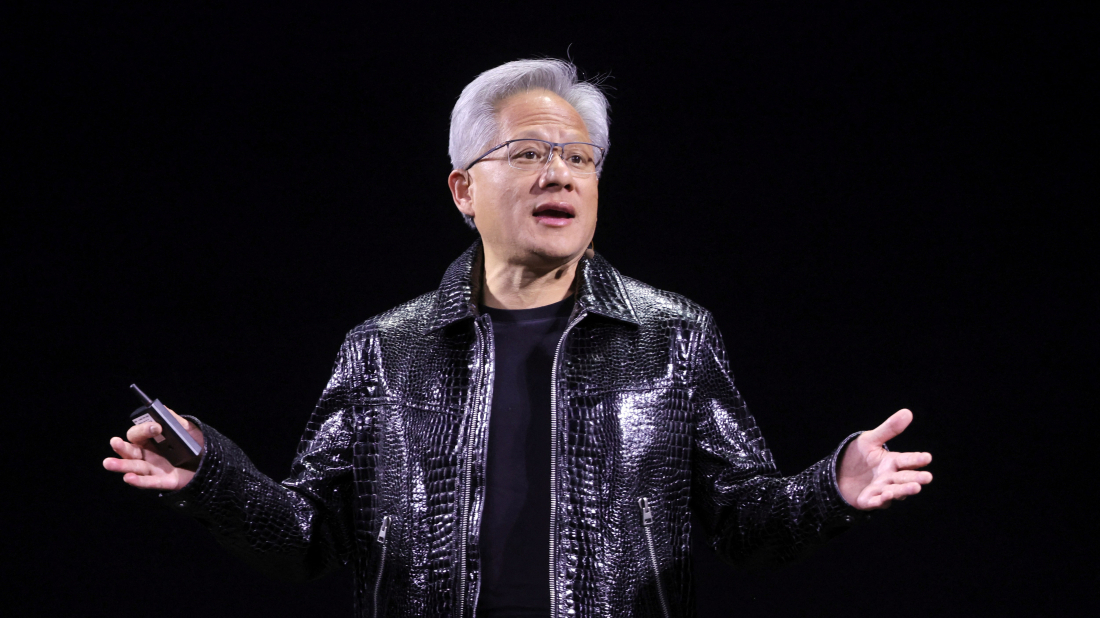
Santa Clara, CA, February 17, 2025 – Nvidia founder and CEO Jensen Huang dismissed market concerns over DeepSeek’s recent release of its R1 open source reasoning model, arguing that the technological advancement will ultimately benefit the broader AI ecosystem rather than harm Nvidia’s business.
In a pre-recorded interview with Alex Bouzari, CEO of DataDirect Networks, Huang noted that initial market reactions to the R1 model were based on a misunderstanding of its implications. “I think the market responded to R1, as in, ‘Oh my gosh. AI is finished,’” Huang said. “You know, it dropped out of the sky. We don’t need to do any computing anymore. It’s exactly the opposite.” He emphasized that the release of the model is inherently positive, as it highlights opportunities for more efficient AI models while reaffirming the critical role of compute resources—especially in post-training processes, which remain resource-intensive.
The comments come in the wake of a dramatic market response following DeepSeek’s announcement nearly a month ago. Nvidia’s stock price plunged 16.9% in one trading day, falling from $142.62 per share on January 24 to $118.52 on January 27, an event that wiped approximately $600 billion off its market capitalization. However, the stock has almost fully recovered, with Friday’s opening price reaching around $140 per share.
Huang’s remarks suggest that DeepSeek’s advancements are expected to accelerate AI adoption rather than signal a reduced need for high-performance computing. “It’s making everybody take notice that, okay, there are opportunities to have the models be far more efficient than what we thought was possible,” he added.
DeepSeek’s open source R1 model, which has been met with both excitement and concern in the industry, is part of a broader trend of increasing openness in AI development. The company announced plans to open source five code repositories as part of an “open source week” event scheduled for next week.
Nvidia is set to address these developments further in its upcoming Q4 earnings report on February 26, a report that is likely to provide additional insights into the company’s long-term outlook amid rapid changes in the AI landscape.

U.S. negotiators Steve Witkoff and Jared Kushner will visit Russia then Ukraine over the weekend, Russian state news agency TASS has reported, citing an unnamed source. Ukrainian President Volodymyr Zelenskyy has also said American envoys will visit the capitals of both countries.
U.S. negotiators Steve Witkoff and Jared Kushner have arrived in Moscow for peace talks on the Russia-Ukraine conflict, two people familiar with the matter said. They were met by Russian Presidential Envoy Kirill Dmitriev.
Start your day informed with the AnewZ Morning Brief. Here are the top stories for the 4th of September, covering the latest developments.
U.S. efforts to squeeze Iran’s economy through an oil blockade and sanctions are becoming increasingly difficult for Tehran to withstand, according to three senior Iranian sources. Washington is escalating pressure in hopes of securing concessions in future negotiations.
An Iranian tanker was hit by U.S. forces on Saturday near Iran's key oil export hub, Kharg Island, in the Gulf, the semi-official Iranian news agency Tasnim reported.
The United States and China are preparing to hold their first official bilateral talks focused exclusively on artificial intelligence as concerns grow over the risks posed by increasingly capable AI systems.
AI may live in the cloud, but the infrastructure powering it is anything but virtual. As data centres consume ever more electricity and water, the race is on to find new ways to keep the machines running.
Hua Hong Semiconductor, China's second-largest contract chipmaker, is investing $2 billion to build a new fabrication plant in Wuxi, China as part of a push to expand capacity as domestic demand for AI-related chips outstrips what the industry can currently produce.
A humanoid robot developed by Chinese smartphone maker Honor has run 100 metres in 9.32 seconds, beating Usain Bolt's men's world record of 9.58 seconds, China's state broadcaster reported on Saturday.
An artificial intelligence agent running an experimental store in San Francisco has recommended dismissing a human employee after the worker repeatedly arrived late for shifts.
You can download the AnewZ application from Play Store and the App Store.
What is your opinion on this topic?
Leave the first comment