Ancient hand stencil in Indonesia pushes back origins of rock art
A faint hand outline found in an Indonesian cave has been dated to at least 67,800 years ago, making it the oldest known example of rock art and offer...
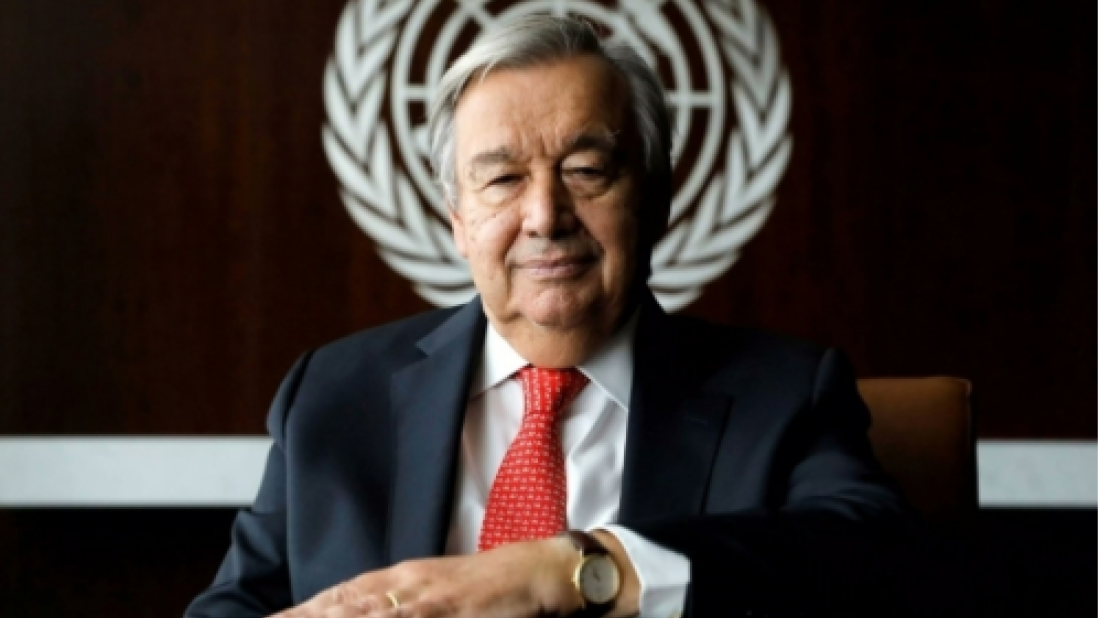
UN Secretary-General António Guterres has launched a global campaign to defend the Anti-Personnel Mine Ban Convention following plans by several countries to withdraw from the landmark treaty, warning that civilian lives are at risk.
UN Secretary-General António Guterres on Monday announced the launch of a new international campaign aimed at reinforcing the 1997 Anti-Personnel Mine Ban Convention, also known as the Ottawa Convention, amid growing concerns over potential withdrawals by several UN Member States.
The move follows recent announcements by five European countries – Estonia, Finland, Latvia, Lithuania, and Poland – indicating their intentions to exit or review their commitments to the treaty. The decisions are reportedly linked to heightened security concerns stemming from Russia's actions in the region.
In a strongly worded statement, Guterres expressed grave concern over the development, warning that such moves risk undermining a treaty that has “led to a virtual halt in global production of anti-personnel mines, a drastic reduction in their deployment,” and the destruction of over 40 million stockpiled mines, according to the UN Office for Disarmament Affairs (UNODA).
“At a time when civilians face heightened risks from widening conflicts, it is imperative that we strengthen the frameworks that protect human life and dignity,” Guterres said, without naming specific countries.
He called on all states to “adhere to humanitarian disarmament treaties and immediately halt any steps towards their withdrawal,” and urged the 32 countries that have yet to join the treaty — including China, Iran, Israel, Russia, and the United States — to do so without delay.
Guterres said the campaign, set to run for the next six months, will focus on three key areas: upholding the norms of humanitarian disarmament, accelerating mine action as a driver of human rights and sustainable development, and promoting a vision of a mine-free world.
“The urgency of this matter cannot be overstated,” he said. “The protection of innocent lives depends on our collective action and commitment.”

Several locally-developed instant messaging applications were reportedly restored in Iran on Tuesday (20 January), partially easing communications restrictions imposed after recent unrest.
There was a common theme in speeches at the World Economic Forum on Tuesday (20 January). China’s Vice-Premier, He Lifeng, warned that "tariffs and trade wars have no winners," while France's Emmanuel Macron, labelled "endless accumulation of new tariffs" from the U.S. "fundamentally unacceptable."
U.S. President Donald Trump said Washington would “work something out” with NATO allies on Tuesday, defending his approach to the alliance while renewing his push for U.S. control of Greenland amid rising tensions with Europe.
At the World Economic Forum’s “Defining Eurasia’s Economic Identity” panel on 20 January 2026, leaders from Azerbaijan, Armenia and Serbia discussed how the South Caucasus and wider Eurasian region can strengthen economic ties, peace and geopolitical stability amid shifting global influence.
The European Union has proposed new restrictions on exports of drone and missile-related technology to Iran, while preparing additional sanctions in response to what it described as Tehran’s "brutal suppression" of protesters.
The stark, frozen beauty of the Arctic has become the unlikely stage for a high-stakes diplomatic standoff that threatens to dismantle the transatlantic security architecture.
Start your day informed with AnewZ Morning Brief: here are the top news stories for the 22nd of January, covering the latest developments you need to know.
NATO Secretary General Mark Rutte says the status of Greenland did not arise in his talks with U.S. President Donald Trump, as Trump stepped back from tariff threats and ruled out using force to take control of the territory.
Venezuelan oil exports under a flagship $2 billion supply deal with the U.S. reached about 7.8 million barrels on Wednesday, vessel-tracking data and documents from state-run PDVSA showed.
A fire alarm prompted the partial evacuation of the Davos Congress Centre on Wednesday evening while Donald Trump was inside the building attending the World Economic Forum, Swiss authorities said.
You can download the AnewZ application from Play Store and the App Store.
What is your opinion on this topic?
Leave the first comment