live Iran's speaker addresses Baku meeting as U.S., Iran pursue peace talks
Iran’s parliamentary speaker said on Wednesday regional countries alone should determine the Middle East’s political and security order, rejecting...
Ukrainian strikes have triggered widespread power outages across Russian-occupied areas of Zaporizhzhia and Kherson, cutting electricity to hundreds of thousands, according to Russia-installed officials, who said the Zaporizhzhia nuclear plant remains unaffected.
Ukrainian strikes have caused widespread power outages across Russian-occupied areas of Ukraine’s Zaporizhzhia and Kherson regions, leaving hundreds of thousands without electricity, Russia-installed officials reported on Tuesday.
The officials said operations at the Zaporizhzhia nuclear power plant—the largest in Europe—were unaffected. The plant, which has been under Russian control since the early weeks of the 2022 invasion, remains shut down and is not currently generating electricity. Radiation levels at the facility remain within normal limits, according to Russian officials managing the site.
Russia-appointed governors in both regions, which Moscow insists Ukraine must cede as part of any peace agreement, said emergency measures were underway to protect critical power supplies. In Zaporizhzhia, Governor Yevgeny Balitsky reported that shelling damaged high-voltage infrastructure in the northwest, cutting power to over 600,000 residents across nearly 500 settlements.
In neighboring Kherson, Governor Vladimir Saldo said drone debris struck two substations, leaving more than 100,000 people in 150 towns and villages without electricity. Emergency crews have been deployed to restore power, he added.
The outages followed a fresh round of peace talks in Turkey, where Russia reiterated its demand that Ukraine relinquish further territory and accept military limitations in exchange for ending the war.
Ukraine has not commented on the reported attacks. Both sides routinely deny targeting civilians, though the conflict has resulted in the deaths of thousands of non-combatants—most of them Ukrainian.
Throughout the war, both sides have accused each other of endangering the Zaporizhzhia nuclear plant, raising fears of a potential nuclear incident. The International Atomic Energy Agency (IAEA), which has a permanent monitoring presence at the plant and other Ukrainian nuclear sites, said last week it had seen no indication Russia planned to restart the facility or link it to its own power grid.

At least thirteen people have died and sixty-six have been injured following an explosion at Qatar's main liquefied natural gas (LNG) processing hub at Ras Laffan, authorities said on Sunday.
Tehran has agreed to let the International Atomic Energy Agency (IAEA) recommence inspections of its nuclear programme, U.S. Vice President JD Vance has said. The U.S. and Iran have settled on a 60-day roadmap aimed at reaching a final deal, according to mediators Qatar and Pakistan.
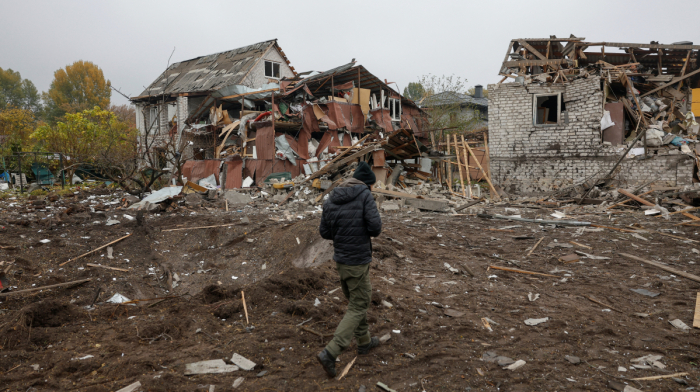
A Ukrainian strike has damaged a school building in a Russian-controlled area of Ukraine’s Zaporizhzhia region, according to local authorities cited by the TASS news agency. No injuries were reported in the incident.
U.S. President Donald Trump said that Iran had agreed to nuclear inspections into "infinity, despite Tehran's denials, and that unfrozen Iranian assets would be used to buy humanitarian supplies from the United States.
Iran’s parliamentary speaker said on Wednesday regional countries alone should determine the Middle East’s political and security order, rejecting external involvement and calling for expanded intra-regional cooperation.
France has confirmed its first Ebola case linked to the current outbreak in the Democratic Republic of Congo after a doctor returning from a humanitarian mission tested positive for the virus, the health ministry said on Wednesday (24 June).
Ukraine said its forces had struck key energy installations inside Russia, including a gas processing plant and a helium facility in the Orenburg region, as drone assaults increased across multiple areas.
Critical minerals are becoming a key battleground in the growing economic rivalry between the G7 and China, as governments seek to secure supplies vital to the energy transition and advanced manufacturing.
An unusual weather pattern known as an omega block is at the heart of the extreme heat sweeping across Europe. The phenomenon can trap hot air over the same region for days or even weeks, allowing temperatures to climb to dangerous levels.
Ebola cases in the Democratic Republic of Congo have surpassed 1,000, with health officials warning that the outbreak is spreading rapidly through displacement camps and across borders.
You can download the AnewZ application from Play Store and the App Store.
What is your opinion on this topic?
Leave the first comment