An Egyptian national charged with tossing gasoline bombs at a pro-Israeli rally in Boulder, Colorado, injuring a dozen people, planned his attack for a year and used Molotov cocktails instead of a gun because his noncitizen status blocked him from buying firearms as prosecutors said.
Mohamed Sabry Soliman, 45, told investigators that he wanted to "kill all Zionist people" but had delayed committing the attack until after his daughter had graduated from high school, according to state and federal court documents charging him with attempted murder, assault and a federal hate crime.
Police and FBI affidavits quoted the suspect as saying he took firearms training to obtain a concealed-carry permit but ended up using Molotov cocktails because of his immigration status. Soliman told investigators that he had learned how to make the fire bombs from YouTube.
Federal authorities said Soliman was in the country illegally, having overstayed a tourist visa and an expired work permit.
Trump administration officials immediately seized on Sunday's violence as an example of why they are cracking down on illegal immigration.
A police affidavit filed in support of Soliman's arrest warrant said he was born in Egypt, lived in Kuwait for 17 years and moved three years ago to Colorado Springs, about 100 miles (161 km) south of Boulder, where he lived with his wife and five children.
"In light of yesterday’s horrific attack, all terrorists, their family members, and terrorist sympathizers here on a visa should know that under the Trump administration we will find you, revoke your visa, and deport you," U.S. Secretary of State Marco Rubio said on X.
Federal and local authorities at an afternoon news conference in Boulder said Soliman had done nothing to draw law enforcement attention before Sunday's incident. He was believed to have acted alone, they said.
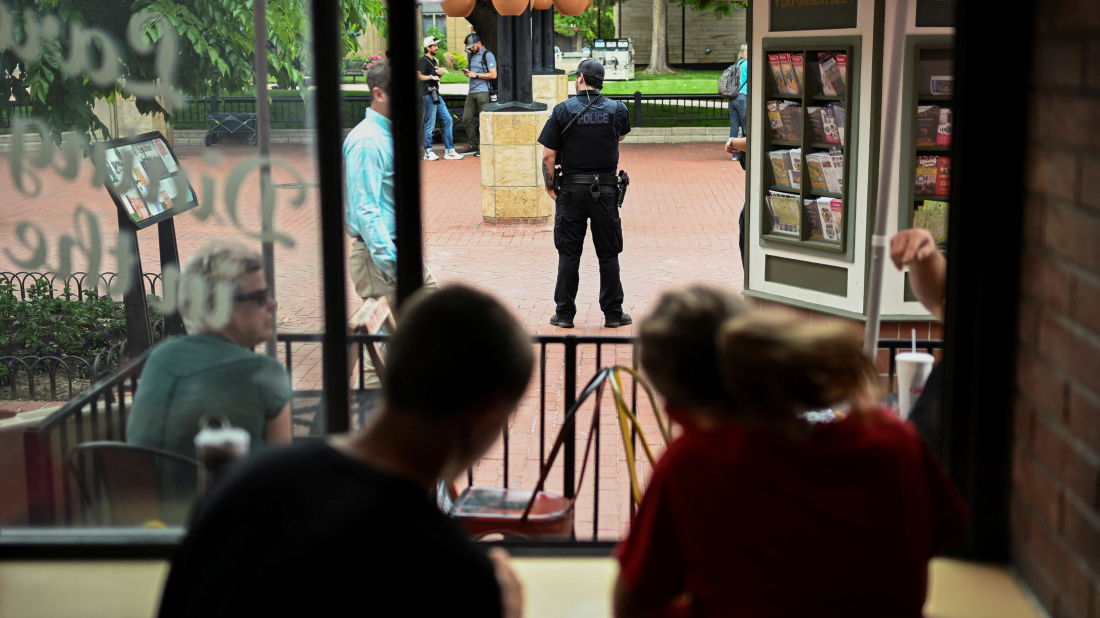
According to the Boulder police affidavit, Soliman had planned for a year to carry out the attack, which unfolded on the Pearl Street Mall, a popular pedestrian shopping district near the University of Colorado.
The affidavit said the suspect "threw two lit Molotov cocktails at individuals participating in the pro-Israel gathering," yelling, "Free Palestine" as they ignited in the crowd.
The victims, many of them elderly, were taking part in an event organized by Run for Their Lives, an organization devoted to drawing attention to the hostages seized in the aftermath of Hamas' 2023 attack on Israel.
SIXTEEN MOLOTOV COCKTAILS WERE LEFT
The attack was the latest act of violence aimed at Jewish Americans linked to outrage over Israel's escalating military offensive in Gaza. It followed the fatal shooting of two Israel Embassy aides that took place outside Washington's Capital Jewish Museum last month.
U.S. Attorney General Pam Bondi described the fire-bombing as an "antisemitic terror attack."
Authorities said they found 16 gasoline-filled Molotov cocktails near where the suspect was detained.
The police also found a gasoline canister in his car parked nearby and a weed sprayer filled with gasoline at the scene. The federal affidavit references a video posted on social media during the attack showing Soliman "shirtless, pacing back and forth while holding what appear to be Molotov cocktails."
During a brief court appearance on Monday, Soliman appeared via a video feed from the Boulder County Jail, wearing an orange jumpsuit. He answered "yes" to some procedural questions from the judge but otherwise did not speak.
Soliman's attorney, public defender Kathryn Herold, said during the hearing that she would reserve any arguments regarding his bond conditions until a future date. He was initially detained in lieu of $10 million cash bail.
The suspect faces a maximum sentence of life in prison if found guilty on the federal hate crime charge because he was also charged with attempted-murder in state court.
The multiple attempted-murder counts are punishable by up to 384 years in prison, Boulder County District Attorney Michael Dougherty said.
Department of Homeland Security officials said Soliman had entered the United States in August 2022 on a tourist visa, filed for asylum the following month, and remained in the country after his visa expired in February 2023.
"There are millions of individuals like this that we are attempting to locate from the past administration that weren't properly screened that were allowed in," Todd Lyons, acting director of U.S. Immigration and Customs Enforcement, said during a press conference in Boston.
In a social media post, U.S. President Donald Trump called Sunday's attack "yet another example of why we must keep our Borders SECURE, and deport Illegal, Anti-American Radicals from our Homeland."
Under former President Joe Biden, ICE prioritized arrests of serious criminals and called for officers to consider humanitarian factors when detaining migrants.
Authorities had identified eight victims by late Sunday - four women and four men, 52 to 88 years of age. Two victims remained hospitalized on Monday. In addition, four more victims who were less seriously injured came forward on Monday.
Rabbi Yisroel Wilhelm, the Chabad director at the University of Colorado, Boulder, told CBS Colorado that the 88-year-old victim was a Holocaust refugee who fled Europe.
Sunday's attack was not the first high-profile incident of mass violence in Boulder, a university town that attracts many young professionals and outdoor enthusiasts. In 2021, a gunman fatally shot 10 people, including an off-duty police officer, in a local supermarket.














What is your opinion on this topic?
Leave the first comment