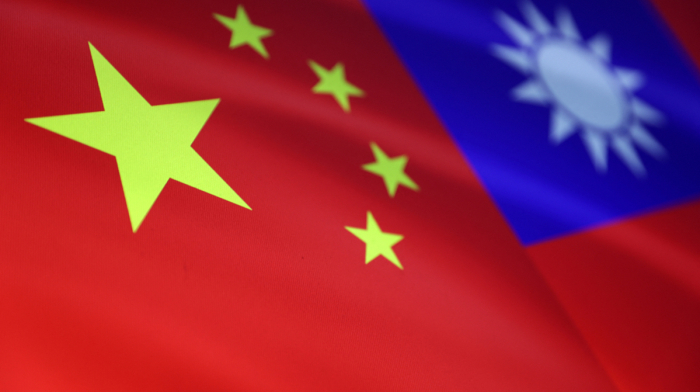
China's state media warned U.S. President-elect Donald Trump his pledge to slap additional tariffs on Chinese goods over fentanyl flows could drag the world's top two economies into a mutually destructive tariff war.
China's state media warned U.S. President-elect Donald Trump his pledge to slap additional tariffs on Chinese goods over fentanyl flows could drag the world's top two economies into a mutually destructive tariff war.
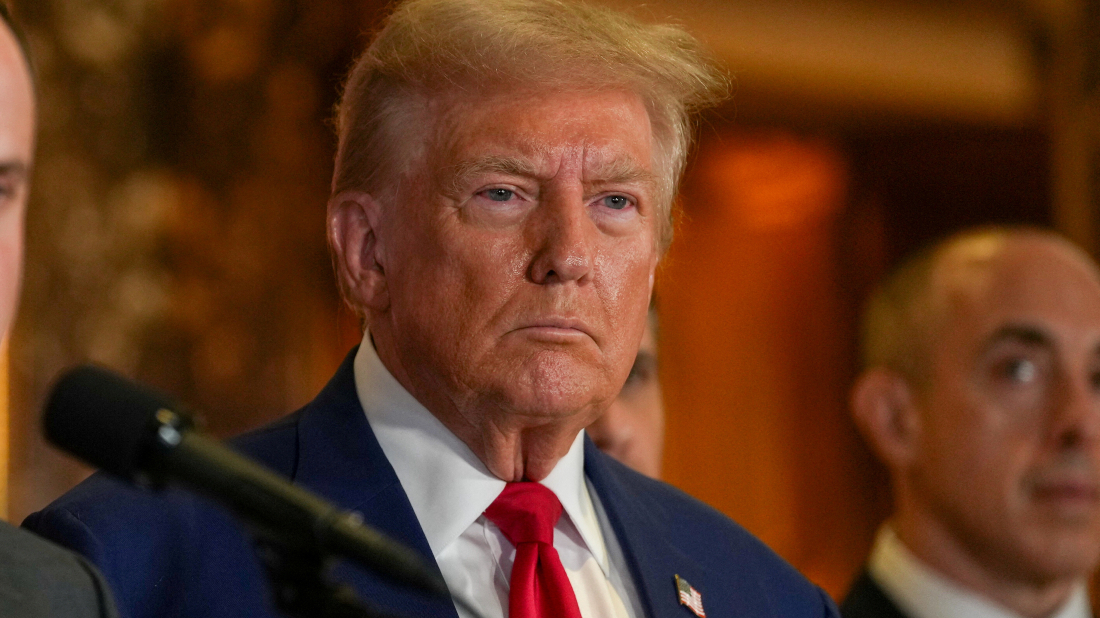
Trump, who takes office on Jan. 20, said on Monday he would impose "an additional 10% tariff, above any additional tariffs" on imports from China until Beijing clamped down on trafficking of the chemical precursors used to make the deadly drug.
The two superpowers are setting out their positions ahead of the former president's return to the White House. Trump's first term resulted in a trade war that uprooted global supply chains and hurt every economy as inflation and borrowing costs shot up.
Editorials in Chinese communist party mouthpieces China Daily and the Global Times late on Tuesday warned the next occupant of 1600 Pennsylvania Avenue to not make China a "scapegoat" for the U.S.' fentanyl crisis or "take China's goodwill for granted."
"The excuse the president-elect has given to justify his threat of additional tariffs on imports from China is farfetched," China Daily said.
"There are no winners in tariff wars. If the U.S. continues to politicise economic and trade issues by weaponising tariffs, it will leave no party unscathed."
Economists have begun downgrading their growth targets for China's $19 trillion economy for 2025 and 2026 in anticipation of further tariffs promised by Trump during the election campaign, and are warning Americans to brace for an increase in the cost of living.
"For now the only thing we know for sure is that the risks in this area are high," said Louis Kuijs, chief Asia economist at S&P Global Ratings, which on Sunday lowered its China growth forecast for 2025 and 2026 to 4.1% and 3.8%, respectively.
"What we assumed in our baseline is an across-the-board (tariff) increase from around 14% now to 25%. Thus, what we assumed is a bit more than the 10% on all imports from China."
Trump is threatening Beijing with far higher tariffs than the 7.5%-25% levied on Chinese goods during his first term.
"China already has a template for dealing with the previous U.S. tariff policy," the Global Times quoted Gao Lingyun, an analyst at the Chinese Academy of Social Sciences in Beijing, as saying.
"Using counternarcotics issues to increase tariffs on Chinese goods is untenable and unpersuasive," he added.
TRADE WAR TWO
Trump previously said he would introduce tariffs in excess of 60% on Chinese goods.
The threat is rattling China's industrial complex, which sells goods worth more than $400 billion annually to the U.S. and hundreds of billions more in components for products Americans buy from elsewhere.
His pick of trade lawyer Jamieson Greer as new U.S. trade representative elevates a key veteran of Trump's first term trade war against China and points to a bruising four years for trade negotiators the world over.
Greer served as chief of staff to Trump's former U.S. Trade Robert Lighthizer, who renegotiated the North American free trade deal with Canada and Mexico.
The president-elect looks set to tear up that agreement on his first day in office.
Trump on Monday also pledged 25% tariffs on goods from Mexico and Canada, saying the U.S.' neighbours were not doing enough to stop drugs and migrants crossing their borders.
But China can expect to bear the brunt of Trump's efforts to bring down the U.S.' trade deficit and bring about the "manufacturing renaissance" he promised on the campaign trail.
"What the future will bring on this front is hard to say," S&P Global's Kuijs said. "There are many uncertainties. There is still a large increase to go to get to 60%."











What is your opinion on this topic?
Leave the first comment