Oscars 2026 nominations announced: 'Sinners' breaks record with 16 nods
The Academy Awards nominations have been announced, with the crime drama Sinners leading the race securing a record 16 nominations ahe...
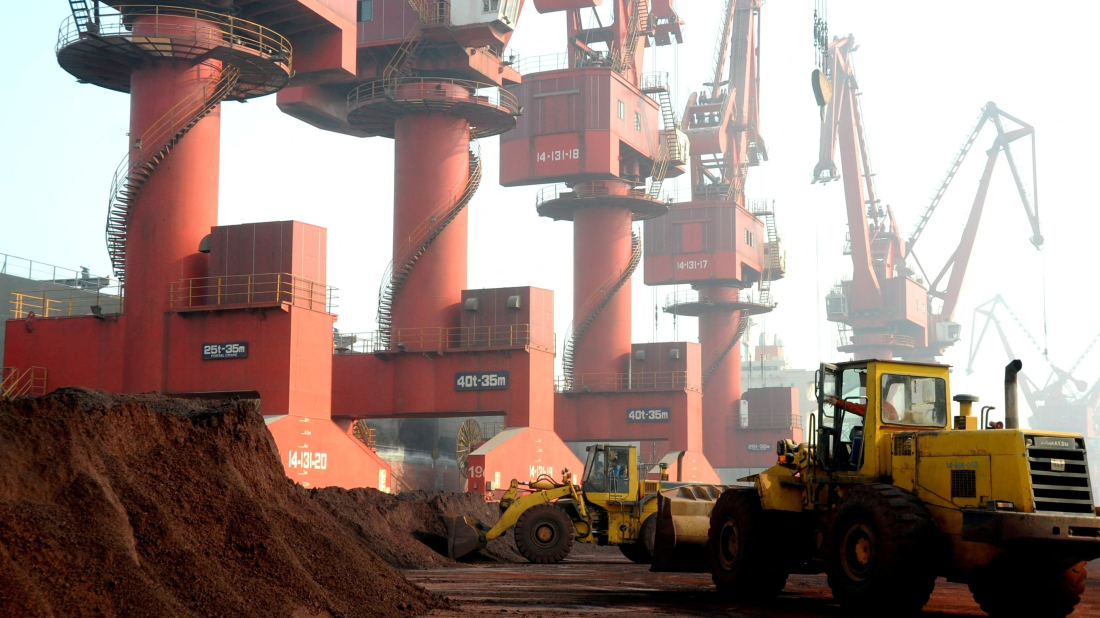
U.S. President Donald Trump has signed an executive order directing the Secretary of Commerce to launch an investigation into the country’s heavy reliance on imported critical minerals.
The order, issued on Tuesday, highlights concerns over the vulnerability of U.S. supply chains and their potential risks to national security, defense readiness, and economic stability.
The executive order stresses that the dependence on imports for essential minerals, particularly rare earth elements (REEs), has raised significant security and economic concerns. “The dependence of the United States on imports and the vulnerability of our supply chains raises the potential for risks to national security, defense readiness, price stability, and economic prosperity and resilience,” the order states.
This move is seen as part of an effort to break China’s dominance in the critical minerals sector, which is vital for the production of advanced technologies, defense systems, and renewable energy products. China currently controls 69% of global rare earth production and holds 49% of the world’s estimated reserves, according to the U.S. Geological Survey’s 2024 data.
The executive order also follows Trump's March 20 decision to encourage both public and private investments aimed at boosting the U.S. production of critical minerals. The order outlines the establishment of financing and credit mechanisms to enhance the country’s energy and critical minerals sectors.
This new directive builds on previous actions, including the tariffs imposed by the Trump administration in 2018 on Chinese goods, which led to retaliatory measures from Beijing, including tighter controls over the export of rare earths. The latest restrictions were implemented by China on April 4, just days after new U.S. tariffs were announced.
As global demand for critical minerals continues to rise, the U.S. is focusing on reducing its dependency on China and securing a more resilient and self-sufficient supply chain. The investigation into mineral imports is part of broader efforts to strengthen U.S. economic and security positions in an increasingly competitive global market.

Israeli Prime Minister Benjamin Netanyahu issued veiled threats to Iran’s new Supreme Leader, Mojtaba Khamenei, and Hezbollah on Thursday (12 March), during his first press conference since the conflict with Iran began.
Israel and Iran continued to exchange strikes on Friday (13 March), as the U.S. and French militaries reported deaths in Iraq, and the U.N. launched a $325 million appeal to help Lebanon, where a seventh of the population have left their homes since fighting began.
A long-running investigation has suggested that the street artist known as Banksy may be legally named David Jones. A report indicates that Jones was previously known as Robin Gunningham, a name long associated with Banksy, before legally changing his name several years ago.
A widening conflict involving Iran, the United States and Israel has triggered escalating military strikes across the Middle East, disrupted shipping through the strategic Strait of Hormuz and raised concerns over global energy supplies. This live report tracks the latest developments.
Ayman Ghazali, a 41-year-old U.S. citizen born in Lebanon, crashed his truck into the hallway of a Detroit-area synagogue on Thursday (12 March) while children attended preschool. Security personnel shot him dead during the confrontation, and authorities said no one else was seriously injured.
Kremlin spokesman Dmitry Peskov said on Saturday (14 March) that many countries are interested in purchasing Russian oil after the United States temporarily eased sanctions on certain exports.
An explosion lightly damaged a Jewish school in Amsterdam early on Saturday (14 March) in what the city’s mayor described as “a deliberate attack against the Jewish community.”
Ukrainian drones struck an oil refinery and a key port in Russia’s southern Krasnodar region overnight (13-14 March), local authorities said, causing injuries and damage. In separate action, Russian air attacks on Ukrainian territory killed and wounded civilians near Kyiv, officials reported.
Start your day informed with AnewZ Morning Brief. Here are the top news stories for the 13rd of March, covering the latest developments you need to know.
North Korea fired what appeared to be a ballistic missile on Saturday (14 March), Japanese and South Korean officials said. The development comes amid the joint annual U.S.-South Korea "Freedom Shield" military drills and South Korean Prime Minister Kim Min-seok's visit to Washington.
You can download the AnewZ application from Play Store and the App Store.
What is your opinion on this topic?
Leave the first comment