The EU and UK pledged hundreds of millions in new aid for Sudan on Tuesday, as international leaders gathered in London to address the worsening humanitarian crisis and mark two years since the outbreak of the devastating conflict.
The European Union and the United Kingdom on Tuesday committed to boosting humanitarian aid for Sudan, ahead of an international conference in London marking two years since the outbreak of a devastating conflict that has displaced millions and plunged the country into crisis.
The UK government stated that the purpose of the conference is to strengthen and coordinate the international response to the crisis. However, Sudan’s government criticized the event for excluding representatives from both sides of the conflict.
The war, which began in April 2023 as a result of a power struggle between Sudan’s military and the paramilitary Rapid Support Forces (RSF), has caused widespread destruction, particularly in the Darfur region. Tens of thousands of people have been killed, millions displaced, and several foreign actors have been drawn into the conflict.
During the conference, the EU and its member states pledged over €522 million (approximately $592 million), while Britain announced an additional £120 million ($158 million) in aid to support Sudan.
British Foreign Secretary David Lammy emphasized the need for a united global approach to protect civilians and facilitate humanitarian access. “We do need patient diplomacy,” he told delegates. “We cannot resign ourselves to inevitable conflict. We cannot be back here, one year from now, having the same discussion.”
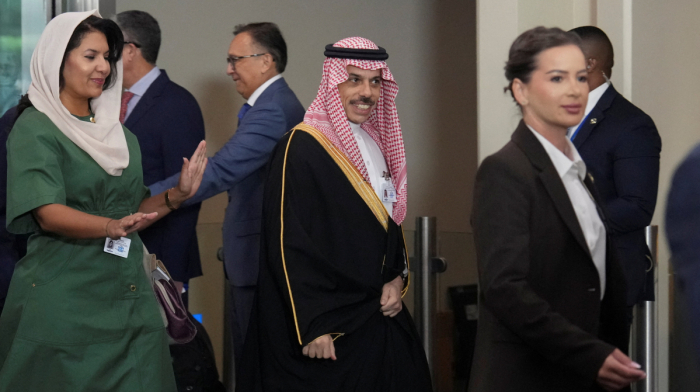
The conference is co-hosted by the African Union, European Union, France, Germany, and the UK. Participating nations include Egypt, Kenya, and the United Arab Emirates.
Sudan’s foreign minister lodged a complaint with Lammy, expressing frustration over the country’s exclusion and objecting to the presence of the UAE and Kenya. Sudan has accused the UAE of supplying weapons to the RSF—a claim supported by U.N. experts and U.S. lawmakers. Sudan has taken the matter to the International Court of Justice in The Hague. The UAE has denied the allegations and requested the case be dismissed.
Tensions have also escalated with Kenya after it hosted talks between the RSF and its allies on forming a parallel administration, prompting Sudan to recall its ambassador.
In a statement, Lana Nusseibeh, the UAE’s assistant minister for Political Affairs, acknowledged that both warring parties have committed atrocities and accused them of deliberately blocking humanitarian assistance. “As Sudan’s devastating war enters its third year, the United Arab Emirates issues an urgent call for peace,” she said.
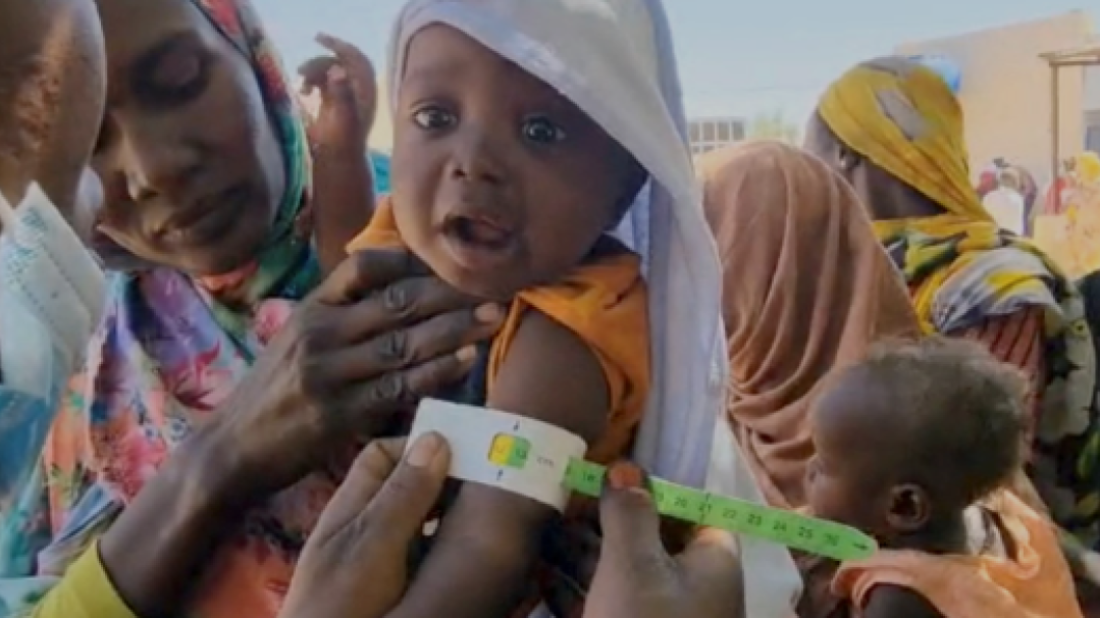
The conference aims to draw renewed global attention to what the UK has described as one of the worst humanitarian crises in recent memory, with 30 million people in need of assistance and 12 million already displaced.
The UN Development Programme’s representative in Sudan, Luca Renda, expressed hope for a more coordinated international response, noting, “The Sudanese people are tired of this war.”
German Foreign Minister Annalena Baerbock described the situation as “the greatest humanitarian catastrophe of our time.”
Meanwhile, lawyers representing Sudanese victims submitted a 141-page dossier to the UK’s war crimes unit, documenting alleged atrocities committed by the RSF. They requested the file be forwarded to the International Criminal Court, which has jurisdiction over war crimes in Darfur.
A UN agency also warned on Tuesday that sexual violence is being systematically used as a weapon of war in Sudan, further highlighting the gravity of the ongoing conflict.














What is your opinion on this topic?
Leave the first comment