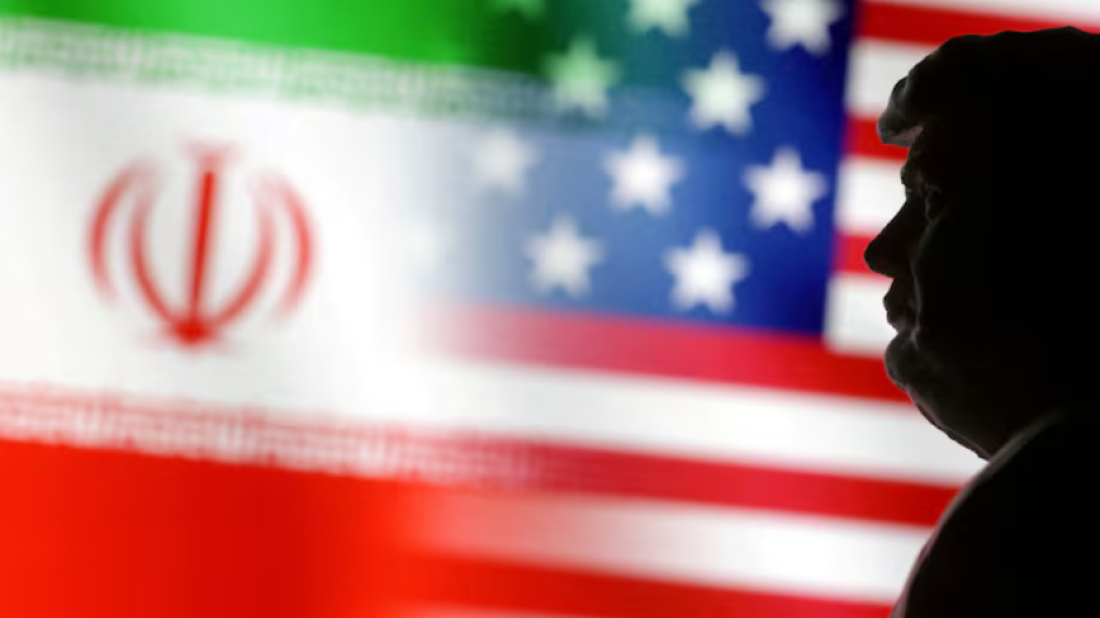
The U.S. Treasury has announced new sanctions against Iran just days before direct nuclear talks are expected to begin, as President Donald Trump warns Tehran of “great danger” if negotiations fail.
The U.S. Treasury Department in a statement said it imposed sanctions on five Iran-based entities and one person based in Iran for their support of Iran's nuclear program with the aim of denying Tehran a nuclear weapon.
"The Iranian regime's reckless pursuit of nuclear weapons remains a grave threat to the United States and a menace to regional stability and global security," Treasury Secretary Scott Bessent said in the statement.
"Treasury will continue to leverage our tools and authorities to disrupt any attempt by Iran to advance its nuclear program and its broader destabilizing agenda."
Iran's mission to the United Nations in New York did not immediately respond to a request for comment.
The action comes after Trump made a surprise announcement on Monday that the United States and Iran were poised to begin direct talks on Tehran's nuclear program, but Iran's foreign minister said the discussions in Oman would be indirect.
In a further sign of the difficult path to any deal between the two geopolitical foes, Trump issued a stark warning that if the talks were unsuccessful, "Iran is going to be in great danger."
The Treasury said those targeted on Wednesday supported two previously sanctioned entities that manage and oversee the country's nuclear program, the Atomic Energy Organization of Iran (AEOI) and its subordinate, the Iran Centrifuge Technology Company (TESA).
Among those targeted was a company that manufactures aluminum for TESA, an AEOI subordinate responsible for a number of nuclear reactor projects and a company tasked with developing thorium-fueled reactor technologies.
U.S. Energy Secretary Chris Wright said on Tuesday that Iran can expect tighter sanctions if it does not come to an agreement with Trump on its nuclear program.
Efforts to settle a dispute over Iran's nuclear program, which it says is purely for civilian use but which Western countries see as a precursor to an atomic bomb, have ebbed and flowed for more than 20 years without resolution.
Trump tore up a 2015 deal between Iran and six world powers - the U.S., Russia, China, France, Britain and Germany - during his first term of office in 2017 and talks since then have stalled.
Iranian officials told Reuters on Tuesday that Tehran is approaching weekend talks with the United States over its nuclear program warily, with little confidence in progress and deep suspicions over U.S. intentions












What is your opinion on this topic?
Leave the first comment