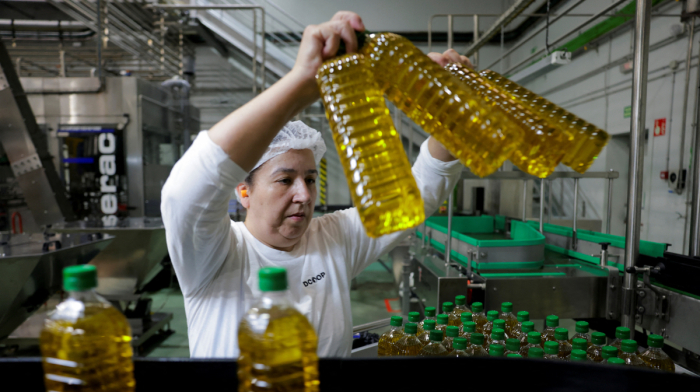
Argentina and Uruguay approve Mercosur–EU free trade agreement
Argentina and Uruguay on Thursday became the first founding members of the Mercosur bloc to ratify a long-awaited free trade agreement with the Europe...
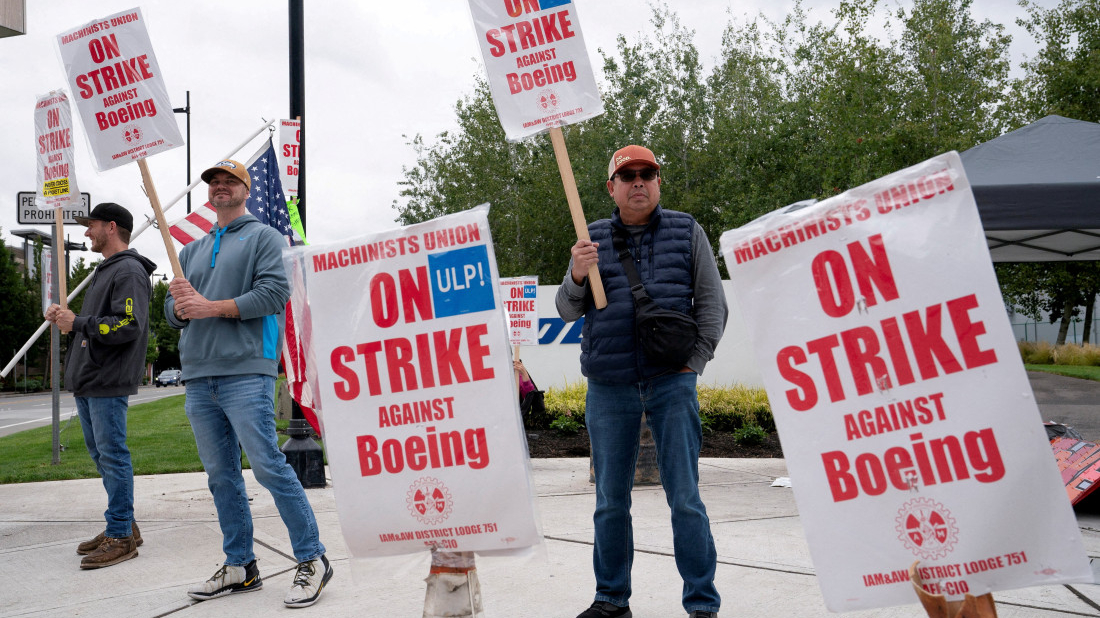
Boeing has halted discussions and withdrawn its pay proposal to union workers, as a major strike approaches its fourth week. This leaves approximately 33,000 people in a state of uncertainty and heightens tensions between the two sides.
Boeing announced it has withdrawn its pay offer to approximately 33,000 U.S. factory workers amid a strike entering its fourth week. The company stated that no further negotiations would occur following a failed round of discussions with union representatives, mediated by federal officials.
Stephanie Pope, head of Boeing Commercial Airplanes, criticized the union for not seriously considering Boeing's proposals, which she described as "non-negotiable." She noted that Boeing is focused on cash preservation, exploring options to raise billions through stock sales, while temporarily furloughing thousands of salaried employees.
The union, representing West Coast factory workers, is demanding a 40% pay increase over four years and the reinstatement of a defined-benefit pension, which was eliminated in a previous contract. A recent offer of a 25% raise was overwhelmingly rejected by workers, and Boeing's latest proposal of a 30% raise was also deemed insufficient.
Despite Boeing's claims of good faith bargaining and improved proposals, the union accused the company of refusing to negotiate on key issues, including wage increases and benefits.

A F-16 fighter jet of the Turkish Air Force crashed near a highway in western Türkiye early on Wednesday (25 February), killing its pilot, officials and media reports confirmed.
Chinese President Xi Jinping and German Chancellor Friedrich Merz agreed on Wednesday in Beijing to strengthen economic cooperation while addressing trade imbalances, market access concerns, and the war in Ukraine, during Merz’s first official visit to China since taking office.
U.S. President Donald Trump declared a “golden age” for America in his first second-term State of the Union on Tuesday evening, delivering the longest-ever address at more than 90 minutes. Here are the main takeaways.
President Donald Trump delivered the first State of the Union address of his second term to Congress on Wednesday (25 February), declaring that America’s “golden age” had begun and that the country was experiencing a “turnaround for the ages.”
Start your day informed with AnewZ Morning Brief. Here are the top news stories for the 25th of February, covering the latest developments you need to know.
Mexico’s President Claudia Sheinbaum on Thursday thanked FIFA and its president, Gianni Infantino, for reaffirming that the country’s 2026 World Cup host venues will remain unchanged, following violence that erupted after the killing of a major cartel leader.
A student from Azerbaijan was detained by U.S. immigration agents inside a Columbia University residential building on Thursday morning, was released later the same day after New York City Mayor Zohran Mamdani raised her case directly with President Donald Trump.
Argentina and Uruguay on Thursday became the first founding members of the Mercosur bloc to ratify a long-awaited free trade agreement with the European Union, paving the way for one of the world’s largest free trade zones.
Nuclear negotiations between the United States and Iran in Geneva have been described as “positive”, according to a report by Axios citing a U.S. official.
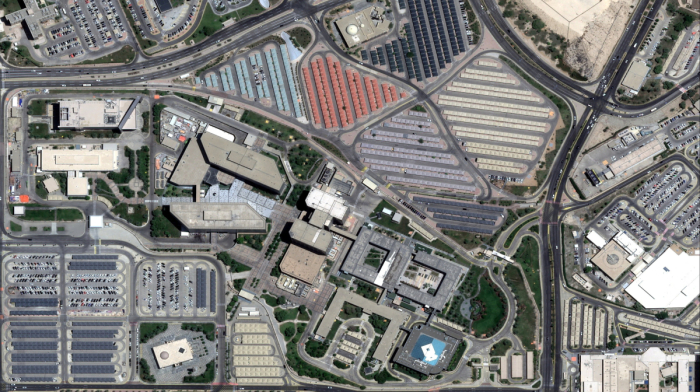
The United States is expected to deploy six additional aerial refuelling aircraft to Israel as Washington continues to strengthen its military presence in the Middle East while nuclear negotiations with Iran remain under way.
You can download the AnewZ application from Play Store and the App Store.
What is your opinion on this topic?
Leave the first comment