Kenya has confirmed its first case of Ebola after a Kenyan citizen who had travelled from the Democratic Republic of Congo (DRC) died in Nairobi, prompting health authorities to launch an urgent contact-tracing operation.
The man had been ill for about a month before making the long journey from eastern Congo by road into Uganda and later flying to Kenya's capital. He died late on Monday, just days after arriving in Nairobi.
The case makes Kenya the third country to report an Ebola infection linked to the outbreak in eastern Congo, which has become the second-largest Ebola epidemic ever recorded.
Patient travelled through Uganda before reaching Nairobi
Kenya's Health Minister Aden Duale said the patient travelled by road from Congo to Kampala, Uganda's capital, before boarding a flight to Nairobi on Saturday.
After arriving at Jomo Kenyatta International Airport, he passed through routine health screening. He was later taken to Nairobi Hospital by a relative after his condition deteriorated.
Doctors found that he had a fever, chills and bleeding beneath the skin. He was immediately isolated, but died late on Monday.
Patrick Amoth, Kenya's Director General for Health, said the man's symptoms may not have been obvious when he went through airport screening because medication could have temporarily masked them.
The case has raised concerns about the difficulties of detecting Ebola in people travelling across borders, particularly when symptoms can fluctuate or be suppressed by medication.
Authorities trace passengers and healthcare workers
Kenyan health officials have identified 28 people who came into contact with the patient since he entered the country. The group includes relatives and healthcare workers who treated or assisted him.
Authorities are also searching for 23 passengers and four crew members who travelled on the same Jambojet flight as the patient.
The investigation is aimed at identifying anyone who may have been exposed and monitoring them before they develop symptoms.
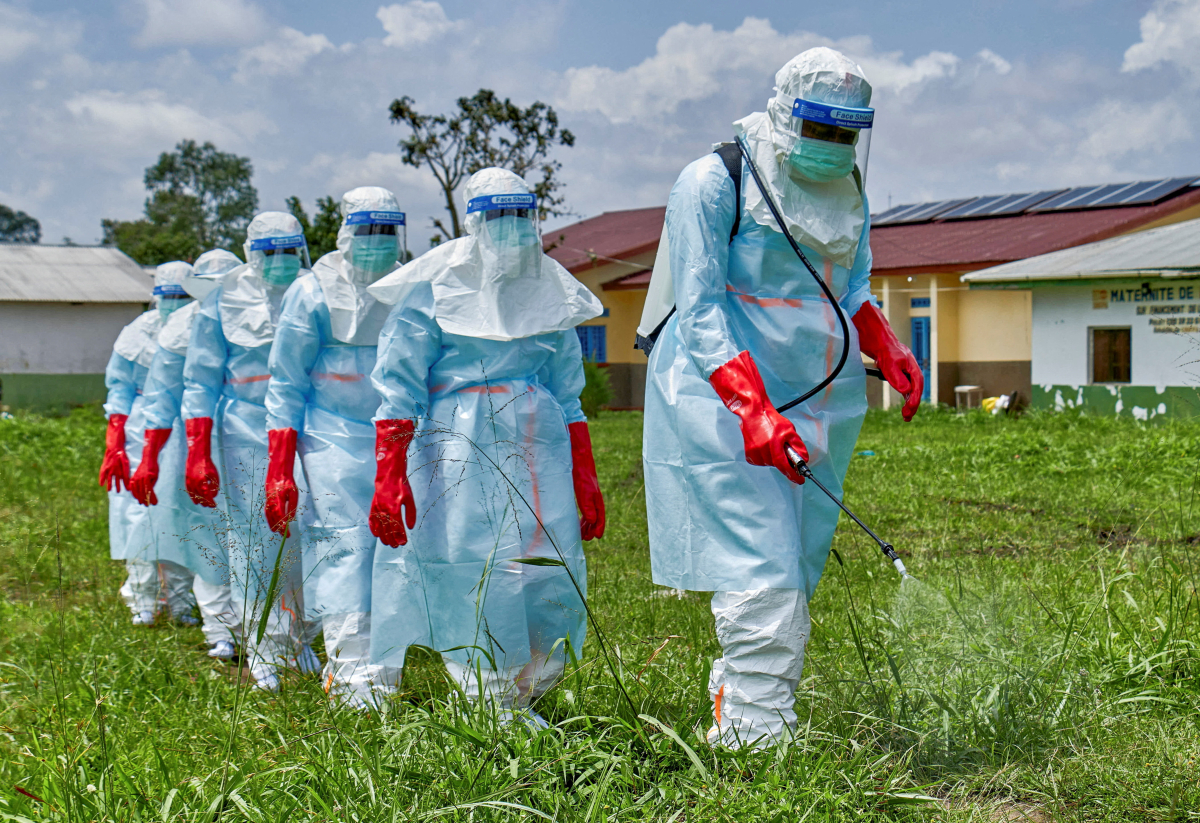
The patient was due to be buried on Tuesday under special burial procedures designed to prevent the virus from spreading. Such precautions are particularly important because Ebola can remain highly infectious after death.
Duale sought to reassure the public that Kenya had been preparing for the possibility of an imported case.
“We have continued to maintain, as a country, a high level of alert for Ebola since the outbreak began in May,” he said.
Kenya steps up response
Ebola is transmitted through direct contact with the blood or other bodily fluids of an infected person. It can cause fever, vomiting and diarrhoea and, in severe cases, internal and external bleeding.
The disease does not typically spread through casual contact in the same way as respiratory infections, but close contact with an infected person — particularly someone who is seriously ill or has died — can carry a significant risk.
Kenya's health authorities are now focusing on contact tracing, isolation and monitoring as they work to determine whether the patient infected anyone during his journey or after arriving in the country.
The case also highlights the challenge posed by cross-border movement in East Africa, where people regularly travel between Congo, Uganda and Kenya for work, family and trade.
A major outbreak in eastern Congo
The latest case is connected to an Ebola outbreak that was declared in the Democratic Republic of Congo in mid-May, although health officials believe the virus may have been circulating for months before it was formally detected.
More than 8,000 people have been infected and more than 4,000 have died, making the outbreak the second-largest Ebola epidemic on record.
Uganda also reported 20 cases and two deaths earlier in the year after the virus crossed its border from Congo. The country was subsequently declared Ebola-free in August following a period without new infections.
The outbreak is being driven by the relatively rare Bundibugyo strain of Ebola. Unlike some other Ebola strains, there is currently no proven vaccine or specific treatment for Bundibugyo Ebola, making early detection, isolation and infection-control measures particularly important.
For Kenya, the immediate priority is to establish how far the virus may have travelled with the patient and ensure that anyone potentially exposed is identified and monitored.
The authorities' ability to trace contacts quickly will be crucial in determining whether the case remains an isolated imported infection or marks the beginning of further transmission in the country.
Read more about Ebola:














What is your opinion on this topic?
Leave the first comment