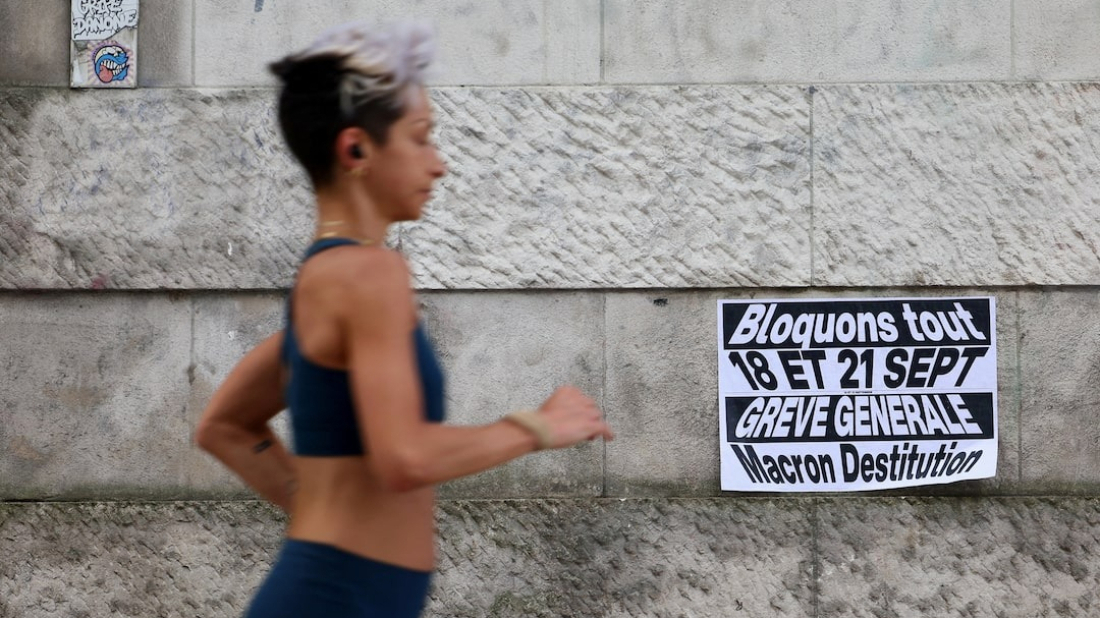
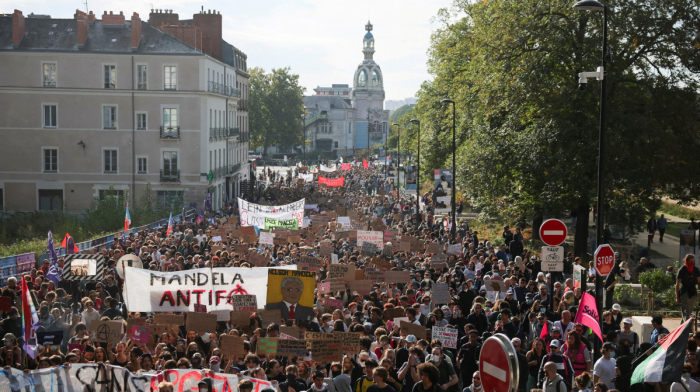
Hundreds of thousands of workers, students and pharmacists staged strikes and demonstrations across France on Thursday against looming budget cuts, intensifying pressure on President Emmanuel Macron and his new prime minister.
Teachers, train drivers, hospital staff and pharmacists joined the nationwide walkouts, while high school students blocked school entrances in Paris and other cities. Metro services in the capital were reduced to rush-hour operations, and regional train traffic was heavily disrupted.
“Workers are currently so despised by this government and by Macron that it can’t continue like this,” said Fred, a bus driver and CGT union representative at a rally in Paris. A teacher, Gaetan Legay, added: “I am here to defend public services … to demand that public money goes back into services rather than to large companies or in tax gifts to the ultra-rich.”
Unions are demanding the scrapping of austerity plans left over from the previous government, more spending on public services, higher taxes on the wealthy, and the reversal of pension changes that extended working life. An Interior Ministry source estimated up to 800,000 people could take part in the day’s protests.
France’s budget deficit last year was nearly double the EU’s 3% ceiling. Prime Minister Sébastien Lecornu, appointed after parliament ousted François Bayrou last week over a proposed €44 billion (about $47 billion) spending squeeze, has yet to clarify whether he will pursue those cuts but has signalled a willingness to compromise.
Unions have vowed continued mobilisation unless major changes are made. “The workers we represent are angry,” they said in a joint statement, calling the fiscal measures “brutal” and “unfair.”
The strikes extended beyond schools and transport. Pharmacists said up to 98% of pharmacies could close, EDF reported a 1.1-gigawatt reduction in nuclear output at its Flamanville reactor, and farmers’ unions blocked roads near Toulon.
Interior Minister Bruno Retailleau said police had dismantled blockades at bus depots in Paris and warned that up to 8,000 agitators might seek to provoke clashes. Some 80,000 officers were deployed nationwide with riot units, drones and armoured vehicles. Police reported more than 20 arrests by midday.
The disruption also delayed plans to move the 70-metre Bayeux Tapestry, a UNESCO-listed artefact depicting the 1066 Norman invasion, which is due to be loaned to Britain.













What is your opinion on this topic?
Leave the first comment