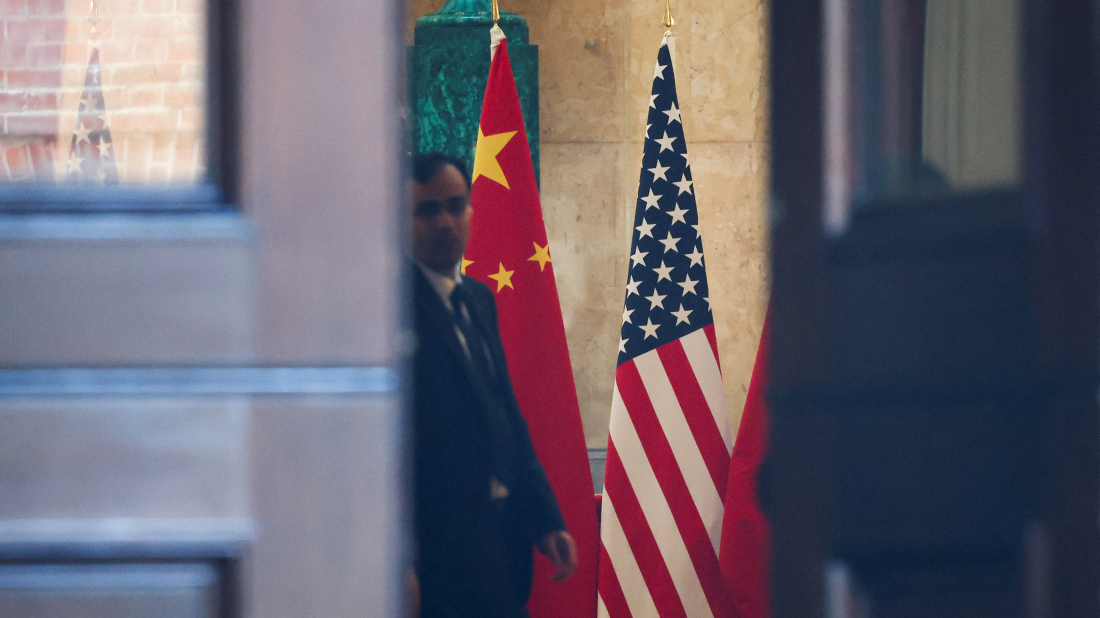
US. Defence Secretary Pete Hegseth and other senior U.S. officials held rare direct virtual talks with their Chinese counterparts notably Defence Minister Dong Jun amid growing tensions.
The call, which came after months of persistent friction between the two countries over tariffs, Taiwan and the South China sea mark a significant military to military exchange.
Hegseth told Dong that Washington does not seek conflict with China, regime change, or the economic strangulation of the People’s Republic of China. He emphasized, however, that the United States remains determined to protect its vital interests in the Asia-Pacific region.
Dong responded by stressing China’s opposition to what it sees as provocations and external interference in the South China Sea.
He called for the two sides to maintain stable communications on the basis of equality and mutual respect, while reiterating Beijing’s position that its sovereignty and territorial claims are non-negotiable.
The diplomatic activity was not confined to defence officials. US. Secretary of State Marco Rubio also spoke by phone with Chinese Foreign Minister Wang Yi.
The two discussed bilateral tensions alongside regional and global issues.
Rubio stressed the importance of open communication channels, while Wang compared the US. and China to “two giant ships” that must move forward together, warning of the risks of collision if their paths diverge.
The calls come at a time when the US-China relationship is strained on multiple fronts. Trade disputes have re-emerged with new tariff threats, military tensions continue to simmer over Taiwan and the South China Sea, and Washington has raised concerns about Beijing’s support for Russia’s war in Ukraine.
Despite these challenges, both governments appear keen to manage tensions and prevent relations from spiraling into outright confrontation.
Analysts see the recent contacts as part of an effort to lay groundwork for possible high-level meetings, including a potential encounter between President Donald Trump and President Xi Jinping later in the year.
For now, the conversations underline a delicate balancing act; both sides are drawing clear red lines while keeping diplomatic channels open, signaling recognition that sustained communication is essential to avoiding escalation.












What is your opinion on this topic?
Leave the first comment