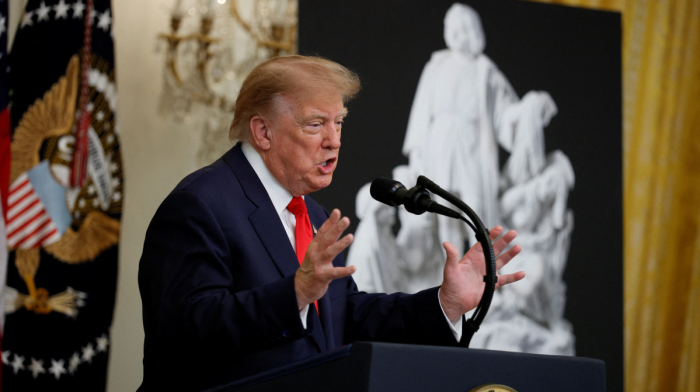
live U.S., Iran inch closer to deal, timing remains unclear
U.S. and Pakistani leaders forecast a Sunday signing of a long-elusive framework agreement to end fighting between the United States and Iran, but Teh...
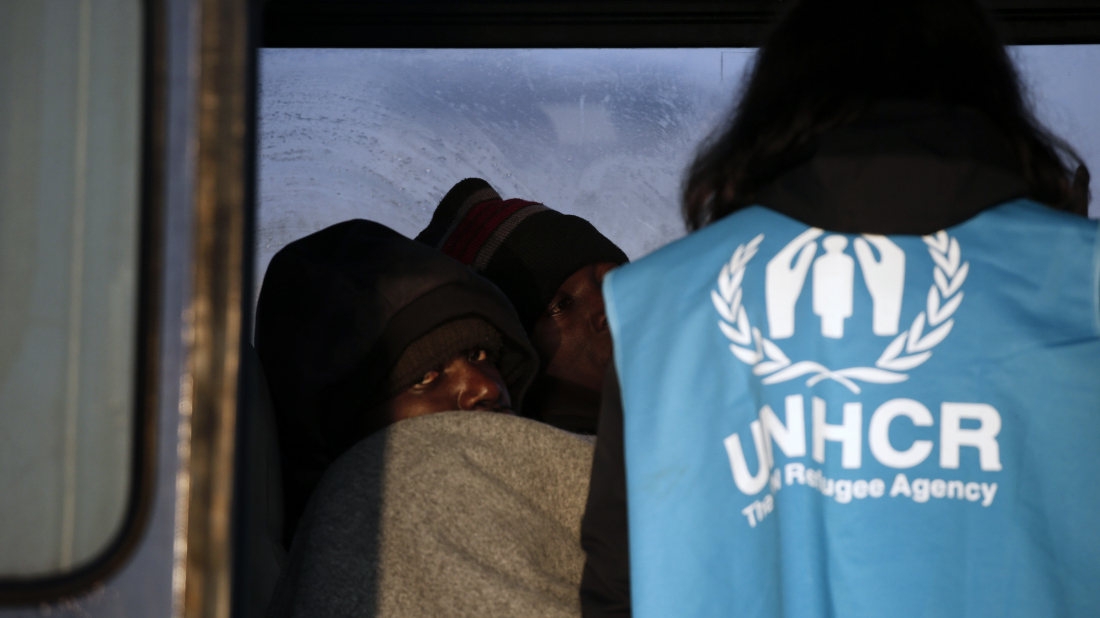
The U.N. agency responsible for providing humanitarian aid and support for displaced people has announced cuts in its 2026 budget due to financial constraints.
The agency plans to scale back its budget by nearly a fifth to $8.5 billion even as displacement continues to rise due to crises like the war in Sudan, a copy of its budget showed on Monday.
This means it will spend $8.5 billion as opposed to its budgeted $10.2 billion for the year 22025 due to financial constraints.
According to the UN, drastic cuts in foreign aid are becoming increasingly common among major donors in Europe and the United States, with a direct impact on the most vulnerable populations.
For example the United Kingdom, Belgium etc have all cut humanitarian spending while increasing military allocations.
At the end of June, less than 17% of the $46 billion needed to meet global humanitarian needs in 2025 had been received, according to the United Nations Office for the Coordination of Humanitarian Affairs (OCHA). This represents a 40% drop compared to the same period in 2024.
To cushion this, the agency plans to reduce posts by 25% or 3985 in the coming year. It will also close its regional bureau for Southern Africa effective 1st October.
Tom Fletcher, UN Under-Secretary-General for Humanitarian Affairs and Emergency Relief Coordinator says of the situation “The math is cruel, and the consequences are heartbreaking. Too many people will not get the support they need, but we will save as many lives as we can with the resources we are given.”

Pakistan has warned that any attempt by India to block or significantly reduce river flows under the Indus Waters Treaty could have “far-reaching consequences”, after India's water minister said New Delhi was working to ensure that “not a single drop” of water reaches Pakistan in the coming years.
SpaceX made a historic entrance into the Nasdaq on Friday, surging over 20% in its first day of trading and lifting its valuation to more than $2 trillion. Investors flocked to the world’s largest IPO, betting on Elon Musk’s sprawling empire spanning rockets, AI and beyond.
Armenia has every right to choose Europe. But Europe’s support for Armenia’s direction should not become automatic approval of its political process.
U.S. President Donald Trump has said a peace agreement with Iran is scheduled to be signed on Sunday in a post on social media, despite Tehran's Foreign Ministry spokesperson Esmaeil Baghaei saying no deal would be approved this weekend.
Japan’s birth rate and fertility levels have fallen to their lowest levels on record, highlighting the country’s worsening demographic crisis as fewer people marry and have children.
Every June, roughly 13 million young people in China sit down at the same time to take the same test. They have been preparing for it, in many cases, since primary school. Their families have rearranged their lives around it.
European museums are increasingly returning cultural artefacts to countries in Africa and the Middle East, as pressure grows to address the legacy of colonialism and disputed ownership.
Uganda’s health ministry has raised concerns over what it described as unfair travel restrictions imposed during the current Ebola outbreak, warning that such measures risk undermining transparent reporting. .
Georgia is overhauling its migration laws in one of the most significant legal reforms in years, introducing criminal penalties for fake marriages, tighter controls on foreign students and expanded investigative powers for the migration authorities.
Start your day informed with the AnewZ Morning Brief. Here are the top stories for 13 June, covering the latest developments you need to know.
You can download the AnewZ application from Play Store and the App Store.
What is your opinion on this topic?
Leave the first comment