Caspian crude gains traction as Japan looks to diversify oil supplies
Japan’s growing interest in Caspian crude reflects a pragmatic response to uncertainty in global energy markets and its continued reliance on...
A tense one-day summit in Beijing has exposed widening divisions between the European Union and China on trade, Russia and rare earth supplies.
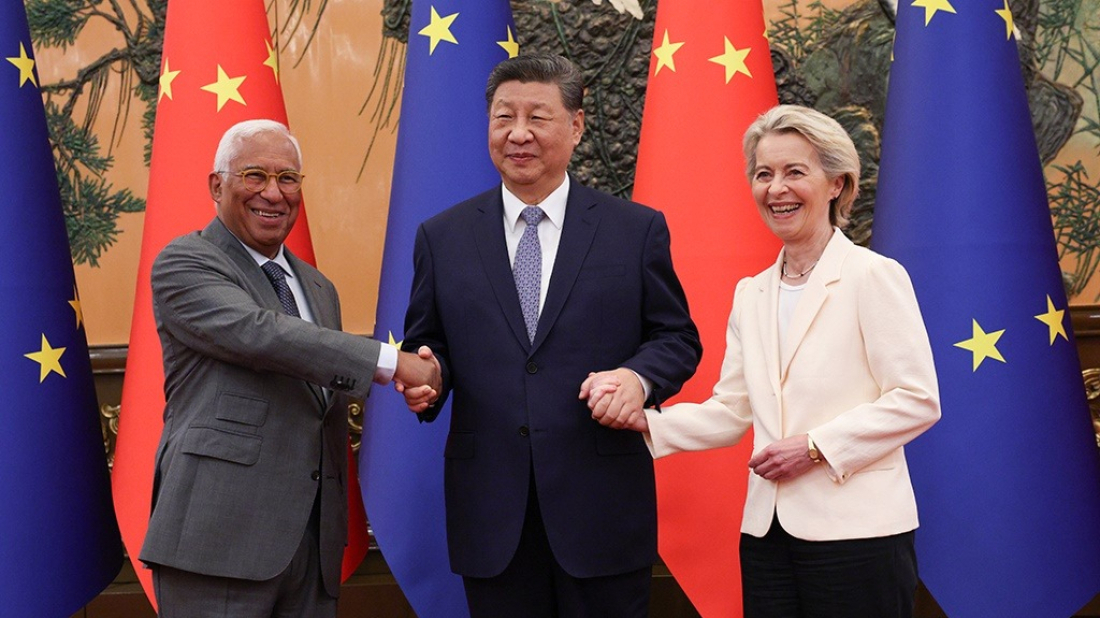
European Commission President Ursula von der Leyen described relations with China as being at a “clear inflection point” following a shortened summit in Beijing on Thursday, where she and European Council President Antonio Costa met with President Xi Jinping and Premier Li Qiang.
The meeting, cut to a single day at China’s request, marked 50 years of EU-China ties but was overshadowed by disagreements on trade policy, geopolitical alignment, and supply chain disruptions.
Von der Leyen said the bloc had raised concerns over Chinese industrial overcapacity, limited market access, and export controls on rare earths, which had affected European automotive production in May. Xi, in turn, warned the EU to avoid “restrictive economic and trade tools” and maintained that China is not a source of Europe’s challenges.
Both sides agreed to deepen cooperation on climate change, issuing a joint statement pledging efforts on carbon markets, energy transition and green technology.
The EU also called on China to use its influence to encourage Russia to end its war in Ukraine, with von der Leyen stating the need for a ceasefire and genuine negotiations.
China’s exports of rare earth magnets to the EU surged 245% in June from May, reaching 1,364 tonnes, though still 35% lower than the same month last year. Von der Leyen said Brussels welcomed China's efforts to streamline export licences.
The EU’s trade deficit with China reached €305.8 billion (about $360 billion) in 2024, prompting investigations into subsidised imports, including electric vehicles.
Von der Leyen emphasised that any future deal with the U.S. would not affect the EU’s independent stance towards China.

Cuba and the United States have been at odds for more than six decades, with tensions rooted in the 1959 revolution that transformed the island’s political and economic system. Renewed focus on relations comes as Donald Trump’s rhetoric intensifies and conditions on the island worsen.
NASA is aiming to launch its Artemis 2 mission on Wednesday (1 April), sending astronauts on a 10-day journey around the Moon, officials confirmed. According to the Space Administration, the launch window is due to open at 23:24 GMT, with additional opportunities to 6 April if delays occur.
U.S. President Donald Trump has said that the U.S is in talks with the new Iranian regime. He said this in a post on his Truth Social account but warned that the U.S. will "Obliterate" Iran's electric and oil facilities if no deal is reached, especially regarding the Strait of Hormuz closure.
The four astronauts selected for NASA’s Artemis II mission have arrived in Florida, entering the final phase of preparations for the first crewed journey towards the Moon in more than five decades
Iranian Military Spokesman Lieutenant Colonel Ibrahim Zulfiqari has warned that American soldiers will become 'food for sharks' if U.S. President Donald Trump launches ground attacks against Iran. The threat comes after the U.S. military said it was deploying thousands of Marines to the region.
Two sailboats carrying humanitarian aid from Mexico arrived safely in Havana on Saturday, the Mexican Navy said, concluding a journey in which the vessels were delayed by bad weather and briefly reported missing.
China imposed sanctions on Japanese lawmaker Keiji Furuya on Monday, who is a close aide of Japanese Prime Minister Sanae Takaichi, due to his "collusion with Taiwan independence" forces, in its latest move in a diplomatic row over Taiwan.
Ukrainian President Volodymyr Zelenskyy said he talked about a possible security partnership on Sunday with Jordan's King Abdullah over defending against drone attacks amid rising tensions over the Iran conflict.
U.S. President Donald Trump said he had "no problem" with any country sending crude to Cuba as a Russian tanker neared a Cuban port with a badly needed shipment, signalling he was reversing course on blocking oil shipments to the country on Sunday.
Cuba and the United States have been at odds for more than six decades, with tensions rooted in the 1959 revolution that transformed the island’s political and economic system. Renewed focus on relations comes as Donald Trump’s rhetoric intensifies and conditions on the island worsen.
You can download the AnewZ application from Play Store and the App Store.
What is your opinion on this topic?
Leave the first comment