Start your day informed with AnewZ Morning Brief: here are the top news stories for 11th July, covering the latest developments you need to know.
1. Rubio and Wang set for high-stakes talks at ASEAN Summit
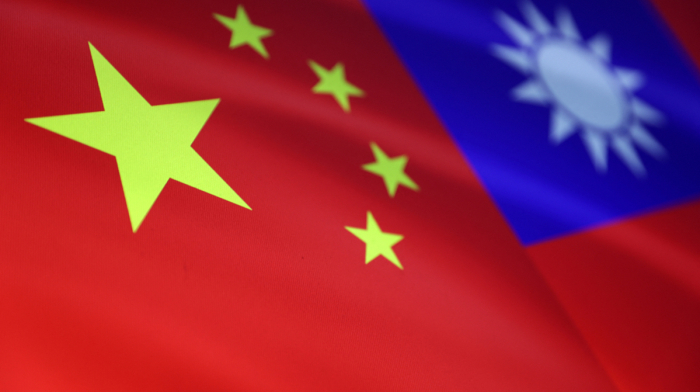
U.S. Secretary of State Marco Rubio are meeting Chinese Foreign Minister Wang Yi in Kuala Lumpur on Friday, the State Department said, in what will be the first in-person meeting of the two counterparts.
Washington's top diplomat arrived in Malaysia on Thursday in his first trip to Asia since taking office, where he joined foreign ministers of the 10-member Association of Southeast Asian Nations in Kuala Lumpur and met with senior Malaysian officials and his Russian counterpart, Sergei Lavrov.
2. Trump threatens 35% tariffs on Canadian goods
U.S. President Donald Trump has said he will slap a 35% tariff on Canadian goods starting 1 August, even as the two countries are days away from a self-imposed deadline to reach a new deal on trade.
The missive came as Trump also threatened blanket tariffs of 15% or 20% on most trade partners, and said he would soon notify the European Union of a new tariff rate on its goods.
Trump announced the latest levies on Canada on Thursday in a letter posted to social media and addressed to Prime Minister Mark Carney.
3.Mourning begins in Texas where more than 170 are still missing from flash floods
Texas governor Greg Abbott called on state lawmakers to approve funding for new warning systems and emergency communications in flood prone areas when the Legislature meets later this month. Abbott also asked for financial relief for the response and recovery efforts.
Shock has turned into grief across central Texas, where at least 120 people have died from flash flooding and more than 170 are still reported as missing.
Photos of those who have died, along with candles and flowers, now decorate a fence in Hill Country – a growing tribute that reflect the enormity of the disaster in the region.
4. Iran expels half a million Afghans in 16-day stretch since recent conflict with Israel, UN says
More than half a million Afghans have been expelled from Iran in the 16 days since the conflict with Israel ended, according to the United Nations, in what may be one of the largest forced movements of population this decade.
For months, Tehran has declared its intention to remove the millions of undocumented Afghans who carry out lower-paid labor across Iran, often in tough conditions.
The International Organisation for Migration (IOM) has said 508,426 Afghans have left Iran via the Iranian-Afghanistan border between 24 June and 9 July.
5. Kazakhstan launches Central Asia’s most powerful supercomputer
Kazakhstan has officially launched the most powerful supercomputer in Central Asia, marking a significant milestone in its push for digital sovereignty. President Kassym-Jomart Tokayev attended the inauguration ceremony at the new data center operated by the Ministry of Digital Development, Innovation, and Aerospace Industry.
According to the presidential press service, the computing cluster, built on NVIDIA H200 graphics processors, can deliver up to 2 exaflops (two quintillion operations per second) of performance, making it the region’s most advanced high-performance computing system.












What is your opinion on this topic?
Leave the first comment