Kazakhstan’s Transport Ministry said Monday that the definitive report on last December’s Azerbaijan Airlines Flight J2‑8243 crash near Aktau—an accident that killed 38 of 67 people—will be released only after lab tests and simulations are finished.
Kazakhstan’s Transport Ministry says the definitive report on the 25th of December 2024 crash of Azerbaijan Airlines Flight J2‑8243 near Aktau International Airport will be released only after “all laboratory tests and simulation modelling are complete,” stressing that the probe is being conducted “strictly under ICAO Annex 13 standards” and in coordination with Azerbaijani and Russian specialists. Field‑site work has ended and a pre‑report—issued in February—remains the latest public document; prosecutors have declined to publish further material, citing Kazakh law that bars disclosure while proceedings are active.
What happened
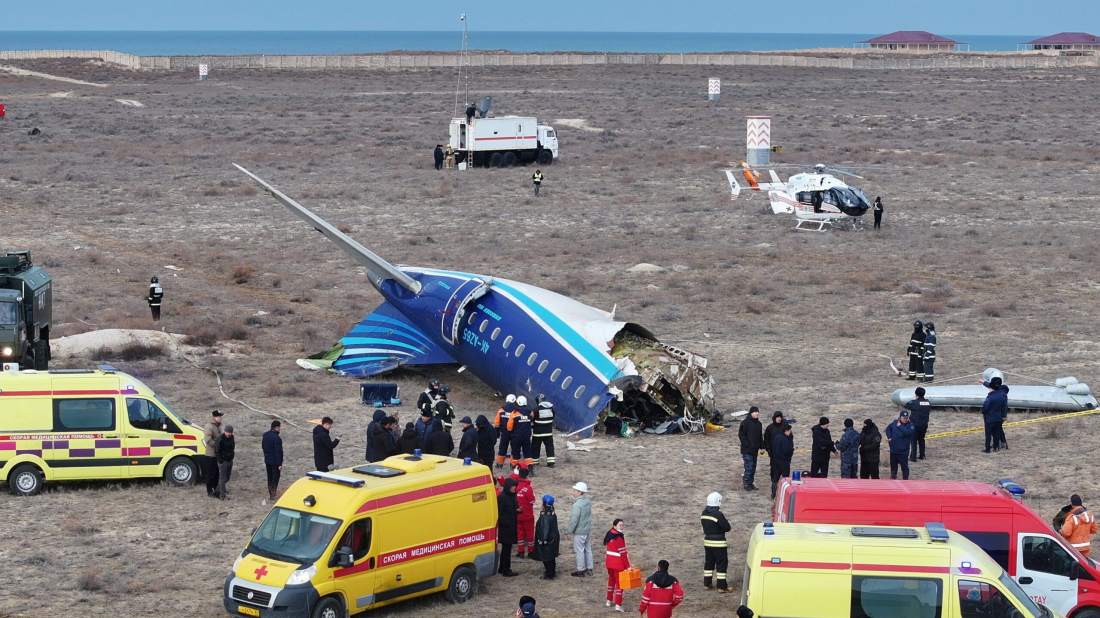
The Embraer 190AR (tail number 4K‑AZ65) was operating a scheduled Baku–Grozny service when poor visibility over Chechnya forced the crew to divert across the Caspian and request an emergency landing at Aktau. It crashed about three kilometres short of the runway, killing 38 of the 67 people on board and injuring 29 others.
Key findings to date
External damage: The February preliminary report found that “foreign objects penetrated the tail and hydraulic lines,” triggering a total loss of control moments before touchdown. Wikipedia
Possible missile strike: Kazakh and Azerbaijani investigators recovered fragments consistent with a Pantsir‑S1 surface‑to‑air missile, and flight‑data traces show the jet was flying through a Russian air‑defence zone that had been activated against Ukrainian drones earlier that morning. euronews
Eyewitness accounts: Survivors told ABC News they heard “three bangs” and saw shrapnel puncture the fuselage while the aircraft cruised over Grozny.
Political cross‑currents
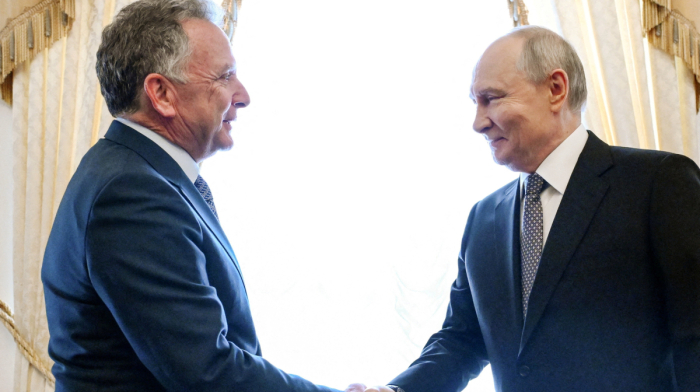
Baku has publicly accused Russian forces of an accidental shoot‑down, an assertion Moscow neither confirms nor denies pending the final report. Al Jazeera notes that Azerbaijani President Ilham Aliyev demanded accountability after accepting a personal apology from Vladimir Putin. Al Jazeera The Kremlin maintains that hostile drone activity, not Russian missiles, may have been to blame and urges investigators to consider “all technical scenarios.”
Legal and safety roadmap
Kazakhstan’s Main Transport Prosecutor’s Office emphasises that no conclusions will be released until forensic work on recovered fragments and full flight‑simulator reconstructions are finished. Once published, the report is expected to include safety recommendations on air‑defence coordination, route planning in conflict zones, and cockpit procedures for hydraulic failure. Families of victims are pressing for an interim briefing, but officials say only the final report can carry legal weight.
What’s next
Laboratory metallurgical analysis of missile‑fragment samples is under way in Brazil, home of aircraft maker Embraer.
Re‑enactment flights with an Embraer‑190 testbed are scheduled for June to validate control‑loss scenarios.
The investigation team aims to deliver its full findings “no later than Q4 2025,” after which criminal liability—if any—will be determined by Kazakhstan’s courts.
Until then, the crash remains the region’s deadliest civilian aviation disaster in more than a decade and a stark reminder of the risks airliners face when conflict and commercial corridors intersect.













What is your opinion on this topic?
Leave the first comment