India's main opposition Congress Party has taken legal action against Meta and the federal government, alleging that an automated content moderation system is suppressing political speech by restricting posts featuring opposition leader Rahul Gandhi ahead of key state elections.
The lawsuit, filed in the Delhi High Court, escalates a dispute that has intensified in recent weeks and raises broader questions about political expression, platform accountability and government regulation of social media in the world's largest democracy.
At the centre of the case is a controversial amendment to India's information technology rules that requires large digital platforms to use automated tools to identify and remove content matching material previously blocked under government orders or court directives.
Congress argues that the system is operating far beyond its intended scope and is wrongly restricting lawful content connected to Gandhi and the party's political activities.
Opposition alleges widespread restrictions
The petition was filed by Manu Jain, social media head of the Congress party's youth wing, who claims the rules have become a mechanism for suppressing legitimate political expression.
According to the filing, users have seen posts removed or restricted even when they were not identical to content previously subject to removal orders.
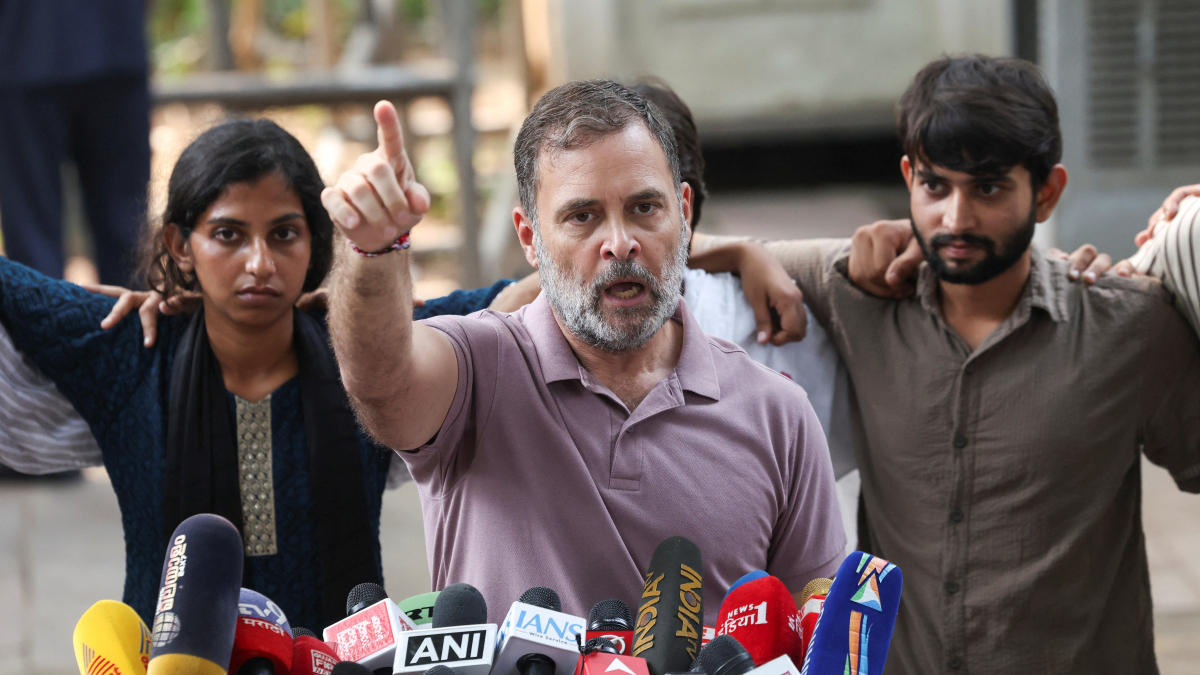
Who is Rahul Gandhi?
Rahul Gandhi is the Leader of the Opposition in India's lower house of parliament and one of the most prominent figures in the opposition Indian National Congress party. A member of India's Nehru-Gandhi political dynasty, he is the son of former Prime Minister Rajiv Gandhi and former Congress president Sonia Gandhi. Gandhi has emerged as the principal political challenger to Prime Minister Narendra Modi and the ruling Bharatiya Janata Party (BJP).
Congress says the allegedly affected posts include birthday greetings, personal tributes and even a wedding invitation that featured Gandhi's image or name.
The party argues that Meta's automated systems appear to be treating Gandhi's name and photograph as trigger terms, resulting in restrictions on otherwise lawful content.
In some cases, users reportedly received notifications stating that access to content had been restricted through an automated system implemented to comply with legal requirements. The notices also warned that repeated sharing of similar content could place accounts at risk of restriction.
The party's youth wing claims that some accounts are now approaching suspension thresholds despite no clear explanation of what rules were breached.
Lawsuit targets government rules
The legal challenge focuses on amendments introduced in February to India's Information Technology Rules.
The changes require major social media companies to use technical tools, including automated systems, to identify and restrict content that is identical to material already removed following government orders or court rulings.
Before the amendment, platforms were only encouraged to make efforts to use such technology.
Congress argues that the revised rule has led to excessive and opaque content removals while providing users with little information about why posts are being blocked.
The lawsuit seeks the restoration of restricted content, disclosure of the criteria used to remove posts and a declaration that the amended rule is unconstitutional.
It also challenges government advisories issued in October and requests that Meta stop restricting content solely because it contains Gandhi's name or image.
The dispute places Meta in a difficult position as it navigates competing pressures from India's government and opposition parties.
India is Meta's largest market, with approximately 400 million Facebook users and 515 million Instagram users, according to industry estimates.
Meta says it complies with Indian law and has stated in transparency reports that it uses automated systems to restrict content at scale under legal requirements.
The company says the system remains under development and describes the effort as unprecedented due to the scale of compliance required.
Meta declined to comment on the lawsuit.
According to its transparency reporting, India is among a small number of jurisdictions where Meta does not generally identify which government authority requested a content restriction, citing local legal requirements.
At a recent private meeting reported by Reuters, Congress representatives urged Meta to challenge some government takedown orders in the same way that social media platform X has done through the courts.
Meta reportedly told party officials that it remains politically neutral and is obligated to comply with local laws.
Government defends online regulations
Prime Minister Narendra Modi's government has defended the rules, arguing that stronger enforcement mechanisms are necessary in a country with more than 1.1 billion internet users.
Officials say automated moderation tools help prevent the spread of illegal and harmful content and ensure that previously prohibited material does not quickly reappear online.
The government has not yet publicly responded to the latest lawsuit.
India has significantly increased enforcement under the rules. According to Meta's transparency disclosures, the company restricted more than 5.4 million pieces of content during the first half of 2026 under the automated takedown requirements, compared with about 70,000 restrictions throughout all of 2025.
The legal challenge comes after a broader campaign by Congress against Meta.
The party's youth wing has organised protests outside Meta offices and displayed billboards accusing the company of favouring the ruling Bharatiya Janata Party (BJP).
Congress leaders allege that restrictions targeting opposition voices undermine the level playing field necessary for free and fair elections, particularly as state polls approach.
The BJP has rejected the allegations and accused protesters of targeting private businesses.
The court case is expected to become an important test of the balance between government regulation, platform responsibility and political speech in India.
Read more:



















What is your opinion on this topic?
Leave the first comment