U.S. interception of Skipper tanker signals harder line on Venezuela
Washington’s seizure of a tanker carrying Venezuelan oil shows a shift from financial sanctions to direct maritime action, further straining relatio...
The Organization for Security and Co-operation in Europe (OSCE) has reinforced its commitment to enhancing law enforcement collaboration across Central Asia through the 2025 Regional Meeting of Heads of Law Enforcement and Security Co-operation Departments (HoLEDs), held on June 4–5 in Dushanbe.
Jointly organized by the OSCE Secretariat and the OSCE Programme Office in Dushanbe, the meeting brought together senior law enforcement officials from all five Central Asian OSCE field operations, along with international partners including the United Nations Office on Drugs and Crime (UNODC) and the Central Asia Drug Action Programme (CADAP 7).
The two-day forum served as a key platform for dialogue on shared security challenges such as illicit drug trafficking, the misuse of small arms and light weapons, and the promotion of community policing. The discussions focused on improving regional coordination, sharing operational best practices, and enhancing the capacity of national police services to address transnational threats.
In her opening address, Tatiana Turcan, Deputy Head of the OSCE Programme Office in Dushanbe, underlined the importance of such regional gatherings. “It’s also an opportunity to exchange professional experiences and to discuss challenges in the region,” she said.
Umberto Severini, Head of the Strategic Police Matters Unit at the OSCE Transnational Threats Department, added, “This forum plays a crucial role in enhancing the co-ordination between the TNTD/Strategic Police Matters Unit, the OSCE Central Asia field operations, and our wider network of international partners.”
Participants took part in a field visit to a Mobile Police Reception (MPR) unit — a key component of Tajikistan’s ongoing police reform efforts supported by the OSCE — to observe how community-based policing models are being applied in practice. Training sessions also included discussions on the implementation of ongoing projects, highlighting both successes and obstacles.
The meeting concluded with a reaffirmed commitment to regional cooperation in law enforcement, emphasizing the OSCE’s role in supporting member states to strengthen security, build institutional resilience, and foster trust between police and communities across Central Asia.

Russia’s human rights commissioner, Tatyana Moskalkova, has said that Ukraine has not provided Moscow with a list of thousands of children it alleges were taken illegally to Russia, despite the issue being discussed during talks in Istanbul.
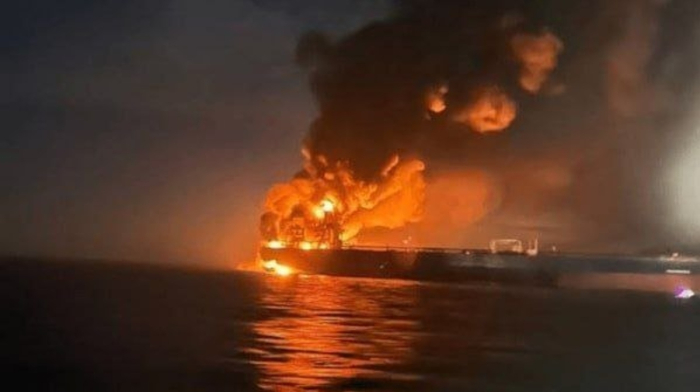
Iranian authorities have seized a foreign tanker carrying more than 6 million litres of smuggled fuel in the Sea of Oman, detaining all 18 crew members on board.
An explosive device found in a vehicle linked to one of the alleged attackers in Bondi shooting has been secured and removed according to Police. The incident left 12 people dead.
The latest round of clashes between Thailand and Cambodia has left 15 Thai soldiers dead and 270 others injured, Thailand’s Ministry of Defence spokesman Surasant Kongsiri said at a press conference on Saturday.
Syrian President Ahmad al-Sharaa has offered condolences to President Donald Trump following an ISIS attack near the ancient city of Palmyra that killed two U.S. soldiers and a civilian interpreter, Syrian and U.S. officials said Sunday.
The European Union’s interest in investing in regional connectivity projects in the South Caucasus, such as the Trump Route for International Peace and Prosperity (TRIPP) is driven by a need for strategic credibility and a tangible foreign policy success, according to a regional expert.
Shadow Trade is an investigative documentary by AnewZ that examines how global sanctions imposed after Russia’s 2022 war in Ukraine have been weakened through informal trade routes, permissive transit regimes, and overlooked commercial practices.
Kazakhstan and Uzbekistan have signed a new agreement on the transportation of natural gas through Uzbek territory, strengthening bilateral energy cooperation and supporting regional energy security ahead of the winter season.
Kazakhstan is assessing the scale of damage and potential losses following a recent attack on infrastructure operated by the Caspian Pipeline Consortium, a key export route for the country’s oil.
The Taliban leadership in Afghanistan opted out of a major regional meeting held in Iran’s capital Tehran on Sunday.
You can download the AnewZ application from Play Store and the App Store.
What is your opinion on this topic?
Leave the first comment