The AnewZ Opinion section provides a platform for independent voices to share expert perspectives on global and regional issues. The views expressed are solely those of the authors and do not represent the official position of AnewZ
Minilateralism has become an increasingly relevant form of diplomacy, especially with the shifting of the global order toward multipolarity and the rise of middle powers that seek ways to achieve their goals and resolve their specific issues in a more efficient manner.
As an emerging middle power with a proactive foreign policy, Azerbaijan uses minilateral formats to establish and deepen ties with countries that want to address shared challenges or pursue common opportunities, without being limited by political ideology or bureaucratic complexities.
Minilateralism acts as an effective diplomatic channel because it allows countries to work in a smaller group of nations on a more specific set of shared problems or interests. This enables countries such as Azerbaijan to gain more benefits and address crises more quickly than by engaging in multinational formats that are often burdened with slower response mechanisms and more dispersed cooperation.
Minilateral diplomacy also works very well with Azerbaijan’s pursuit of a multi-vector foreign policy. Given minilateralism’s flexibility, focus on mutual interests and objectives, as well as greater functionality, the country can incorporate these important advantages into its balancing and non-aligned stance in dealing with great powers, while maintaining its strategic and security autonomy.
Azerbaijan, through its active engagement in minilateral platforms such as C6, the Organization of Turkic States, or numerous trilateral formats, including the Azerbaijan-Türkiye-Pakistan,, Azerbaijan-Georgia-Türkiye, Azerbaijan-Uzbekistan-Turkmenistan formats, among others, manages to maximize its potential and use its resources more efficiently.
Azerbaijan’s middle power status and minilateralism
In a largely fragmented world order with unpredictable and competition-oriented global powers, middle powers are increasingly turning toward smaller-scale, less institutionalised frameworks of collaboration.
Azerbaijan, as a confirmed emerging middle power, often chooses to work within minilateral formats to gain greater autonomy in decision-making and a more productive mode of collaboration with a selected few countries that are on more or less equal footing in terms of power and agenda.
Previous experience with occasionally inefficient multilateral diplomacy, where negotiations can be dominated and influenced by assertive great powers, has prompted Azerbaijan toward more flexible and problem-solving-oriented minilateral frameworks.
Such ineffectiveness was obvious during Azerbaijan’s struggles to receive necessary support from multilateral forums to maintain its territorial integrity and sovereignty, which were violated by the decades-long Armenian occupation of Azerbaijani lands.
Unlike multilateralism, minilateral diplomacy is not burdened by overarching ideology and rigid institutional formalities but aims to achieve greater benefits for participating states with tighter cooperation. Azerbaijan's trilateral cooperation formats are a great example of such productive collaboration, in which countries can have more say in defining the areas and priorities of their cooperation and activities.
In times of unpredictable geopolitical crises, as well as opportunities, and the need for quicker responses to them, minilateral frameworks have been gaining momentum in international relations. Especially given the rise of emerging middle powers that look for more agency and faster reactions to shifting geopolitical dynamics, minilateralism has become a desired course of diplomacy for many countries, including Azerbaijan.
Intertwined relationship between multi-vector and minilateral diplomacy
Countries that pursue a multi-vector foreign policy avoid completely and permanently aligning themselves with any geopolitical bloc or great power, but instead choose approaches such as minilateralism to participate in different mini-alliances or partnerships that target specific interests or support shared agendas.
Azerbaijan is more interested in active participation within smaller groups of countries, preferably trustworthy neighbors, where it can work more freely in alignment with its own political will and pursue its multi-vector strategy.
Although some countries include more powerful countries or blocs in their minilateral formats, such as Central Asian nations in their engagements with the US or the EU, and prefer more strictly interest-based cooperation, Azerbaijan leans more toward partnership-based minilateral diplomacy.
While Azerbaijan's multi-vector policy acts as a core principle of its foreign policy and a political symbol of greater geopolitical independence, minilateralism is rather a tool to balance its relationships across the geopolitical spectrum and provide protection from often hegemonically oriented great powers.
Azerbaijan’s prominent minilateral formats
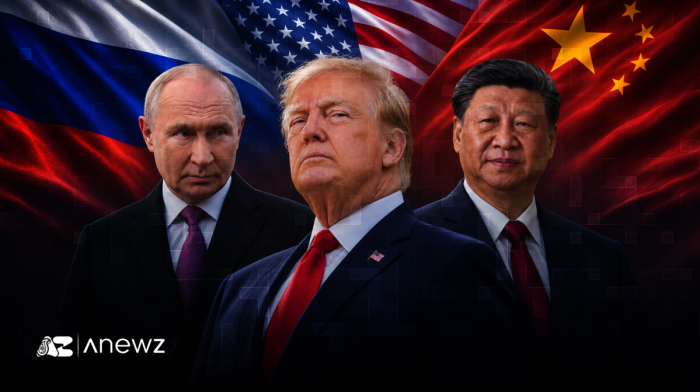
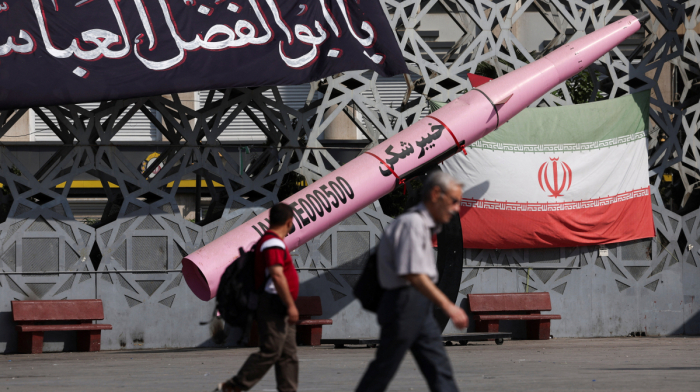
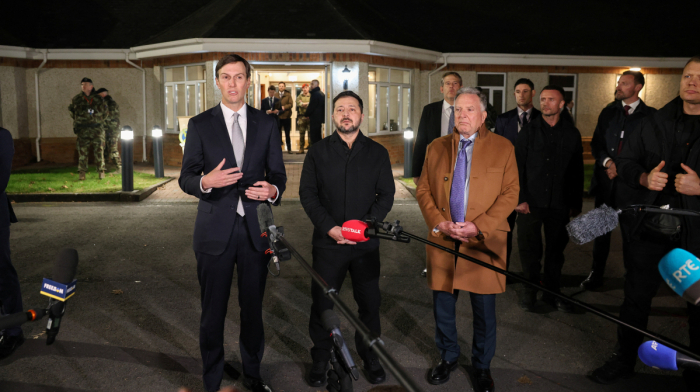
While the current major geopolitical tensions, such as the Russia-Ukraine conflict and the Iran war, continue to shake the international order, Azerbaijan has found itself in an increasingly important strategic position as a much-needed alternative transportation and energy route.
Strategic partnership between Azerbaijan and five Central Asian states in the minilateral format of C6 has become an important cooperation link between the South Caucasus and Central Asia and, from a wider perspective, between East and West.
The C6 has emerged from opportunities for countries participating in the Middle Corridor to concurrently amplify their individual leverage and strengthen interregional connectivity. This framework allows Azerbaijan to remain an intrinsic part of important international transport and logistics projects.
The minilateral platform of C6 also acts as a powerful diplomatic channel where a smaller group of countries can hold more productive discussions and make decisions more aligned with their shared interests, especially concerning trade, logistics and energy cooperation.
Unlike the C6, which is a largely interest-based framework, the Organization of Turkic States (OTS) incorporates shared values, such as culture and language, as binding elements within the format.
The OTS fits the minilateral model with its few actors, more specifically defined tasks and institutional lightness. Although the organization is not without limitations, as it implies non-binding security guarantees and relies on the political will of member states, it has advantages that help focus directly on strengthening cooperation across the Caspian-Eurasian region.
Although it emerged as an ethnolinguistically characterised organization, the OTS has developed into a powerful minilateral platform with a flexible but structured model of security cooperation.
While Türkiye, as the largest and most powerful member, has the leverage to potentially usurp the relatively equal footing of the OTS’s members, in reality, the leading roles of Azerbaijan and Kazakhstan in Turkic cooperation, along with Uzbekistan’s full admission in 2019, make such a scenario less likely and counterproductive to the future of the organization.
Azerbaijan’s trilateral cooperation frameworks are one of the most prominent forms of the country’s foreign policy that often take the form of minilateral diplomacy. The Azerbaijan-Türkiye-Pakistan trilateral format, which is heavily focused on strategic and defense collaboration, is especially important as it has provided continuous and steadfast support for each other’s statehood and territorial integrity in times of crisis and external threats, which have remained among the crucial shared interests of the member states.
Moreover, this trilateral platform has enriched the concept of minilateralism, often hastily reduced to being merely an interest-based concept. Recently, the Azerbaijan-Türkiye-Pakistan trilateral platform has started introducing solidarity as one of the principles of its collaboration. This suggests that minilateral formats can incorporate shared identities and worldviews of participating countries, without the risk of tampering with the conceptual framework of minilateralism.
The Azerbaijan-Türkiye-Georgia format is Azerbaijan’s oldest and most institutionalized trilateral partnership that serves as an effective minilateral format in the area of shared energy interests and major energy projects, such as the Baku-Tbilisi-Ceyhan oil pipeline, the Southern Gas Corridor and the Baku-Tbilisi-Kars railway.
It is worth mentioning the relatively newly emerged Azerbaijan-Uzbekistan-Turkmenistan trilateral framework that is expected to gain more importance in the foreseeable future, especially given the rising significance of alternative energy resources and transport routes that bypass geopolitically contested points.
The benefits of minilateralism
Similar to other countries, Azerbaijan does not rely completely on minilateral formats in its foreign policy to achieve its national interests of security, economic prosperity and maintaining peace in its immediate neighborhood.
Bilateralism still represents the cornerstone of the country’s diplomatic outreach, as is the case in international relations in general. Azerbaijan also uses multilateral formats to proactively participate in resolving major and global issues. Its active membership in the Non-Aligned Movement and hosting COP29 are proof of the country's commitment to international forums of collaboration.
However, Azerbaijan also recognizes the power of minilateralism in the currently fragmented global order and pursues the most optimal diplomatic outreach, in which smaller and more flexible formats of cooperation occupy a significant part of the country's foreign policy efforts.
Especially given Azerbaijan’s recently acquired emerging middle-power status, minilateral formats can offer the country more agency in the decision-making process and greater acknowledgment of its potential and diplomatic influence.













What is your opinion on this topic?
Leave the first comment