Trump tightens U.S. student and journalist visa rules with fixed time limits
The Trump administration is pressing ahead with new immigration rules that will impose fixed time limits on visas for foreign students, cultural excha...
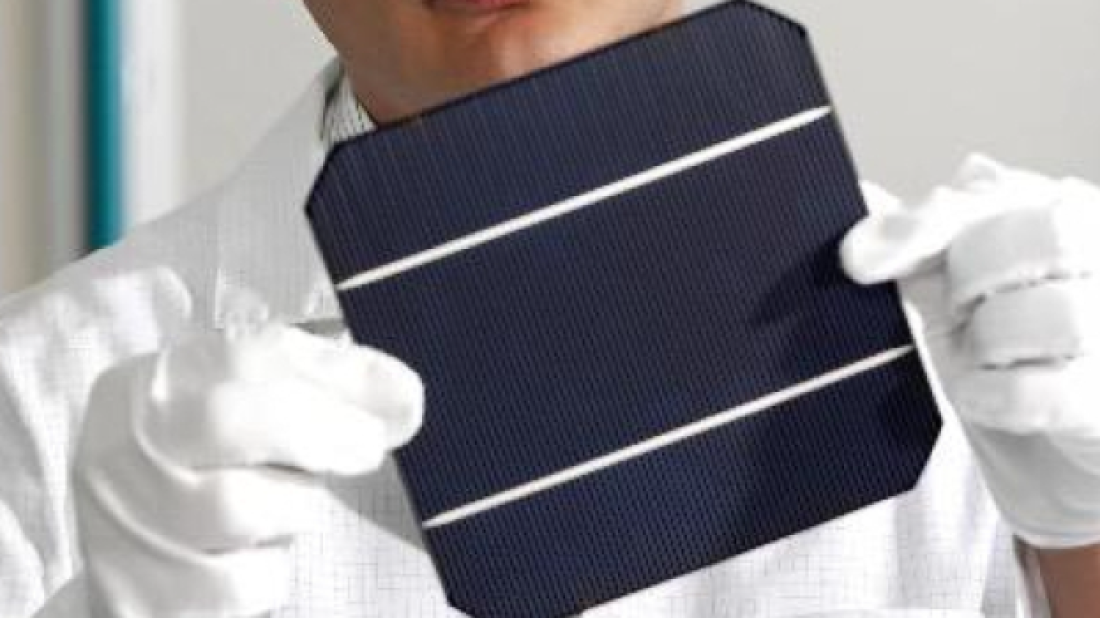
A team led by Prof. Mingtai Wang at the Hefei Institutes of Physical Science has developed a breakthrough method to control the spacing of titanium dioxide nanorods without changing their size, significantly improving solar cell efficiency.
Researchers from the Chinese Academy of Sciences have devised a new way to grow titanium dioxide nanorod arrays (TiO₂-NA) with tunable density, allowing for better performance in solar energy applications without compromising nanorod dimensions.
Published in Small Methods, the study addresses a long-standing issue in nanomaterials engineering: the interdependence of nanorod size, length, and density. Traditionally, adjusting one parameter altered the others, limiting the effectiveness of devices such as solar cells and photocatalysts.
Prof. Mingtai Wang’s team overcame this by fine-tuning the hydrolysis stage during precursor film preparation, leading to smaller anatase nanoparticles that serve as uniform seeds for rutile-phase nanorod growth. This innovation allowed the researchers to control nanorod density independently of size.
Using the new TiO₂-NA films in CuInS₂ solar cells, the team achieved power conversion efficiencies exceeding 10%, peaking at 10.44%. Their Volume-Surface-Density model further explained how nanorod spacing impacts light absorption, charge separation, and carrier transport.
This advancement opens new possibilities in clean energy and optoelectronics, offering precise nanostructure control for next-generation solar technologies.

U.S. President Donald Trump announced the reimposition of a U.S. naval blockade on all Iranian ports and warned that power plants and bridges could be targeted next week unless Tehran returns to negotiations.
The United States carried out a third consecutive night of airstrikes against Iran, targeting military capabilities around the Strait of Hormuz as Donald Trump announced the reinstatement of a blockade on Iranian shipping and proposed a 20% fee on cargo passing through the strategic waterway.
The U.S. military announced that it has completed a new wave of strikes against Iranian military targets under U.S. President Donald Trump's orders. The operation targeted command centres, air defence systems, missile and drone facilities, and coastal surveillance sites across multiple locations.
The death toll from the fire at a live music pub in Bangkok has climbed to 32 after two more victims died from their injuries, according to Thailand's Police Hospital.
Ukraine and Russia exchanged fresh attacks on Tuesday, with Kyiv targeting shipping and energy infrastructure inside Russia while Moscow launched another large-scale missile and drone assault on Ukrainian cities.
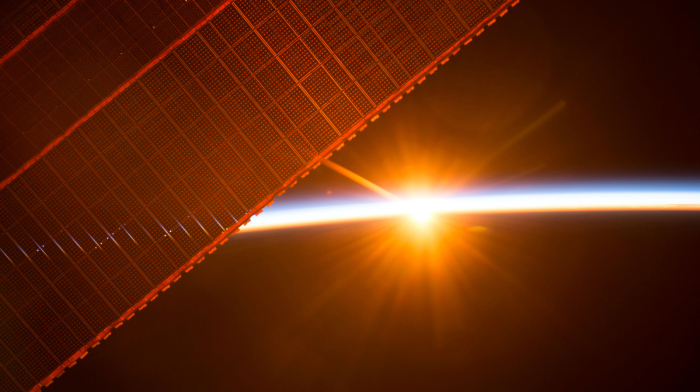
A Russian Soyuz spacecraft carrying two Russian cosmonauts and one U.S. astronaut successfully docked with the International Space Station (ISS) on Tuesday, highlighting continued U.S.-Russian cooperation in space despite wider geopolitical tensions.
Space exploration just got sweeter as scientists say they have discovered a type of sugar called erythrulose in outer space.
Pakistan is set to become a founding member of the China-led World Artificial Intelligence Cooperation Organisation (WAICO), with Deputy Prime Minister and Foreign Minister Ishaq Dar travelling to Shanghai on Thursday to sign the founding agreement during a two-day visit.
Beijing is using Shanghai’s artificial intelligence (AI) forum to promote its governance agenda and showcase domestic alternatives to U.S. technology.
Australia will establish an Office of AI to coordinate artificial intelligence standards and oversee major data centres as the government prepares new laws on their energy and water use, Prime Minister Anthony Albanese said on Wednesday (15 July).
You can download the AnewZ application from Play Store and the App Store.
What is your opinion on this topic?
Leave the first comment