Meta is launching its first-ever AI developer conference, LlamaCon, on Tuesday, aiming to re-engage the developer community and spotlight the company’s Llama family of open AI models.
The conference begins at 10:15 a.m. PDT with a keynote featuring Meta Chief Product Officer Chris Cox, VP of AI Manohar Paluri, and generative AI researcher Angela Fan. The sessions will be available on the Meta for Developers Facebook Page and the Meta Developers YouTube channel, providing global access to the announcements and discussions.
At 10:45 a.m., Meta CEO Mark Zuckerberg will take the stage alongside Databricks Co-founder and CEO Ali Ghodsi in a fireside chat to discuss open-source AI and real-world AI applications. Meta recently became a strategic advisor to Databricks, strengthening its ties to the data-focused AI ecosystem.
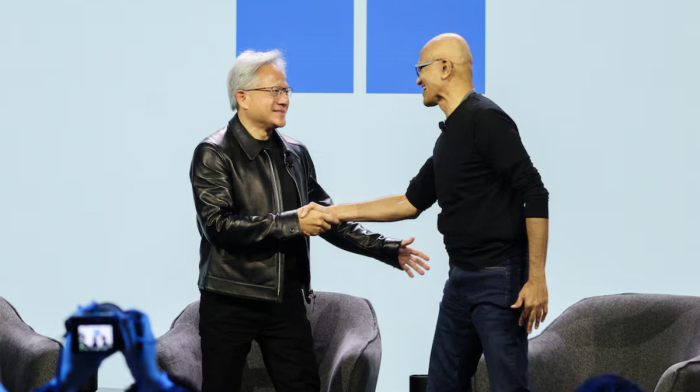
Later, at 4:00 p.m., Zuckerberg will join Microsoft CEO Satya Nadella for a high-profile conversation on trends in artificial intelligence and how developers can remain competitive amid rapid innovation. The session is expected to provide strategic insights into AI development and deployment from two of the industry’s most influential figures.
A Critical Moment for Meta’s AI Strategy
LlamaCon comes at a crucial time for Meta, following the release of its Llama 4 models. While positioned as a next-generation advancement in open-source AI, Llama 4 failed to surpass leading benchmarks set by rivals such as OpenAI, Anthropic, DeepSeek, and Google.
Compounding the challenge, Meta was recently criticized for allegedly using a selectively optimized version of its Llama 4 Maverick model to outperform competitors on LM Arena, a popular crowdsourced AI evaluation platform. Developers were frustrated when the high-scoring variant was not the same as the publicly released model, raising questions about transparency and reproducibility.
The stakes at LlamaCon are high, with Meta hoping to rebuild trust among developers and reinforce its commitment to open AI innovation. The event's agenda—with technical deep dives, executive keynotes, and developer outreach—appears designed to do just that.
Whether the company can regain momentum and reaffirm its place in the open-source AI community may depend on what is unveiled today.















What is your opinion on this topic?
Leave the first comment