Kazakhstan has launched Space Days 2025, a landmark international forum in Almaty that gathers astronauts, scientists, policymakers, and investors from across the globe to debate the future of space technology, education, and cooperation.
Almaty, Kazakhstan – The future of space exploration is being written not only in Houston or Paris, but in the steppes of Central Asia. With the launch of Space Days Kazakhstan 2025, Almaty has become the temporary capital of the global space community — a gathering where astronauts, scientists, entrepreneurs, and policymakers sit side by side to imagine humanity’s next steps beyond Earth.
A meeting of minds
The forum opened with a blend of technical depth and symbolic resonance. Workshops on satellite modelling, geospatial data, and project management attracted students and young engineers, while a photo exhibition honoured Talgat Musabayev, Kazakhstan’s pioneering cosmonaut. In packed lecture halls, specialists like Dr. Muhammad Sharif of ICESCO and Kozhayev Kaiyrzhan of Kazakhstan’s national space company spoke not just of technologies, but of responsibility — how satellites and space data can be harnessed for education, disaster response, and sustainable development.
For many delegates, the event is as much about building bridges as it is about hardware. A roundtable on space investment drew bankers and innovators from Kazakhstan, the UAE, and Europe, underlining that space today is no longer the sole preserve of states.
“We need partnerships that cross both borders and industries,” said one speaker, “because no single country can tackle the challenges of space alone.”
Voices from orbit
If the first day belonged to scientists and entrepreneurs, the second day belonged to those who have actually left the planet. The panel “Space Unites: A View from Orbit” brought together legends like Toktar Aubakirov and Aidyn Aimbetov from Kazakhstan, Russia’s Anton Shkaplerov and Sergey Volkov, and Romania’s Dumitru-Dorin Prunariu. Their stories — of launches, risks, and the fragile beauty of Earth seen from orbit — reminded the audience why the space dream continues to inspire new generations.
“We may fly under different flags,” said Prunariu, “but in orbit there are no borders. Space is the most powerful reminder that cooperation is not optional — it is survival.”
Technology and ambition
Kazakhstan used the forum not only to listen but to show ambition. Panels on satellite manufacturing, communications, and navigation featured heavyweights such as Peter Fossel of HydroSat, Dr. Sunghee Lee of Contec, and Vugar Bayramov of Azercosmos. Much of the discussion circled around how quickly the industry is shifting — from state-led missions to agile private ventures, from bulky satellites to nimble constellations, and from exploration for prestige to applications that touch daily life.
Kazakhstan, once best known for Baikonur, now wants to brand itself as a hub for 21st-century space partnerships. Proposals for a new international spaceport and an “astro-hub” at the Assy-Turgen Observatory signal that the country sees its future not only as a launchpad for others, but as a partner in research, data, and innovation.
Beyond the conference hall
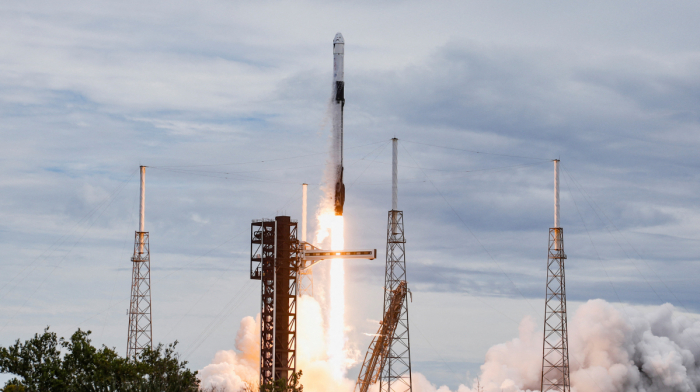
Unlike many global forums, Space Days Kazakhstan doesn’t end in lecture theatres. Delegates will travel to the Assy Plateau for a hands-on visit to one of Central Asia’s most advanced observatories. And at Baikonur, participants will witness a Soyuz rocket roar into the night sky — a reminder of Kazakhstan’s unique place in space history and its ongoing role in shaping what comes next.
A bridge between worlds
For organisers, the symbolism is clear: Kazakhstan is positioning itself as a bridge — between East and West, between tradition and innovation, between those who remember Gagarin’s launch and those who dream of Mars.
“Space knows no boundaries,” one keynote speaker told the audience. “And neither should cooperation.”
As the conversations in Almaty unfold, one thing is certain: Kazakhstan is no longer just a stage for others’ missions. It is writing itself into the story of space exploration, not at the margins, but at the centre of global dialogue.















What is your opinion on this topic?
Leave the first comment