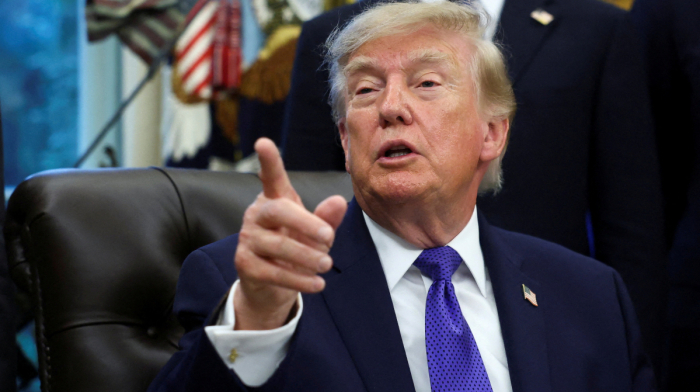
U.S. President Donald Trump has imposed new tariffs on UK and EU imports, warning foreign “cheaters” as he promises to restore American jobs and economic dominance.
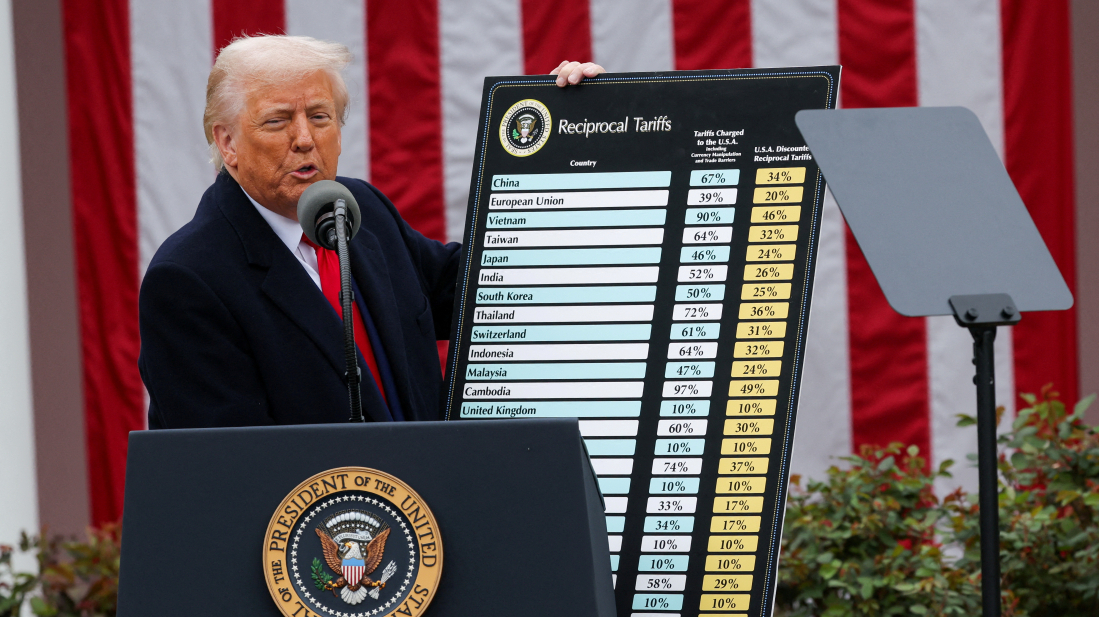
President Donald Trump has launched a new trade offensive, unveiling reciprocal tariffs on key trading partners including the United Kingdom and the European Union. Speaking at the White House during an event titled “Make America Wealthy Again,” Trump declared the day as America’s “Liberation Day.”
“This is Liberation Day,” he told a cheering crowd, accusing foreign governments of rigging global trade rules. “Our country has been looted, pillaged, raped, and plundered.”
Trump claimed the new levies would return “trillions” of dollars to the U.S. economy, offer relief to taxpayers, and bring factories and jobs back home.
UK slapped with 10% import tariff
The first tariff to take effect is a 25% duty on all car imports, starting from midnight Eastern Time (5am UK time Thursday). A separate 10% tariff was confirmed on all other UK imports, possibly in response to Britain’s 20% VAT rate on foreign goods.
The European Union will face an even steeper 20% tariff on its non-auto exports, triggering promises of retaliation from Brussels. By contrast, the UK government has said it will not respond with “knee-jerk” tariffs, according to No.10 sources.
Trade talks between London and Washington are still ongoing. The prime minister insists “rapid progress” is being made and remains committed to dialogue.
UK car industry bracing for impact
The UK’s car manufacturing sector is expected to suffer the brunt of the measures. A study by the Institute for Public Policy Research (IPPR) warns that over 25,000 jobs could be at risk if tariffs persist.
Tariffs on steel and aluminium remain in force, compounding pressure on British exporters. UK businesses are also facing uncertainty about which goods will be targeted next, as the White House’s full tariff list is yet to be released.
Northern Ireland exposed
The situation is especially sensitive in Northern Ireland, where post-Brexit trade rules tie imports to EU regulatory frameworks. If the EU retaliates against U.S. goods, it could affect U.S. shipments entering Northern Ireland — potentially creating an unexpected trade chokepoint.
Economic risk builds
Markets have responded with unease. Trump’s tariffs come at a time of global fragility, threatening to unwind trade arrangements in place since 1947. Analysts warn of rising prices, disrupted supply chains, and slower growth.
According to David Miles, a member of the Office for Budget Responsibility, if US tariffs on the UK remain at 20–25% for five years, it would “knock out all the headroom the government currently has.” That would mean renewed spending cuts or tax increases, especially as Chancellor Rachel Reeves had only just restored limited fiscal space in the recent spring statement.



















What is your opinion on this topic?
Leave the first comment