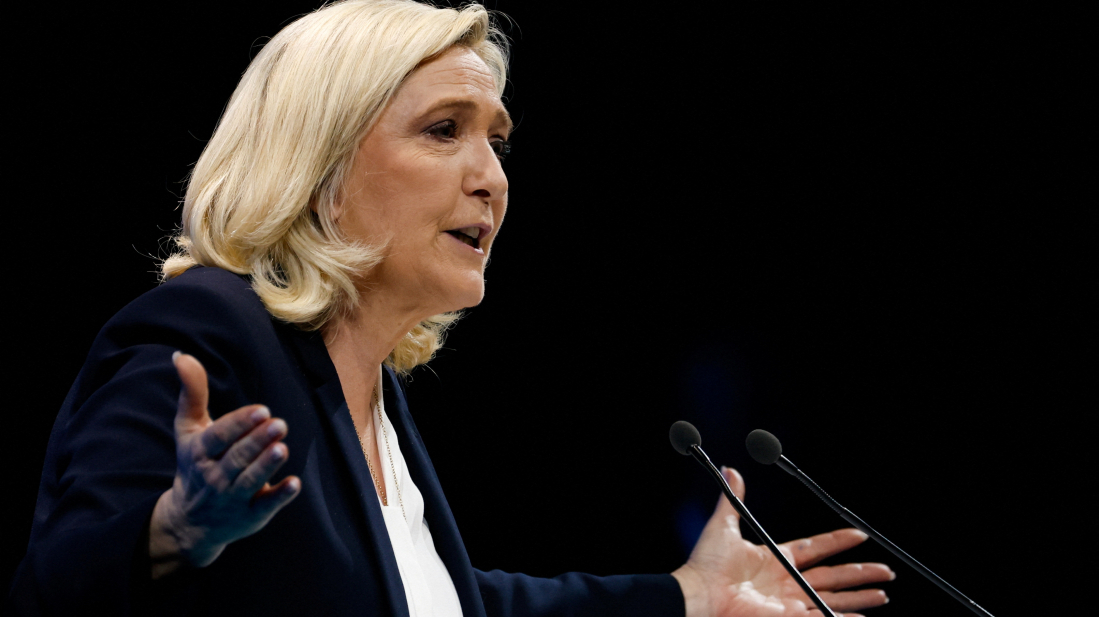
AnewZ provides an examination of Marine Le Pen, the leader of France's far-right National Rally party, and explores her ascent in French politics, her controversial policy positions, and the recent legal challenges she faces.
Marine Le Pen, born Marion Anne Perrine Le Pen on August 5, 1968, in Neuilly-sur-Seine, France, is a prominent French politician known for her leadership of the far-right National Rally (formerly National Front) party.
She succeeded her father, Jean-Marie Le Pen, as the party leader in 2011 and held the position until 2022.
Le Pen has been a significant figure in French politics, running for the presidency in 2012, 2017, and 2022.
Despite not winning, she has consistently garnered substantial support, reflecting her influence and the growing appeal of far-right ideologies in France. In the 2022 presidential election, she captured over 40% of the vote, the highest ever for a National Rally candidate.
Her political career has been marked by controversy, including investigations by the European Anti-Fraud Office for misusing funds during her tenure as a Member of the European Parliament. Despite these challenges, Le Pen has remained a steadfast advocate for her party's nationalist and anti-immigration policies.
Le Pen's leadership has seen the National Rally evolve, distancing itself from some of the more extreme positions held by her father, while still maintaining a strong stance on issues like immigration and national sovereignty.
Her recent activities include visits to Chad and an invitation from the Israeli government, indicating her ongoing influence and the strategic moves to expand her political reach.
Recent Legal Troubles
Marine Le Pen's political journey took a dramatic turn recently when she was convicted of embezzlement by a French court. The trial, which began in November 2024, culminated in a verdict on March 31, 2025, finding Le Pen guilty of misusing European Union funds to pay party staff between 2004 and 2016.
The court ruled that Le Pen and 24 other figures from her National Rally party had diverted more than 4 million euros of European Parliament funds, violating EU regulations. The judge stated that the funds were not used for legitimate parliamentary purposes but were instead part of a scheme to reduce the party's costs.
As a result, Le Pen was handed a five-year ban from public office, effectively barring her from running in the 2027 presidential race unless she successfully appeals the decision. Additionally, she received a four-year prison sentence, with two years suspended, and a fine of €100,000.
This conviction marks a significant setback for Le Pen, who has been a front-runner in opinion polls for the 2027 presidential election.




















What is your opinion on this topic?
Leave the first comment