The Kremlin said on Monday that someone would have to force Volodymyr Zelenskyy to make peace and that the Ukrainian leader's public clash with U.S. President Donald Trump had shown just how hard it would be to find a way to end the war.
Trump and Vice President JD Vance clashed with Zelenskyy in the Oval Office on Friday. Trump accused Zelenskyy of disrespecting the United States, said he was losing the war and risked triggering World War Three.
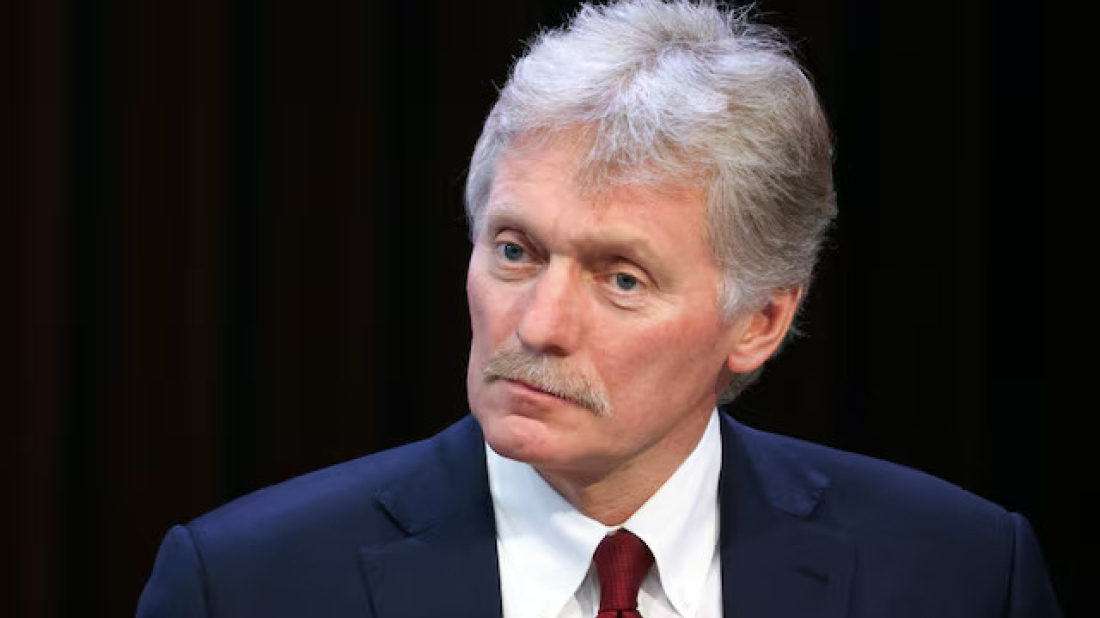
"What happened at the White House on Friday, of course, demonstrated how difficult it will be to reach a settlement trajectory around Ukraine," Kremlin spokesman Dmitry Peskov said. "The Kyiv regime and Zelenskyy do not want peace. They want the war to continue."
"It is very important that someone forces Zelenskyy himself to change his position," Peskov said. "Someone has to make Zelenskyy want peace. If the Europeans can do it, they should be honoured and praised."
Russian President Vladimir Putin sent tens of thousands of troops into Ukraine in 2022, triggering the biggest confrontation between Moscow and the West since the depths of the Cold War.
Conflict in and over Ukraine had been building for years before his decision. Russia seized Ukraine's Crimea peninsula in 2014 after a pro-Moscow president was ousted amid mass street protests in Kyiv. Russian-backed separatists then began fighting Ukraine's armed forces in the country's eastern Donbas region.
Peskov said Putin was familiar with the "unprecedented event" in the Oval Office, adding that it had demonstrated at the very least Zelenskyy's lack of diplomatic skills.
Zelenskyy said on Sunday he believed he could salvage his relationship with Trump but that Ukraine would not concede any territory to Russia as part of a peace deal.
Russia currently controls just under a fifth of Ukraine - or about 113,000 square km - while Ukraine has seized about 450 square km of Russia in an incursion into neighbouring Kursk province, according to open source maps of the war and Russian estimates.
WESTERN 'FRAGMENTATION'
After the clash in the Oval Office, European leaders leapt to Zelenskyy's defence. At a summit in London on Sunday, British Prime Minister Keir Starmer said they had agreed to draw up a Ukraine peace plan to present to the United States.
Starmer also announced a new British 1.6 billion pound ($2 billion) deal that would allow Ukraine to purchase 5,000 air-defence missiles.
Responding to the summit, the Kremlin said the London summit was an attempt to continue the war, not to seek peace, but also noted the divisions between Europe and the United States.
"We see that... a fragmentation of the collective West has begun," Peskov said.
"There remains a group of countries that rather constitutes the party of war, which declares its readiness to further back Ukraine in terms of supporting the war and ensuring the continuation of hostilities."
The West and Ukraine describe Russia's 2022 invasion as an imperial-style land grab.
Putin casts the conflict as part of an existential battle with a declining and decadent West which he says humiliated Russia after the Berlin Wall fell in 1989 by enlarging the NATO military alliance and encroaching on what he considers Moscow's sphere of influence, including Ukraine.
Peskov said Russia would continue its dialogue with Washington on bilateral ties and would press on with what Moscow calls its "special military operation" in Ukraine.
Asked about Trump's remarks that he had spoken to Putin on "numerous occasions", Peskov said: "There have been no contacts that should have been made public" beyond a Feb. 12 phone call.










What is your opinion on this topic?
Leave the first comment