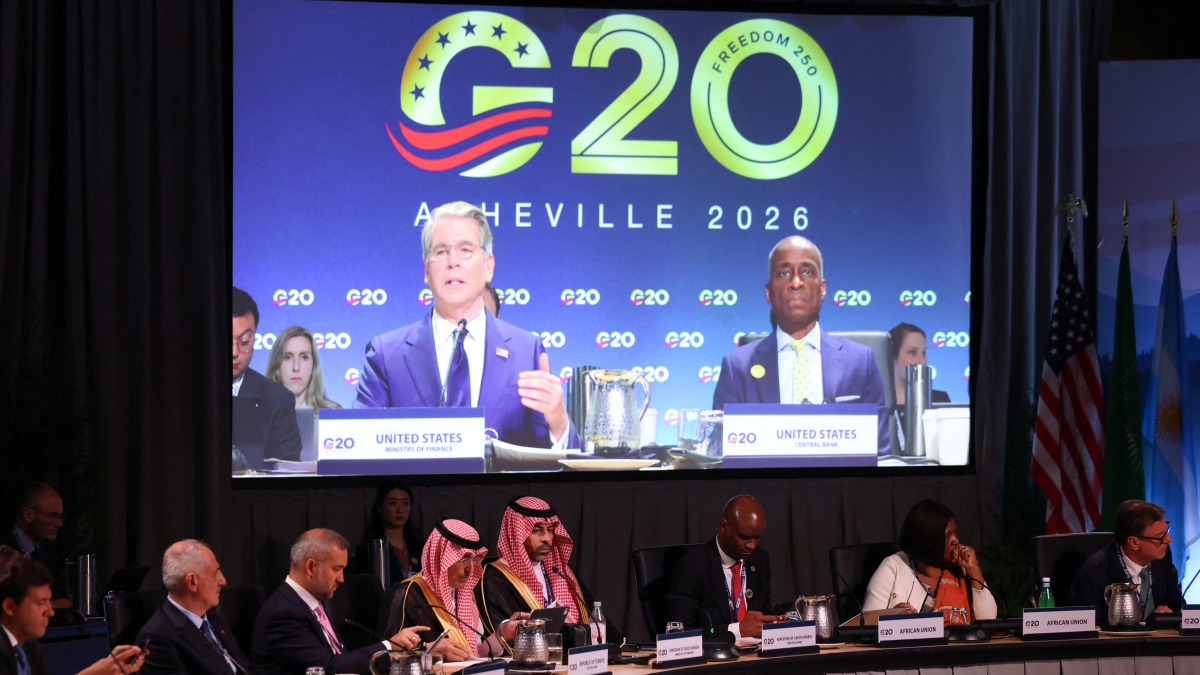
From mounting concerns over record global debt levels to growing tensions over China's trade surplus and Russia's return to the negotiating table, this year's G20 finance meeting in Asheville, North Carolina, highlighted the challenges confronting the global economy.
Against a backdrop of market volatility, rising energy prices and geopolitical uncertainty, finance ministers and central bankers debated how to sustain growth while addressing widening trade imbalances, fiscal pressures and shifting economic power dynamics.
Here are five key takeaways from the gathering.
1) Growth was priority despite debt concerns
With global debt approaching record highs and bond yields rising across major economies, many participants agreed that boosting growth is becoming increasingly important.
U.S. Treasury Secretary Scott Bessent argued that stronger economic expansion, rather than austerity alone, is the most realistic way for governments to manage growing debt burdens accumulated since the global financial crisis and the COVID-19 pandemic.
The discussion comes as investors increasingly question the sustainability of government borrowing in many advanced economies, pushing bond yields higher in countries ranging from the U.S. and Japan to Germany and Britain.
2) China's trade surplus was a major concern
One of the most contentious issues at the meeting was the growing focus on China's export-driven economic model.
The U.S. pressed G20 members to examine their trade relationships with Beijing and consider measures to address what Washington sees as harmful global imbalances. American officials argued that China's massive trade surplus is putting pressure on manufacturing sectors around the world while creating uneven economic conditions.
Several European officials echoed concerns about Chinese industrial subsidies, export policies and what they view as unfair trade advantages. However, finding consensus remains difficult. China has shown little willingness to accept criticism of its economic model, making agreement on a joint communique far from certain.
The debate highlighted widening divisions within the global economy over trade, competitiveness and industrial policy.
3) Russia's return divided participants
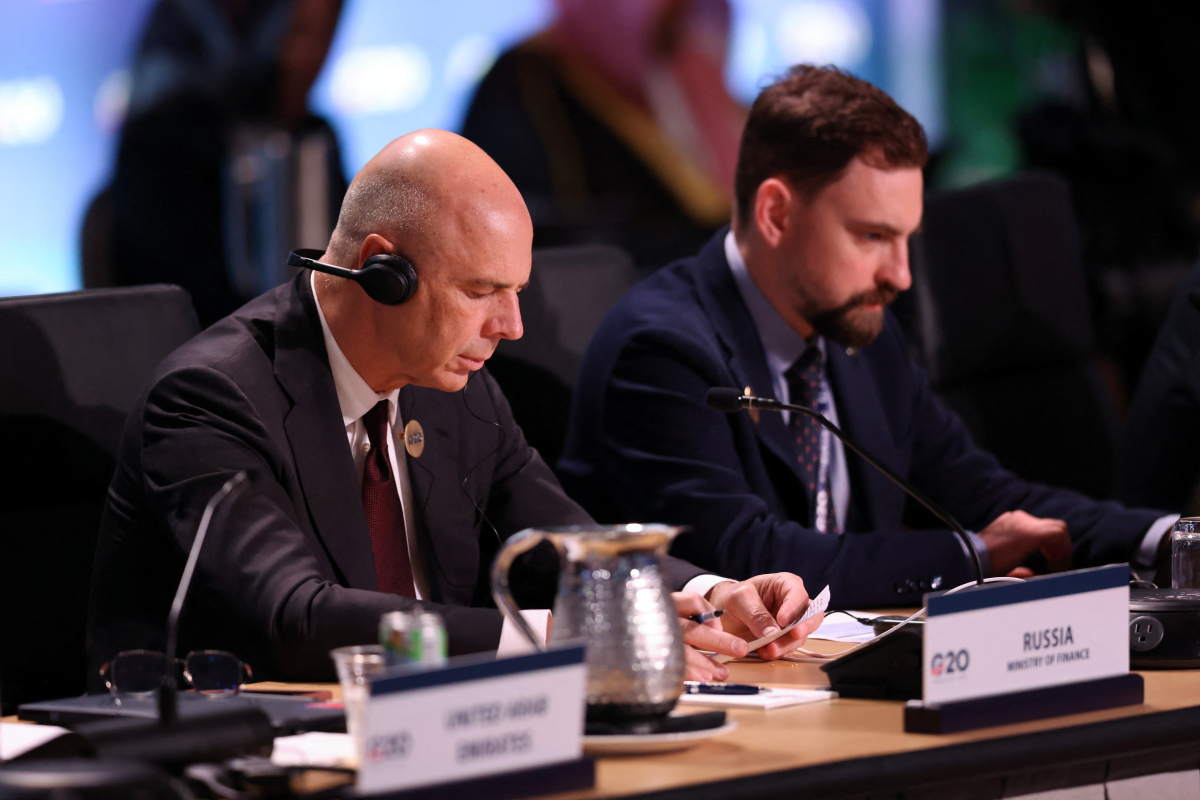
The appearance of Russian Finance Minister Anton Siluanov at the meeting became one of the gathering's most politically sensitive developments.
For many European delegates, Russia's presence was unwelcome given the continuing war in Ukraine. Several ministers openly criticised what they perceived as an attempt to normalise engagement with Moscow despite the conflict.
The issue became so contentious that European officials objected to appearing alongside Siluanov in the traditional G20 group photograph, which was eventually taken without the Russian minister.
While U.S. and Russian officials held talks on the sidelines, European governments stressed that sanctions pressure on Moscow would continue. The episode served as a reminder that geopolitical divisions continue to shape economic diplomacy.
4) Energy security remains a growing concern
The conflict involving Iran and ongoing disruption around the Strait of Hormuz cast a shadow over economic discussions.
Rising energy prices have renewed fears of inflation at a moment when many central banks are still trying to secure lasting price stability. The impact was visible in global financial markets, where bond yields climbed as investors reacted to concerns about higher energy costs and possible monetary tightening.
Washington also used the meeting to encourage partners to maintain pressure on Tehran and to discuss broader energy security issues. The combination of geopolitical instability and economic uncertainty reinforced concerns that energy markets could remain volatile in the months ahead.
5) AI is increasingly seen as a growth engine
Despite the challenges discussed in Asheville, there was also a notable sense of optimism around technology and investment.
Federal Reserve Chair Kevin Warsh argued that the world economy is entering a period of strong investment growth, driven largely by artificial intelligence and related technologies. He suggested that concerns about a long era of weak growth and stagnant investment are giving way to a new cycle of capital spending.
The U.S. delegation repeatedly highlighted AI infrastructure investment as an example of how innovation can support economic expansion, productivity and job creation.
Many policymakers view artificial intelligence as a potential driver of the next phase of global growth, although questions remain about how evenly the benefits will be distributed and how governments should regulate the technology.
The Asheville gathering demonstrated how closely economics and geopolitics have become intertwined.
While debt burdens, growth prospects and trade imbalances dominated formal discussions, disputes involving Russia, China, Iran and global supply chains repeatedly influenced the conversation.
The result was a summit that highlighted both the opportunities and the challenges facing the world economy.

















What is your opinion on this topic?
Leave the first comment