The AnewZ Opinion section provides a platform for independent voices to share expert perspectives on global and regional issues. The views expressed are solely those of the authors and do not represent the official position of AnewZ
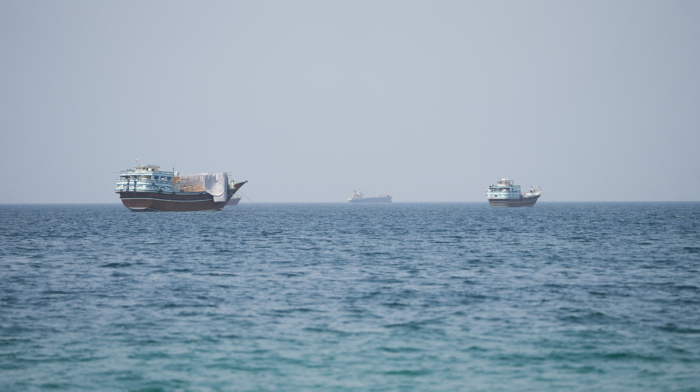
For months, efforts to secure the Red Sea have focused on what is happening in the water. Naval deployments have increased, governments have expanded maritime cooperation and shipping companies have adapted to persistent security threats.
Those measures are necessary, but they address only part of the problem. One of the greatest long-term challenges to Red Sea security lies not offshore, but on land, in Sudan. Tellingly, when Saudi Arabia launched a new multinational maritime defence coalition in late July, Sudan itself was one of the 14 founding signatories - a sign of how directly its war is now bound up with the region's maritime security question.
More than three years after the war began, Sudan is still viewed largely through the lens of humanitarian suffering. That is understandable. Millions have been displaced, thousands have lost their lives and the country's economy has been devastated.
Yet the conflict is doing more than fuelling one of Africa's worst humanitarian crises. It is reshaping the strategic environment of the Red Sea in ways that regional governments have already begun to recognise.
A coastline with regional consequences
Maritime security depends as much on stable coastlines as it does on capable navies. Sudan's position on the Red Sea has therefore become increasingly significant as the conflict has evolved.
Its 850-kilometre coastline occupies a critical stretch of the Red Sea's western shore. When fighting engulfed Khartoum, Port Sudan gradually assumed a role few anticipated. Government ministries relocated there, foreign diplomats set up operations in the city, and humanitarian agencies made it the principal gateway for relief supplies entering the country.
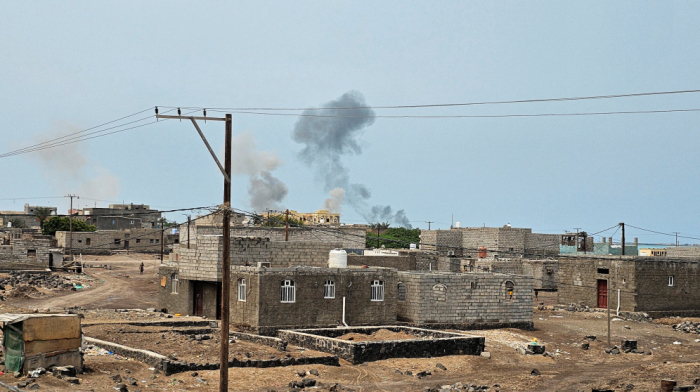
What was once Sudan's main commercial port has become the country's administrative and logistical centre of gravity - and a target in its own right: the RSF has struck facilities in Port Sudan directly.
That transformation has implications beyond Sudan. A prolonged conflict affecting one of the Red Sea's key coastal states inevitably changes how neighbouring governments, investors and security planners assess the region.
Regional priorities are shifting
Those changing calculations are becoming more visible, and increasingly concrete. Egypt increasingly views stability in Sudan as inseparable from its own national security, not least because a fractured Sudan complicates its long-running dispute with Ethiopia over the Nile. Saudi Arabia has continued diplomatic efforts to end the conflict while deepening its own footprint in Red Sea security, culminating in the coalition it now leads.
Other major powers along the corridor are positioned less formally, but no less consequentially. The United Arab Emirates once had a major stake on the Sudanese coast: a $6 billion agreement to build the Abu Amama port north of Port Sudan.
That deal was shelved in 2024 as the war made its terms untenable, leaving the project's future uncertain. Russia's ambitions run in the other direction. Khartoum and Moscow reached a final agreement in early 2025 on a Russian naval facility at Port Sudan capable of hosting up to 300 personnel and four warships, only for Sudan's government to freeze the plan later that year while the war remained unresolved.
Türkiye's stake is now among the most tangible. Ankara has broadened its defence relationship with Khartoum in recent years and continues to eye the old port town of Suakin as a potential long-term maritime foothold.
Sudan's future will ultimately be decided by Sudanese actors. Even so, each of these positions - pursued, stalled or reversed according to how the war unfolds - shows how thoroughly the conflict has become part of a wider regional security calculation rather than simply another internal crisis.
The missing link in current policy
International policy has not fully caught up with that reality. Red Sea security is still discussed primarily in terms of naval deployments, commercial shipping and freedom of navigation, while Sudan is treated separately, as a humanitarian emergency requiring aid or a political crisis requiring mediation. Increasingly, these are the same conversation, and treating them separately leaves policy addressing only half the problem.
Additional naval patrols may reduce immediate risks to shipping, but they cannot remove the uncertainty created by a prolonged conflict on one of the region's most strategically important coastlines. Businesses, insurers and investors weigh political stability as carefully as they weigh security at sea, and Sudan currently offers them neither.
Africa is likely to feel the consequences first - and hardest. Chad and South Sudan depend on transport corridors through Sudan and on access to Port Sudan for trade and humanitarian supplies.
Landlocked and already fragile, both countries would see those links disrupted long before the wider economic fallout reaches markets further afield. A serious disruption to the Port Sudan corridor would not simply slow trade for these countries. It would cut off some of the few routes they have left.
Looking beyond the humanitarian crisis
Ending the war must remain the immediate priority because millions of Sudanese continue to bear its devastating human cost. But stopping there leaves the picture incomplete.
The Red Sea is entering a period of profound strategic change. Governments are investing more resources in maritime security, businesses are reassessing commercial risk and regional powers are recalibrating their interests in real time. Those efforts will always have limits if one of the waterway's most strategically located coastal states remains trapped in conflict.
A more secure Red Sea will take more than stronger patrols and closer maritime pacts between outside powers. It will also take a Sudan that can rebuild its own institutions, hold its coastline and stand again as a reliable partner along one of the world's most importan














What is your opinion on this topic?
Leave the first comment