live U.S., Iran closer to deal, timing remains unclear
U.S. and Pakistani leaders forecast a Sunday signing of a long-elusive framework agreement to end fighting between the United States and Iran, as Reut...
Kazakhstan’s Energy Minister Almasadam Satkaliev led a delegation to South Korea to advance collaboration in nuclear energy, renewables, and oil and gas. Meetings included top Korean firms, with plans for a nuclear plant consortium and a focus on energy security by 2035.
Between October 22 and 25, Kazakhstan’s Energy Minister Almasadam Satkaliev headed a delegation visiting South Korea, where they engaged in discussions with Korean energy leaders and government representatives.
Discussions focused on nuclear power collaboration, and further talks with South Korea's Minister of Trade, Industry, and Energy explored expanding partnerships in oil, gas, and renewables.
Satkaliev also met with key companies, including Doosan Enerbility, KHNP, KEPCO, KNOC, and Samsung C&T, to consider involving Korean firms in an international consortium for Kazakhstan's planned nuclear power plant. The final decision on this consortium is anticipated by 2025.
The visit concluded with a memorandum of understanding with Doosan Enerbility, outlining plans to assess establishing a local office in Astana. The company is also working on a 1000 MW gas turbine plant in Turkestan and auditing Kazakhstan's energy infrastructure with KEPCO KPS to enhance efficiency and lower emissions.
Following a national referendum supporting nuclear power, President Tokayev has advocated for an international consortium involving top companies like Russia’s Rosatom, South Korea’s KHNP, France’s EDF, and China’s CNNC. This project aims to boost Kazakhstan's energy security, with construction expected by Lake Balkhash and completion targeted for 2035.

Pakistan has warned that any attempt by India to block or significantly reduce river flows under the Indus Waters Treaty could have “far-reaching consequences”, after India's water minister said New Delhi was working to ensure that “not a single drop” of water reaches Pakistan in the coming years.
Armenia has every right to choose Europe. But Europe’s support for Armenia’s direction should not become automatic approval of its political process.
U.S. President Donald Trump has said a peace agreement with Iran is scheduled to be signed on Sunday in a post on social media, despite Tehran's Foreign Ministry spokesperson Esmaeil Baghaei saying no deal would be approved this weekend.
Japan’s birth rate and fertility levels have fallen to their lowest levels on record, highlighting the country’s worsening demographic crisis as fewer people marry and have children.
The global race to develop quantum computing is accelerating, with governments and technology firms investing heavily in what is expected to become a major new computing era.
Senior officials from Azerbaijan and Armenia held a working meeting in Dilijan, Armenia, on 14 June to discuss issues related to the peace agenda between the two countries.
Tajikistan has strengthened its position as one of Central Asia’s fastest-growing economies. According to the European Bank for Reconstruction and Development (EBRD), the trend is supported by investment activity, industrial expansion and large-scale infrastructure projects.
The International Monetary Fund (IMF) has urged Georgia to implement reforms to tackle youth unemployment. Nearly 30 per cent of people aged 15-24 are without a job in the country, according to World Bank data.
Kazakhstan’s ruling Amanat party has announced it will merge with a party launched only a month ago by allies of the country’s President Kassym-Jomart Tokayev.
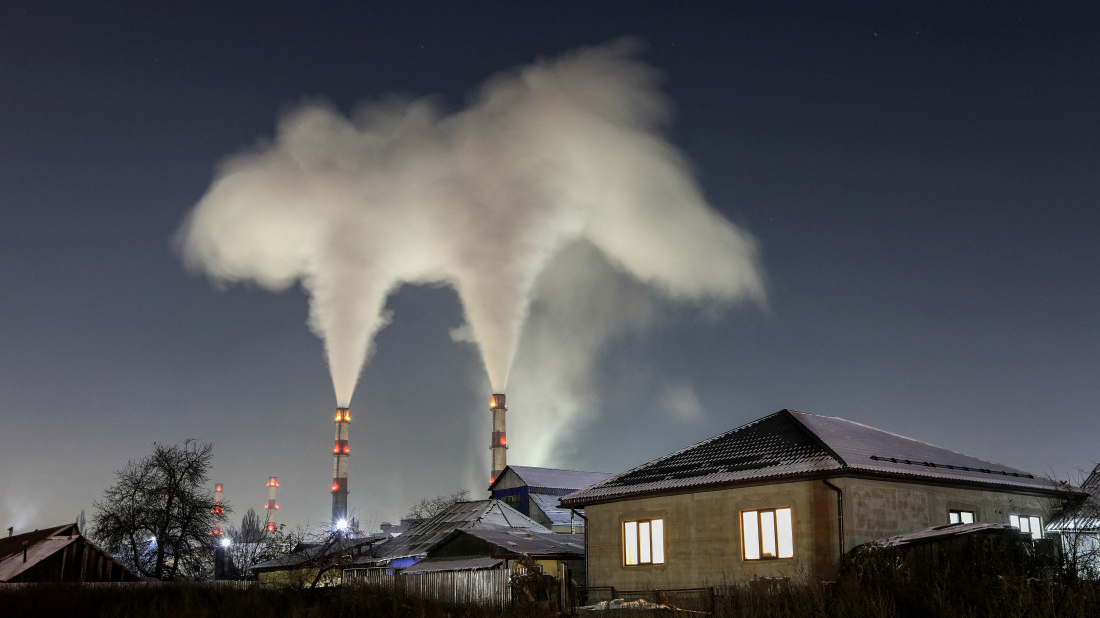
An Indian pollution regulator has accused a Tata components factory supplying Apple iPhones of contaminating groundwater near farmland with wastewater, raising the prospect of a forced shutdown unless the company provides a satisfactory response.
You can download the AnewZ application from Play Store and the App Store.
What is your opinion on this topic?
Leave the first comment