The U.S. government has shutdown on Wednesday as a vote to extend funding past a midnight deadline failed in the U.S. Senate and President Donald Trump threatened to extend his purge of the federal workforce.
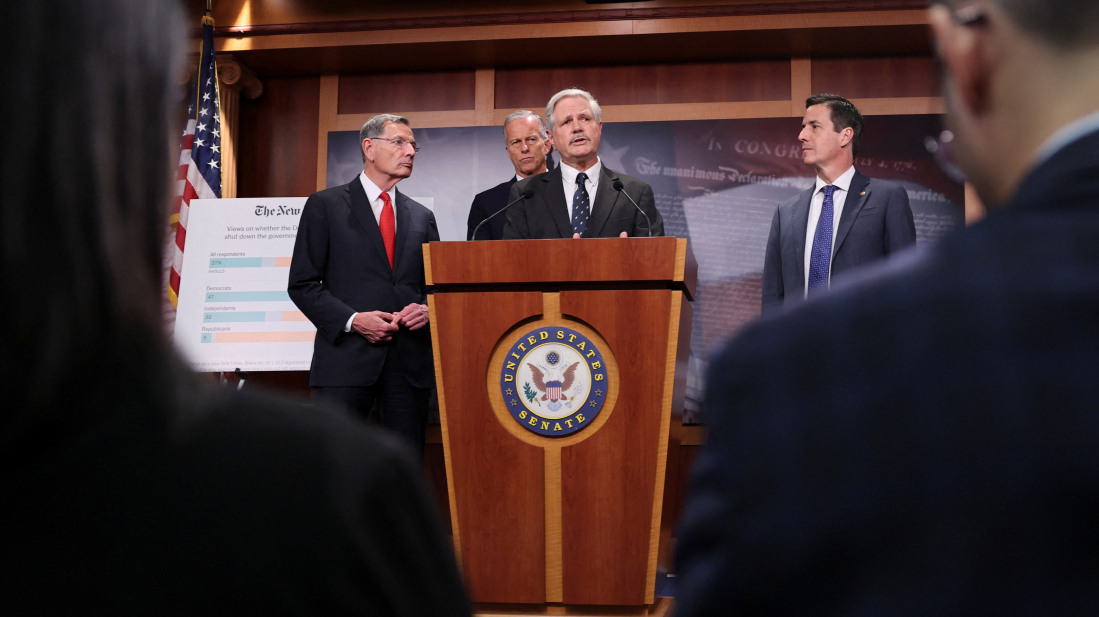
The 55-to-45 vote in the Senate, falling short of the 60 votes needed to advance the legislation, all but ensured that U.S. government agencies will have to discontinue all but "essential" activities such as law enforcement starting on Wednesday, potentially disrupting everything from air travel to the monthly jobs report.
A last-minute fix seemed all but impossible, as Republicans and Democrats have shown no sign that they can bridge their divides. Any agreement also would have to be approved by the Republican-controlled House of Representatives, which is not in session.
Senate Republican Leader John Thune said the chamber would vote again on the House-passed measure on Wednesday.
U.S. budget stand-offs have become routine as the nation's politics have grown more dysfunctional. This time around, Democrats have insisted that any spending bill must include additional healthcare subsidies, while Republicans have insisted that the two issues should be dealt with separately.
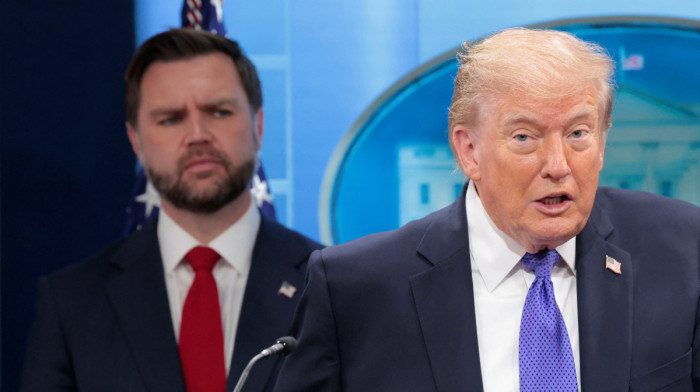
Trump has added fuel to the fire. Ahead of Tuesday's vote, he threatened to cancel programmes favoured by Democrats and fire more federal workers if the government shuts down.
"We'll be laying off a lot of people," he told reporters. "They're going to be Democrats."
More than 150,000 workers are due to leave this week
Such layoffs would lead to a further brain drain for the government. More than 150,000 workers are due to leave federal payrolls this week after taking a buyout, the biggest exodus in 80 years. Tens of thousands more have already been fired this year. Trump has also refused to spend billions of dollars approved by Congress, prompting some Democrats to question why they should vote for any spending bills at all.
In memos to soon-to-be-furloughed employees, several agencies, including the Justice Department and the Social Security Administration, blamed Democrats for the impending shutdown, violating long-standing norms that aim to shield government workers from partisan pressure.
Senator Catherine Cortez Masto of Nevada, who was one of three Democrats to break with her party and vote for the Republican funding bill on Tuesday, said in a statement that the "costly shutdown" would "hand even more power to this reckless administration."
'Non essential' work to be halted
Agencies also issued detailed shutdown plans that would close offices conducting scientific research, customer service and other "nonessential" activities and send tens of thousands of workers home without pay. Military troops, border guards and others doing work deemed "essential" would stay on the job, but would not get paid until Congress resolves the standoff.
The government last shut down in 2018 and 2019, for 35 days, during Trump's first term, due to a dispute over immigration. That cost the U.S. economy $3 billion, or 0.02% of gross domestic product, according to the nonpartisan Congressional Budget Office.
At issue now is $1.7 trillion that funds agency operations, which amounts to roughly one-quarter of the government's total $7 trillion budget. Much of the remainder goes to health and retirement programs and interest payments on the growing $37.5 trillion debt.
Airlines warned that a shutdown could slow flights, while the Labor Department said it would not issue its monthly unemployment report, a closely watched barometer of economic health. The Small Business Administration said it would stop issuing loans, and the Environmental Protection Agency said it would suspend some pollution-cleanup efforts.
Two labour unions representing federal employees filed a lawsuit to block agencies from enacting mass layoffs. Federal appeals courts considering similar lawsuits have allowed Trump to proceed with his firings while the cases play out.
Next Steps?
With no sign of compromise on Capitol Hill, it was unclear how long a shutdown would play out. Congress has shut down the government 15 times since 1981, with most lasting a day or two. The most recent, during Trump's first term, was also the longest.
This time, health care is the sticking point. Democrats say any spending bill must also make permanent Affordable Care Act subsidies that are due to expire at the end of the year. Without a fix, healthcare costs for 24 million Americans will rise sharply, with a disproportionate impact in Republican-controlled states like Florida and Texas that have refused to enact other aspects of the law that provide coverage to low-income people. Democrats have also sought to ensure that Trump will not be able to undo those changes if they are signed into law.
"Our guarantee is to the American people that we're going to fight as hard as we can for their healthcare, plain and simple," Senate Democratic Leader Chuck Schumer said after the vote.
Republicans say they are open to a fix, but accuse Democrats of holding the budget hostage to satisfy the demands of their base voters ahead of the 2026 midterm elections, when control of Congress will be at stake.
"The far left's determination to oppose everything President Trump has said or done is not a good reason to subject the American people to the pain of a government shutdown," Thune said.
Democrats said they believed they were making headway with Trump after a White House meeting on Monday. But hours later, the president posted a deep-fake video showing manipulated images of Democratic leaders that drew on stereotyped images of Mexicans.
















What is your opinion on this topic?
Leave the first comment