Uzbekistan summoned Iran’s ambassador following claims by several Iranian diplomatic missions that the historical and architectural heritage of Samarkand belongs to Persian or Iranian-Islamic civilisation, Tashkent's Foreign Ministry said.
Mohammed Ali Eskandar, Iranian Ambassador to Uzbekistan, was handed a note protesting about the publication of material on X accounts of several Iranian diplomatic missions interpreting Samarkand’s history and cultural heritage for political purposes, the Ministry said.
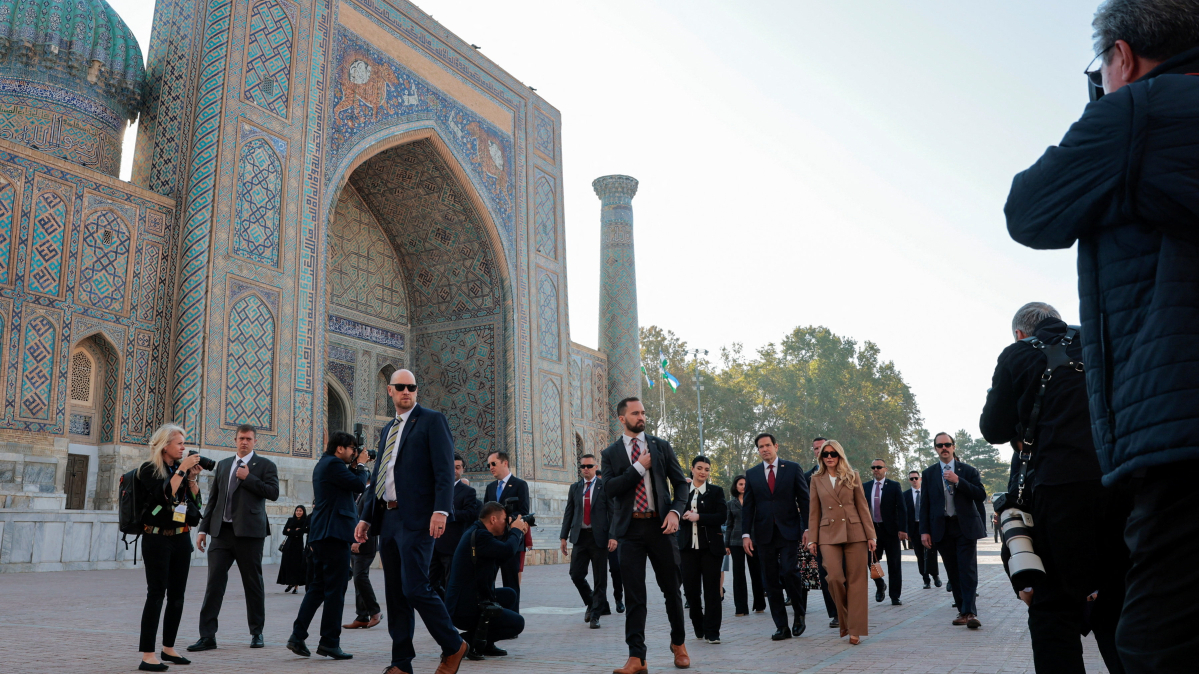
The rebuke follows a number of remarks made by Iranian diplomatic missions about the U.S. Secretary of State Marco Rubio’s visit to Samarkand earlier in October (19 October), where Rubio highlighted the city’s historical significance as a centre for trade.
What did the posts say?
“Those arches are a hallmark of Iranian-Islamic civilization, the very heritage you seek to annihilate,” the Iranian Embassy in Zimbabwe wrote on X on 20 October in a post with a video of Rubio in front of Samarkand’s Registan Square.
“You had the privilege of travelling the world and experiencing the rich culture and ancient heritage of Persia,” the Iranian Embassy in South Africa said in a post addressed to Rubio on 21 October. An image of Rubio in the Tilakari Madrasa in Samarkand was attached to the post.
Iran’s embassy in Bulgaria said Rubio attacked Iranian civilisation but posed in Samarkand “with Persian heritage standing right in front of him,” in another post on X dated 20 October.
The Iranian embassy in Armenia also said that the location where Rubio was standing in Samarkand formed part of Persian civilization and architecture in a post on X, Uzbek news agency Daryo reported.
Uzbekistan’s Foreign Ministry said it had demanded that Iran remove the posts from the social media pages of its diplomatic missions during the meeting with Eskandar on 23 October.
The post appears to have since been deleted from the X page of the Iranian Embassy in Armenia, with the hyperlink to it included on the Daryo website not working on 25 October.
However, the posts on the X pages of the embassies of Bulgaria, South Africa and Zimbabwe remained as of 25 October.
Uzbekistan says Samarkand has a rich history
Uzbekistan’s Foreign Ministry added that the heritage of Samarkand and other cities such as Bukhara and Khiva had a rich and multifaceted history, in a statement.
“The historical and cultural image of Samarkand reflects the centuries-old history, statehood traditions and cultural development of the Uzbek people,” it added.
Samarkand was the centre of the ancient Sogdian civilisation, which served as the commercial and cultural heart of the Silk Road from the 6th century BCE to the 11th Century CE.
Turkic and Turko-Mongol dynasties later ruled it, although its culture and literary language remained Persian.
In 1924, Soviet national delimitation placed the Samarkand region inside the newly created Uzbek SSR.
Some Tajik commentators say this was an arbitrary decision, as Samarkand and Bukhara had Persian-speaking majorities. Today Uzbek is the official language, and a significant part of the city’s population speaks Tajik.
Read more from Uzbekistan:













What is your opinion on this topic?
Leave the first comment