



20:20 CET
Politics
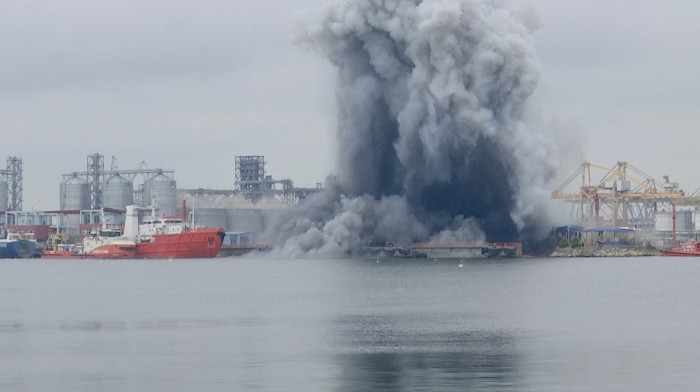
Three ships struck by drones in Black Sea near Romanian shipping canal
Drones have struck three commercial...


The AnewZ Opinion section provides a platform for independent voices to share expert perspectives on global and regional issues. The views expressed are solely those of the authors and do not represent the official position of AnewZ
The era of Aleksandar Vučić, who has effectively ruled Serbia since 2012, has come to an end. But why is the outcome of the election important on a global scale?
His Serbian Progressive Party has been defeated in the October 25 parliamentary elections by a student-led movement that rose to prominence through mass anti-government protests against corruption and demands for greater accountability.
Serbia is a relatively small European country. Nevertheless, it was the birthplace of the first “color revolution” on October 5, 2000. It is now the first country in the world where a student-led movement has defeated a powerful political party.
For the past 14 years, the Serbian opposition has never posed a serious threat to Vučić. After each election – and there have been many since 2012 – it has invariably emerged fragmented and weakened. When the collapse of the canopy at the entrance to the railway station in the city of Novi Sad on 1 November 2024, killed 16 people, it was Serbian students, rather than opposition parties, who launched mass anti-corruption protests.
After more than a year of demonstrations, street blockades, and labor strikes, Vučić resigned as Serbian president on September 27, aiming to run for prime minister. In the post-Soviet space, it was believed that Vučić could follow the Russian model by finding someone like Dmitry Medvedev, whom Vladimir Putin installed as president in a power-sharing arrangement in the late 2000s. But Serbia is not Russia, and Vucic is no “little Putin.”
The parliamentary elections in Serbia were genuinely competitive, and the outcome was far from certain. What surprised most analysts and political figures, both in Serbia and abroad, was Vučić’s admission of electoral defeat. Since he was often portrayed as a “dictator,” rumors were rife that he would never voluntarily relinquish power.
In reality, Vučić was never a dictator. Although his rule was widely described as a “hybrid regime,” Vučić was, in practice, a very soft autocrat. As such, he enjoyed strong support from all major powers with significant interests in the Balkans: the European Union, the United States, Russia, China, Türkiye, and Israel. More importantly, he consistently enjoyed the support of a significant portion of the Serbian population.
However, nearly 14 years in power – whether as deputy prime minister, prime minister, or president – is a long time by Serbian standards. The country, especially its youth, longed for changes. The student-led movement was seen as an alternative not only to Vučić, but also to Serbia’s political establishment as a whole.
The Student List is a heterogeneous movement, a classic big-tent coalition comprising liberals, nationalists, conservatives, ethnic minorities, and many other groups. It is not a traditional political party. As such, it is unlikely to govern as effectively as the Serbian Progressive Party, especially with an experienced political operator like Aleksandar Vučić, who has been active in politics since 1993, now leading the opposition.
More importantly, even if it wants to, the new government is unlikely to be in a position to make any fundamental changes, particularly in foreign policy. Surrounded by EU and NATO member states, Serbia has little room for political maneuvering. As an EU candidate since 2012, the country will almost certainly remain on the path toward EU membership, although that does not mean it will sever ties with other major powers.
The student-led movement has explicitly stated that it does not plan to impose sanctions on the Russian Federation. Also, the new Serbian authorities are likely to continue improving ties with the United States, especially if Republicans suffer a defeat in the midterm elections on 3 November. What could change, though, at least to some extent, are Serbia’s relations with Israel, given that some factions within the student-led movement take a pro-Palestinian stance.
To see Serbia’s future, it is enough to look at neighbouring Hungary. After Hungary’s longtime leader Viktor Orban lost the election on April 12, 2026, Budapest did not radically change its geopolitical course. Coincidentally or not, Hungarian Prime Minister Péter Magyar was the first foreign leader to congratulate Serbian students on their election victory.
That, however, does not mean that Vučić’s departure from power will not have significant implications not only for Serbia but also for the wider world. Julian Assange has once described Serbia as a place “where the future happens first.” If true, the model of organisation and political struggle developed by Serbian students could be adopted in many countries around the world.
Indeed, it was a youth movement that managed to defeat not only the ruling party, but also the old opposition. As a result, Serbia will enter a new political paradigm, and that is something that policy makers in many countries around the world should pay attention to.
If the future unfolds first in Serbia, then sooner or later it will reach other places as well. “With all its horrors and beauties,” as Julian Assange has stressed.

Drones have struck three commercial...
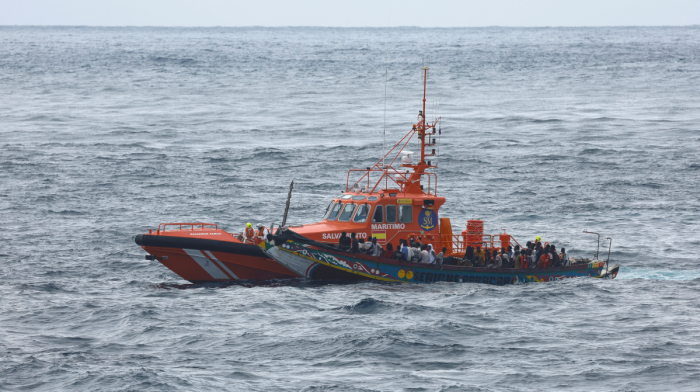
Almost 1,500 migrants arrived in Spain's Canary Islands on Saturday, the highest number in a single day sin...
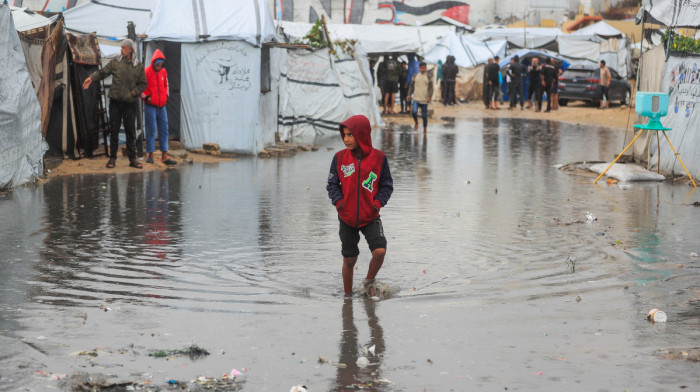
The World Health Organization (WHO) warned on Friday (13 November) of surging respiratory illnesses in Gaza, ...
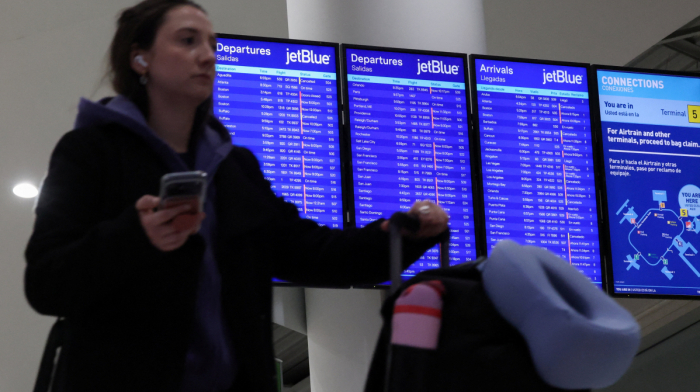
The U.S. Federal Aviation Administration lifted a nationwide ground stop on Friday (13 November) after a communications failure at air traffic control centres caused chaos at airports and triggered the longest nationwide shutdown since the 9/11 attacks in 2001.

More than 30 people have been taken to hospital after a cargo ship collided with a passenger cruise docked on the Mississippi River in New Orleans on Friday (13 November).
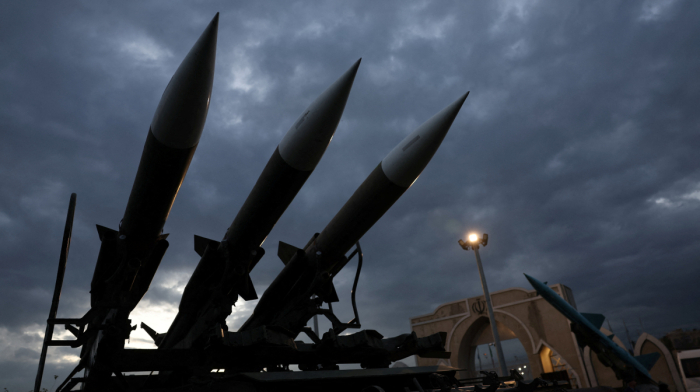
Saudi Arabia said it intercepted two Houthi ballistic missiles targeting Riyadh and three drones in its oil-rich Eastern Province on Sunday (15 November), as Iran's Revolutionary Guards claimed separate attacks on a U.S. military facility in Bahrain.
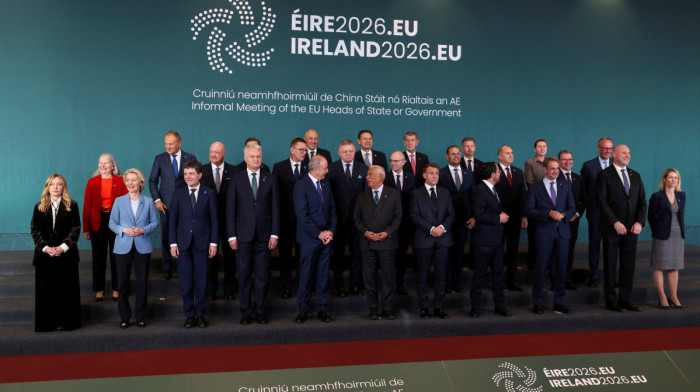
Europe will send a team of diplomats to Ukraine peace talks rather than a single envoy, EU leaders agreed on Friday at the end of a summit in Dublin.
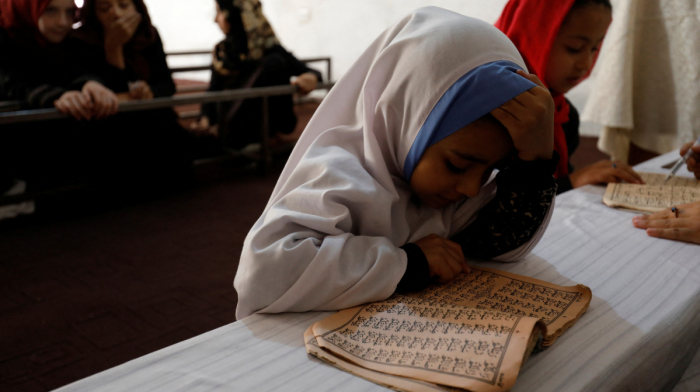
Afghanistan’s Ministry of Education has challenged a United Nations report on access to education, saying its findings do not reflect the full picture of the country’s education system.

A new fund is judged on its team, its process and its governance long before it is judged on its portfolio. If the Turkic Investment Fund gets those right from day one, international capital will follow. If it does not, no amount of political goodwill will compensate.
On 27 September 2020, Azerbaijan launched military operations along the line of contact in Garabagh and the surrounding districts - internationally recognised Azerbaijani territories that had remained under Armenian control since the 1994 ceasefire.
Despite being on opposite poles of the ideological spectrum, with Azerbaijan being a secularist country and Afghanistan an Islamist republic, a difference that has hindered their relationship, these two countries have experienced a certain deepening of bilateral relations in recent years.
As Pakistan's military leadership frequently arrives in Tehran amid one of the most dangerous periods of regional instability in recent years, the visit highlights a recurring pattern in Islamabad's strategic behaviour.
A road can be built through a public contract. A functioning market cannot. It requires businesses willing to invest, customers willing to buy and people confident enough to build their lives around both.
You can download the AnewZ application from Play Store and the App Store.




What is your opinion on this topic?
Leave the first comment