


20:20 CET
Politics
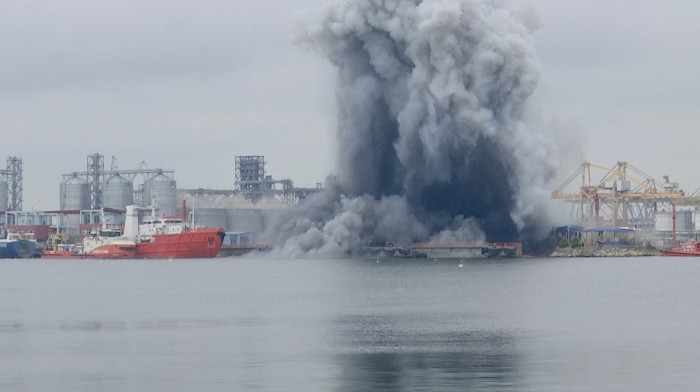
Three ships struck by drones in Black Sea near Romanian shipping canal
Drones have struck three commercial...


The AnewZ Opinion section provides a platform for independent voices to share expert perspectives on global and regional issues. The views expressed are solely those of the authors and do not represent the official position of AnewZ
On 17 October, the situation in France exploded into violence on a scale not seen in the country in modern times. Historic buildings were burned down, shops were looted, people were assaulted and the government showed that the situation was beyond its control. How has France arrived at this point?
The reason behind this is not a single factor but a combination of different circumstances that have coexisted and which many people warned could lead to an explosion of violence. Moreover, it is understandable that some of the events of the past month can help explain what happened on 17 October.
One month ago, young French students started protesting about the situation in schools. Both the education system and its facilities were at the centre of the demonstrations. Demands for better facilities, more teachers and smaller class sizes were among their grievances. However, after a short time, demonstrators started assaulting teachers and school staff, burning schools[1] and creating chaos. At the same time, political figures from the party La France Insoumise (LFI) not only participated but encouraged the demonstrators to take more violent action. One example is the new mayor of Saint-Denis, Bally Bagayoko, a Black Muslim of Malian origin, who encouraged the students by saying that “violence can sometimes be legitimate”.[2]
These protests were a kind of testing ground for what came next. Indeed, what followed was the burning and storming of official buildings, increased looting and violence against individuals across France's major cities, but especially in Paris.
It seems, judging by what we see on television, that this social unrest is based on a lack of political response to the many social problems facing France. However, France has one of the highest levels of public debt in the European Union, partly because of its social welfare system. Social unrest can also be seen in the context of a French tradition of political demonstrations stretching from the French Revolution to May 1968.
I would argue that the situation today is far worse than a “picturesque” demonstration fuelled by political motivations or even social unrest. The problem has different dimensions and points towards a reality that could change France, and the European Union, in the future. To understand this, there is a need to examine the history of France since the 1960s.
There is a term coined at the beginning of the century, Territoires perdus de la République, meaning the lost territories of the Republic. This term refers to certain neighbourhoods in France where public authorities have struggled to exercise control, meaning that police cannot enter, teachers cannot teach about the Holocaust, or crime and drug dealing dominate the local landscape.[1] More than that, it raises the question of who controls these territories.
This debate developed alongside the increasing number of foreigners in France, especially those of North African and sub-Saharan African origin. In other words, there is nothing new about the riots and the violence they have caused. Simultaneously, French public debt was increasing, and successive governments not only failed to address the root causes but also seemed powerless to turn the tide.
There are, in my view, two aspects that have also helped fuel this situation: the first is Macron's election in 2017, and the second is European Union rules that create challenges for governments seeking to implement solutions.
Macron was elected in 2017 and was considered the “Mozart of Finance”. Nearly ten years later, he leaves a legacy of destruction, pessimism, debt, social divisions, mistrust in institutions and an exceptionally high level of taxation. Furthermore, his interpretation of reality is completely dysfunctional and out of touch, with the last parliamentary elections providing just one example of this.
In a debate with Marine Le Pen, Macron said Le Pen would create a civil war in France. Ironically, the images of the current situation in France suggest that the country could be heading towards a civil war, which many have already claimed has begun.
The second reason is the implementation of EU rules, which create difficulties for national political actors seeking to deliver solutions to many domestic problems.
Let us take an example: to expel an illegal immigrant from a member state, the route back must follow the route by which they entered. So, an illegal immigrant from Mali caught in France, who entered the Schengen area through Italy after taking a boat from Libya, would need to return to Italy before being deported. Usually, the member states that served as the initial point of entry are reluctant to accept illegal immigrants back into their territory.
This system, which is implemented through a European regulation,[2] creates significant complications for the deportation of illegal immigrants, generating substantial bureaucratic costs for member states. Although the regulation has been modified to facilitate the refusal of entry to new migrants and the deportation of illegal immigrants, the process remains highly challenging, with civil society and the judiciary also heavily involved.
Another aspect is the EU budget, where certain member states oppose its expansion. This is not the case with France, even though the country could benefit from cuts to the EU budget.
We could give many more reasons for the weakness and failures of Macron's presidency, but these two alone are sufficient to have created, even among moderate circles such as the business community, and among the wider population, a sense that the President is not only weak but also completely incapable of taking serious decisions.
In this context, it is also important to mention the narrative surrounding the current crisis. The rise of social media and the slow decline of legacy media have helped shape criticism of moderate politicians. Facts are no longer presented solely by legacy media but are shown live by participants or spectators.
This is exactly what we have seen in the current situation, with people looting shops and businesses filming their actions and presenting them as something to celebrate, while others filmed specific incidents to demonstrate how support for the rioters was completely out of touch.
Some legacy media outlets are facing intense scrutiny because of the failure of the moderate narrative and the emergence of polarisation as the new status quo.
We believe that the situation will only get worse and that social unrest will spread unless the institutions declare a state of emergency, enabling law enforcement authorities to deal with the situation.
We also believe, as we said at the beginning, that this is preparation for the possibility of a Le Pen presidential victory in 2027. LFI is creating an atmosphere of insurrection against that possibility.
I think there is a need for a broad right-wing coalition, excluding the centre and the left, and committed to implementing a national political programme after the presidential election.
Without such a broad alliance, it will be difficult to implement an effective political programme that can tackle both social unrest and the criminal violence that LFI is trying to fuel in France.

Drones have struck three commercial...
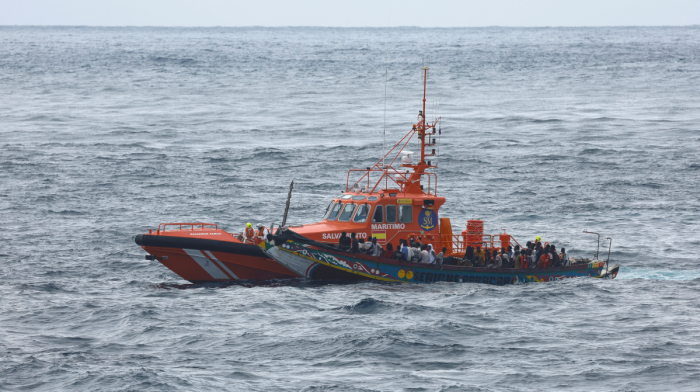
Almost 1,500 migrants arrived in Spain's Canary Islands on Saturday, the highest number in a single day sin...
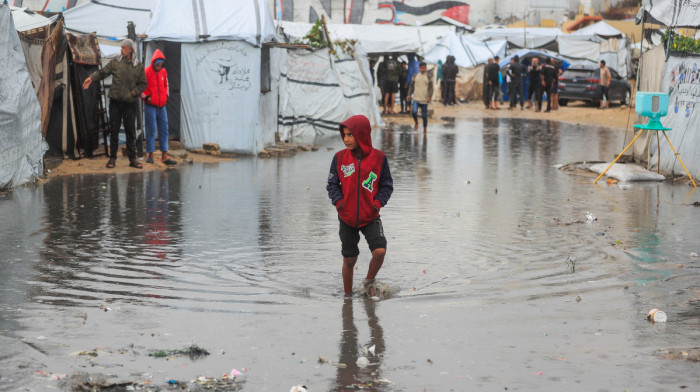
The World Health Organization (WHO) warned on Friday (13 November) of surging respiratory illnesses in Gaza, ...
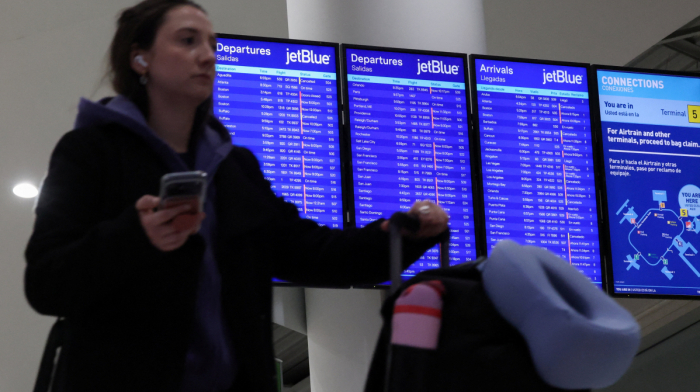
The U.S. Federal Aviation Administration lifted a nationwide ground stop on Friday (13 November) after a communications failure at air traffic control centres caused chaos at airports and triggered the longest nationwide shutdown since the 9/11 attacks in 2001.
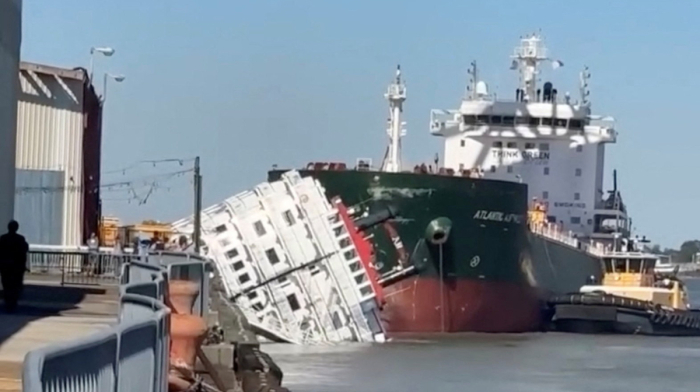
More than 30 people have been taken to hospital after a cargo ship collided with a passenger cruise docked on the Mississippi River in New Orleans on Friday (13 November).
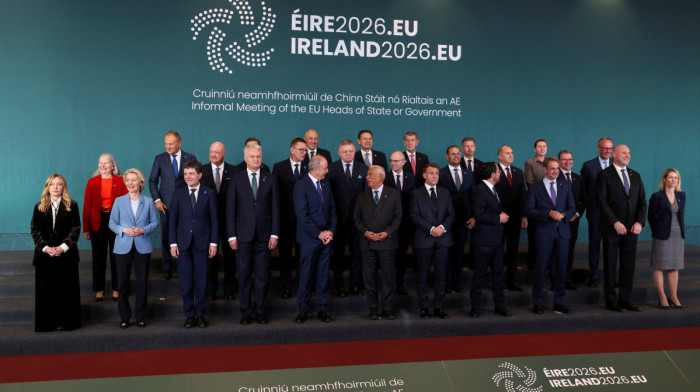
Europe will send a team of diplomats to Ukraine peace talks rather than a single envoy, EU leaders agreed on Friday at the end of a summit in Dublin.
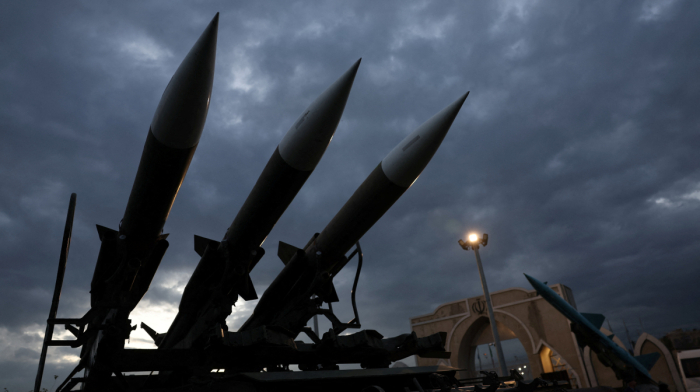
Saudi Arabia said it intercepted two Houthi ballistic missiles targeting Riyadh and three drones in its oil-rich Eastern Province on Sunday (15 November), as Iran's Revolutionary Guards claimed separate attacks on a U.S. military facility in Bahrain.
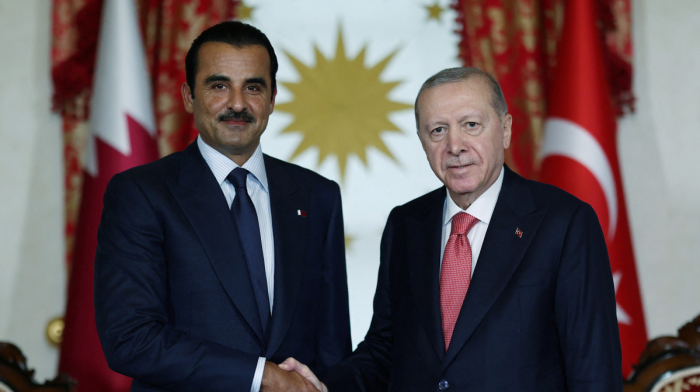
Türkiye and Qatar signed a mutual defence agreement on Friday, November 13, aimed at strengthening collective security and regional stability. The two countries pledged to take a united stance against any external armed attack on either nation.
A new fund is judged on its team, its process and its governance long before it is judged on its portfolio. If the Turkic Investment Fund gets those right from day one, international capital will follow. If it does not, no amount of political goodwill will compensate.
On 27 September 2020, Azerbaijan launched military operations along the line of contact in Garabagh and the surrounding districts - internationally recognised Azerbaijani territories that had remained under Armenian control since the 1994 ceasefire.
Despite being on opposite poles of the ideological spectrum, with Azerbaijan being a secularist country and Afghanistan an Islamist republic, a difference that has hindered their relationship, these two countries have experienced a certain deepening of bilateral relations in recent years.
As Pakistan's military leadership frequently arrives in Tehran amid one of the most dangerous periods of regional instability in recent years, the visit highlights a recurring pattern in Islamabad's strategic behaviour.
A road can be built through a public contract. A functioning market cannot. It requires businesses willing to invest, customers willing to buy and people confident enough to build their lives around both.
You can download the AnewZ application from Play Store and the App Store.




What is your opinion on this topic?
Leave the first comment