The AnewZ Opinion section provides a platform for independent voices to share expert perspectives on global and regional issues. The views expressed are solely those of the authors and do not represent the official position of AnewZ
There are defining moments in the history of nations and states when a shared history ceases to be merely a memory of the past and becomes a force that shapes the future.
I believe the Turkic world is living through just such a moment today.
Spanning a vast region that connects East and West, the Turkic world encompasses approximately 180 million people bound by deep historical and cultural ties, whose connections are growing stronger through trade, transport, investment, education, technology and cooperation between peoples. Sustained for centuries by shared language, culture, traditions and collective memory, this unity is now acquiring an increasingly institutional and practical dimension within the Organization of Turkic States (OTS).
This transformation is highly significant. Since its establishment in 2009, the OTS has evolved from a platform primarily focused on political dialogue and cultural affinity into a comprehensive mechanism for cooperation geared towards concrete results.
As I approach the end of my term as Secretary General, I see this moment as more than an opportunity to reflect on what has been achieved. More importantly, it is an opportunity to consider what makes our cooperation distinctive, the opportunities it can offer our peoples, and the kind of Turkic world we wish to build together in the decades ahead.
A Unity with Deeper Roots
One of the rare features that distinguish the OTS from other international organisations lies in its foundations.
International institutions are often created in response to a specific political challenge, economic necessity or security concern. The foundations of the OTS are different. Our cooperation rests on values that existed long before the Organization itself was established: centuries of shared history, linguistic affinity, common cultural traditions and values, and a deep sense of connection arising from belonging to the same civilisation.
Our shared history, language, identity and culture are not concepts that refer only to our past. They form a foundation of trust on which strong and lasting cooperation can be built.
Very few international organisations rest on such a natural foundation, perhaps none. Yet a shared heritage alone does not guarantee a shared future. It is our generation's responsibility to translate our historical affinity and cultural bonds into opportunities, connections and cooperation that respond to the realities and challenges of the 21st century.
We have a simple saying that expresses this idea particularly well: “We Are Stronger Together”.
Interestingly, these words are understood throughout the Turkic world and need almost no translation. This reflects the deep linguistic and cultural ties between our peoples. Today, “We Are Stronger Together” is not only a slogan expressing our solidarity, but also a guiding principle for our practical cooperation.
From Shared Identity to Institutional Strength
One of the most important changes in recent years has been the gradual transformation of our natural affinity into institutional capacity.
Today, the OTS is making significant progress in strengthening cooperation among its member states. The Organization currently has 65 cooperation mechanisms, covering fields ranging from the economy, trade, transport and customs to energy, digitalisation, industry, science and technology, health, education, youth, agriculture, labour relations and social protection, intellectual property, space activities and more.
Since 2023 alone, 32 new mechanisms have been created, equal to the total number established by the end of 2022. This demonstrates not only the expansion of our cooperation agenda, but also the growing determination of our member and observer states to translate shared priorities into concrete institutional cooperation.
More important than the numbers, however, is the change in the way we work together. Political consultations are becoming more frequent and substantive; ties between ministries and specialised institutions are growing closer; and our ability to think, plan and act together is developing.
I would describe this stage of our development in three terms: implementation, transformation and institutional deepening.
As chair of the Coordination Committee of the Turkic Cooperation Organizations, the OTS works closely and systematically with affiliated and relevant organisations, including the Parliamentary Assembly of Turkic States (TURKPA), the International Organization of Turkic Culture (TURKSOY), the Turkic Academy, the Turkic Culture and Heritage Foundation, the Turkic Investment Fund (TIF) and the Union of Turkic Chambers of Commerce and Industry (TCCI). Together, these institutions contribute to the development of a multifaceted framework for cooperation across the Turkic world, the strengthening of institutional ties and the advancement of shared priorities.
The establishment and launch of the Turkic Investment Fund mark an important milestone in this development. For the first time, the Turkic states have established a joint financial institution to mobilise their economic potential, support investment and entrepreneurship, strengthen small and medium-sized enterprises, and enable joint projects to be carried out. The Council of Central Banks, the Turkic Green Finance Council and the Turkic Investment Promotion Network (TurkIPAnet) further strengthen this emerging financial and investment architecture.
Expanding Cooperation Beyond Governments
One of the most encouraging developments I have witnessed during my term has been the expansion of cooperation networks beyond governments and official institutions into the private sector and professional communities.
Notaries, auditors, engineers, trade unions and representatives of other professions are building ties, creating networks and exploring forms of institutional cooperation across the Turkic world. This expanding cooperation is also reflected in initiatives such as the Union of International Road Transport Associations of the OTS, the Union of Turkic Ski Resorts and the Turkic Red Network, which bring together various stakeholders in transport, tourism and humanitarian cooperation. Business communities, universities, young people, experts and professional associations are finding their own reasons, and increasingly their own ways, to connect.
When people and professional communities begin to build connections on their own initiative, cooperation moves beyond institutional frameworks and takes root in society itself.
For me, this is one of the clearest signs that cooperation in the Turkic world is becoming increasingly mature.
An Emerging Economic and Strategic Space
The growing importance of the Turkic world is determined not only by our shared heritage, but also by the scale of our combined economic and strategic potential.
According to figures released for the end of 2025, the combined gross domestic product of the OTS member and observer states exceeded US$2.4 trillion, while their total trade turnover reached approximately US$1.27 trillion.
Together, the Turkic states could constitute the world's 11th-largest economy and third-largest energy supplier. With substantial reserves of oil, natural gas, coal and critical minerals, as well as more than 40 per cent of global uranium production, our countries possess considerable energy potential and are also investing increasingly in renewable energy development.
At a time when global energy systems are changing rapidly and demand is rising, acting together is a necessity rather than a matter of choice. Recent OTS summits have emphasised the importance of energy security. Energy security depends on connecting pipelines, electricity grids, energy storage systems and transport routes to ensure reliable supplies, increase trade and strengthen economic and geopolitical stability.
Through major infrastructure projects such as the Southern Gas Corridor, the Central Asia–Azerbaijan Green Energy Corridor, the Kambarata-1 Hydropower Plant and the Black Sea submarine electricity cable, the Turkic states are strengthening regional and international energy connections. These initiatives demonstrate the growing role of the Turkic world in strengthening energy security, diversifying supply routes and developing cooperation in renewable energy.
In this respect, the Turkic World Vision 2040 provides an important strategic framework. It calls on us to deepen economic integration, improve connectivity, strengthen institutions, invest in knowledge-based industries and promote sustainable and inclusive development.
Strengthening Transport and Digital Connectivity
The importance of this approach is perhaps most clearly visible in connectivity.
The Trans-Caspian International East–West Middle Corridor is becoming an increasingly important link between Asia and Europe. Forecasts suggest that freight volumes along the corridor could reach 11 million tonnes by 2030. The China–Kyrgyzstan–Uzbekistan railway, which is expected to have an annual freight capacity of up to 15 million tonnes, will also strengthen regional connectivity and expand trade opportunities across Eurasia.
Yet a modern transport corridor is about more than railways, roads and ports. Goods must cross borders efficiently, and data and documents must move with them.
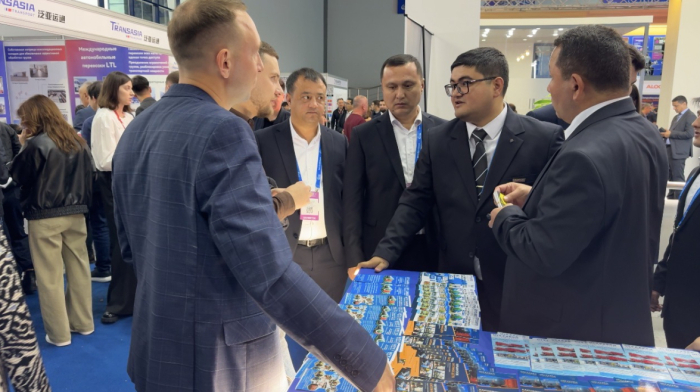
The OTS is complementing physical infrastructure with customs and digital solutions. Initiatives such as the Simplified Customs Corridor, electronic permits (e-Permit), electronic international consignment notes (e-CMR) and digital TIR aim to facilitate cross-border trade and reduce administrative barriers. The Digital Economy Partnership Agreement and ongoing work towards an agreement on free trade in services and investment will further strengthen economic integration among our countries.
We also welcome the recently established cooperation between competition authorities, financial intelligence units, investment promotion agencies, supreme audit institutions and tax administrations. These partnerships strengthen institutional connections and contribute to better economic governance across the Turkic world.
The digital economy is central to this agenda. Digital trade platforms, interoperable electronic customs systems, cooperation in financial technology, secure data exchange and shared approaches to digital regulation can make our economic relations more efficient and accessible. Digital transformation is not merely a technical matter. It is one of the foundations of modern economic integration.
Our goal is clear: to make connectivity work more effectively for the people and businesses that actually use it.
All these developments point to the gradual emergence of a more closely connected Turkic economic space, where infrastructure is reinforced by efficient border crossings, trade is supported by investment, and individual countries' strengths are increasingly translated into shared opportunities.
Towards a More Closely Connected Turkic World
For the younger generation, the Turkic world should be a vibrant space of opportunity. The Turkic Universities Union (TURKUNIB) and the Orhun Exchange Programme are bringing students, academic staff and universities closer together. Initiatives such as the Youth Volunteering Educational Program, the Multilateral Youth Exchange Programme and the International Youth Camp also strengthen direct connections, mutual understanding and a sense of shared identity among young people living in different parts of the Turkic world. Meanwhile, initiatives under discussion, such as the Turkic Identity Card and the Common Museum Card, aim to make travel easier and broaden access to our shared cultural heritage.
A transport corridor becomes more valuable when businesses use it. Business cooperation grows stronger when backed by investment. Investment becomes more productive when combined with technology and human capital. All of this becomes more sustainable when our societies participate in the process and benefit from its results.
The future of the OTS therefore lies not only in increasing the number of areas in which we cooperate, but also in bringing existing mechanisms together within a more connected and unified space of opportunity.
Our strength comes from building on our unique foundations while remaining open to the wider world.
Our long-term direction is set out in the Turkic World Vision 2040. Deeper connectivity and integration, developed with full respect for our states' sovereignty and national priorities, should strengthen our collective ability to address climate change, food and health security, emergencies and other challenges that cross borders.
A Turkic World Open to the World
A stronger Turkic world also means a Turkic world that builds closer ties with the world and is more open to it.
Our geography gives us a natural role in this respect. For centuries, the lands of the Turkic world have connected peoples, cultures, markets and ideas across Eurasia. Today, we have an opportunity to give that historical role a modern meaning.
By improving transport connections, facilitating trade, linking energy networks, encouraging innovation and strengthening ties between societies, the Turkic states can contribute not only to their own prosperity, but also to the development of connectivity and cooperation across the wider Eurasian region.
This approach is reflected in the OTS's growing cooperation with the United Nations system and other international and regional organisations, as well as in the development of the OTS+ format, which offers a flexible platform for cooperation with countries and partners outside the Organization.
Our aim is to build practical, mutually beneficial partnerships that contribute to peace, stability, connectivity, sustainable development and dialogue.
Our aim is not to build walls around the Turkic world, but to build bridges that connect it to the wider world.
A Turkic world with closer internal connections will also be more open, more active internationally and better able to contribute to dialogue, development and shared prosperity beyond its borders.
The Road Ahead
It has been a great privilege to witness the Turkic world drawing ever closer together in recent years, to see our cooperation expand across different fields and become more clearly reflected in concrete results, and to make a modest contribution to this process.
Yet perhaps the most important lesson I take from these years is that we are still only at the beginning of what is possible.
The foundations have been laid. Our member states' determination is strong. The institutional architecture has expanded. Our combined economic and strategic potential is increasingly recognised. Our societies are also discovering new ways to connect with one another.
The 13th OTS Summit, to be held in Ankara under the theme “Turkic Century: Unity in Language, Thought and Deed”, will mark the beginning of Türkiye's chairmanship and provide an important opportunity to carry this momentum into the next phase of our collective action.
Looking ahead, the success of our cooperation should not be measured solely by the agreements we sign or the mechanisms we create. The main measure should be the tangible benefits we deliver to our peoples. Our priority must remain to translate our collective goals into meaningful opportunities and lasting progress for future generations.
I express my deep gratitude to the heads of state of our member and observer states for their vision and unwavering support. I also thank our governments, institutions, permanent representatives, experts and my colleagues in the OTS Secretariat. Their dedication, professionalism and commitment to our common purpose have been invaluable at every stage of our progress.
It has been a great honour to contribute to this process as Secretary General.
Although my term as Secretary General is drawing to a close, my commitment to the unity, cooperation and prosperity of the Turkic world will remain unchanged. I will always regard having contributed to this shared endeavour as a privilege and will continue to believe in the extraordinary potential of our common future.
The Turkic world must move forward in translating its cultural affinity into closer connections, its potential into real opportunities, and its cooperation into tangible benefits for our peoples.
Our ancestors left us a shared heritage. What we bequeath to future generations must be more than the memory of that heritage.
It must be a shared future built upon that heritage.
Despite the differences in our languages and geography, the following message must always resonate:
“We Are Stronger Together”
His Excellency Ambassador Kubanychbek Omuraliev is Secretary General of the Organization of Turkic States










What is your opinion on this topic?
Leave the first comment