The AnewZ Opinion section provides a platform for independent voices to share expert perspectives on global and regional issues. The views expressed are solely those of the authors and do not represent the official position of AnewZ
Military power is usually measured by what a country possesses: fighter aircraft, tanks, warships, missile systems, ammunition stocks and defence budgets. These indicators remain important, but recent wars have exposed a weakness in this way of thinking.
They tell us what a military can deploy today, but much less about what it can still deploy after months of intense fighting.
A modern military can enter a conflict with advanced weapons and large stockpiles while still facing a serious long-term problem. If critical weapons are consumed much faster than industry can replace them, military strength becomes harder to sustain.
The real gap is between military strength and military endurance. One is built on forces and weapons already in hand. The other depends on what sits behind them: production lines, supply chains, skilled workers, financing and the ability to replace losses while the fighting continues.
Recent wars have made that second question much harder to ignore.
The consumption-replacement gap
The basic problem is straightforward: weapons can be used much faster than they can be replaced.
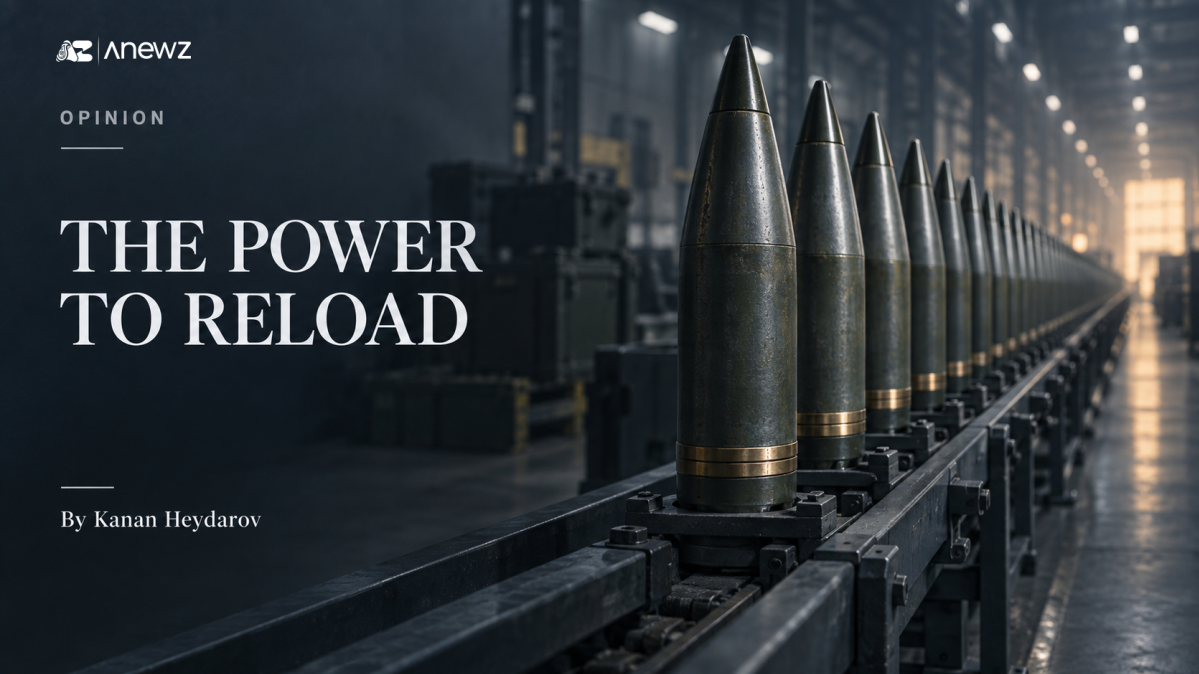
The war in Ukraine demonstrated this with artillery ammunition. Production systems designed around peacetime demand suddenly faced a high-intensity conflict requiring large quantities of shells. The response was visible on both sides of the Atlantic: the European Union launched measures to expand ammunition production capacity, while the United States sharply increased 155 mm production from pre-war levels. The experience showed that the size of a stockpile cannot be separated from the rate at which it is used and replenished.
More recent fighting has shown that the problem is not limited to artillery. A March 2026 analysis published by the Royal United Services Institute estimated that coalition forces expended more than 11,000 munitions during the first 16 days of the Iran war. The study drew particular attention to expensive air-defence interceptors and precision-strike weapons, where rapid wartime consumption can be much more difficult to replace.
The rate of depletion differs greatly between weapon systems, and it would be misleading to treat every munition as equally scarce. Some weapons can be produced in relatively large numbers. Others depend on specialised components and production lines that can take years to expand.
The difference is important. A stockpile is not just a fixed number. It is part of a cycle of use, loss and replacement, with industry expected to keep that cycle going.
The harder question is what happens when that cycle stays out of balance for too long.
A country may begin a conflict with a larger arsenal than its opponent and still find its freedom of action narrowing if its most important systems cannot be replaced quickly enough.
The factory behind the arsenal
That is why industrial capacity belongs inside any serious measure of military power.
The United States is already trying to expand production of several important munitions. But increasing output is not simply a matter of allocating more money.
A July 2026 CSIS assessment of the U.S. munitions industrial base found manufacturing lead times of roughly 25 to 51 months for several important weapons. The Pentagon has responded with longer-term procurement arrangements intended to give manufacturers greater certainty to invest in factories, suppliers and additional production capacity.
Production of the PAC-3 MSE interceptor used by Patriot systems provides one example. Current plans anticipate increasing annual production capacity from roughly 600 to 2,000 interceptors by 2030. CSIS also reports planned increases for THAAD, Tomahawk, SM-6 and other munitions.
The planned increases are substantial, but the timelines tell their own story. Governments can raise defence spending within a budget cycle. Expanding industrial capacity usually takes much longer.
Factories need equipment. New workers must be recruited and trained. Suppliers need predictable orders. Production may depend on explosives, electronics, propulsion systems or specialised materials whose own supply chains cannot immediately expand.
A larger defence budget, then, does not automatically produce more usable military power. Funding opens the door; industry determines how fast a country can walk through it.
When time becomes a military variable
None of this means stockpiles have become less important. In fact, a state entering a major conflict without adequate inventories cannot simply wait several years for factories to solve the problem. Large stocks of missiles, ammunition and spare parts remain essential, particularly during the opening stages of a war.
Technology matters too. In some cases, a smaller number of highly effective weapons can do more than a much larger number of less capable systems.
So the point is not that production has replaced technology or stockpiles. The point is that their value changes as a war drags on.
A military's strength on day ten of a conflict may depend mainly on the arsenal accumulated before the war. Its position in month ten increasingly depends on what has been repaired, replaced and produced since the fighting began.
This is especially important for sophisticated systems with long production times. A missile fired in minutes may require months, or longer, to replace. The imbalance does not automatically mean a military will run out of weapons, but it can reduce flexibility and force harder choices about where scarce systems are used.
This is where time enters the military balance. Simple comparisons of aircraft, ships or missiles can miss it. The longer a conflict lasts, the more industrial depth starts to matter.
Alliances also need to share production
The same problem appears at alliance level.
NATO burden-sharing debates have traditionally focused on how much each member spends on defence. Spending remains important, but the Alliance is increasingly treating industrial production itself as a collective security issue.
NATO's July 2026 Strategy for Industry-NATO Cooperation calls for scalable production facilities, stronger defence supply chains, strategic reserves and the ability to increase production during crises. It also calls for exercises designed to test the Alliance's ability to surge industrial output.
That changes the way deterrence looks in practice. An alliance brings together more than armies; it also brings together factories, suppliers, technology, logistics and finance.
The work can also be divided. One country may focus on ammunition, another on air defence, drones, sensors or electronic warfare. Others can provide components, maintenance hubs or transport infrastructure. In effect, production itself becomes part of burden-sharing.
This becomes particularly important when several crises overlap. The same missile or interceptor may be needed in Europe, the Middle East and the Indo-Pacific. Industrial capacity cannot always expand at the same speed as strategic commitments.
When production cannot keep pace with all of those demands, governments have to choose: which stockpiles are replenished first, which theatres receive scarce systems and where new capacity is built. At that point, production policy is no longer a technical issue. It becomes part of foreign and security policy.
The ability to reload
It would be easy to overstate the argument and claim that advanced Western militaries are simply running out of weapons, or that industrial constraints have made technological superiority irrelevant. The evidence does not support either claim.
The United States and its allies retain major technological, financial and industrial advantages, and production is expanding. But NATO's own industrial strategy shows that higher spending has to be converted into output that can be scaled and sustained during a crisis.
The lesson is narrower, but more useful.
Military power is not only what can be seen at the start of a conflict. It also rests on the less visible system behind the arsenal: factories, supply chains, workers, maintenance and the long-term financing that keeps production moving.
For years, the obvious question has been: How large is the arsenal?
Now another question matters almost as much: How quickly can it be rebuilt?
In a short war, the first question may decide the outcome. In a long one, the second becomes harder and harder to avoid.
About the Author:
Kanan Heydarov is a Baku-based analyst who writes on geopolitics, international relations, security, defence and geoeconomics. His previous analytical work has been published by The Defence Horizon Journal.











What is your opinion on this topic?
Leave the first comment