The AnewZ Opinion section provides a platform for independent voices to share expert perspectives on global and regional issues. The views expressed are solely those of the authors and do not represent the official position of AnewZ
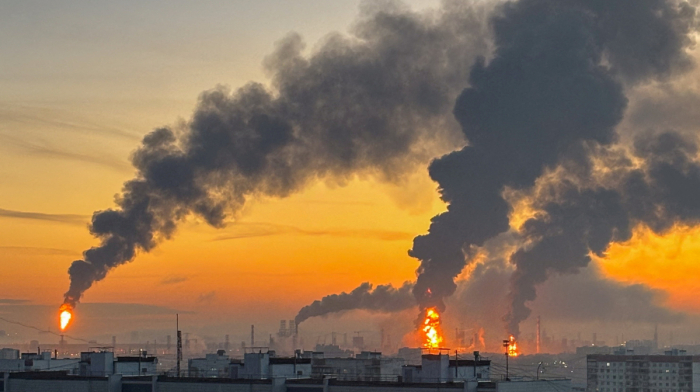
The next oil shock may not begin at an oilfield. It may begin when a tanker captain refuses to sail, an insurer withdraws cover, a bank declines to finance a cargo, or a refinery discovers that crude oil is available but diesel is not.
That distinction matters because the world is no longer confronting a conventional oil crisis. It is facing the possibility of something considerably more dangerous: simultaneous stress across several of the maritime arteries through which the global energy economy circulates.
Hormuz is already under severe pressure. Bab el-Mandeb and the Red Sea have become increasingly hazardous. The Black Sea remains exposed to an escalation of the Russia-Ukraine war. And further east, the Strait of Malacca remains one of the most consequential vulnerabilities in China's energy-security architecture.
Four chokepoints. One increasingly interconnected crisis.
If two or three of them become seriously impaired at the same time, the relevant question will no longer be whether Brent trades at $100, $120 or $150 a barrel.
The question will be whether the international energy system can continue moving sufficient molecules, ships, insurance and money through the arteries on which it depends.
And this is precisely why Azerbaijan - together with Türkiye and the wider Caspian - is becoming strategically more important.
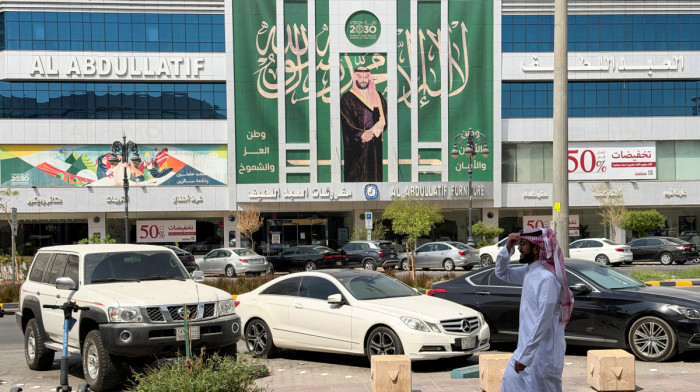
Saudi Arabia's buffer is no longer something to take for granted
For decades Saudi Arabia performed a unique function in oil markets. Riyadh was not merely one of the world's largest exporters; it was regarded as the producer capable of putting additional barrels into the market when others could not.
That assumption is now being tested.
Saudi supply fell sharply in August, while crude loadings also declined substantially. At the same time, the kingdom faces security risks affecting not only production facilities but the infrastructure required to move oil to customers.
That distinction is crucial.
Oil underground has little economic value during a crisis if it cannot reach a terminal, enter a tanker, obtain insurance and pass safely through international waters.
Abqaiq, Yanbu, Jizan, Red Sea shipping and Gulf export routes therefore have to be viewed as parts of a single system.
The uncomfortable question is obvious: what happens when the producer traditionally regarded as the market's ultimate shock absorber itself becomes exposed to the shock?
Markets can adjust to lost barrels. They find it much harder to price the disappearance of confidence in the system that transports those barrels.
Bab el-Mandeb is no longer a theoretical risk
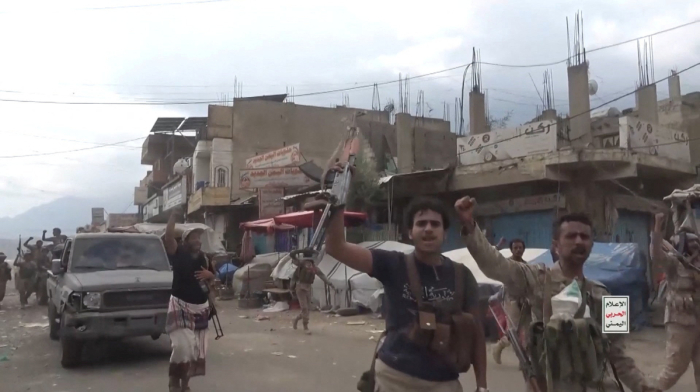
Developments in Yemen have made the danger still more immediate.
The battle for the strategically located island of Mayyun, or Perim, illustrates why apparently small pieces of geography can carry enormous economic significance.
The island sits directly in Bab el-Mandeb, connecting the Red Sea with the Gulf of Aden and Indian Ocean.
For ships travelling between Asia and Europe through Suez, this is not peripheral geography. It is the gateway.
That matters even more when Hormuz itself is constrained. One of the obvious responses to disruption in the Gulf is to move more Saudi crude towards western export terminals and the Red Sea.
But what happens when the alternative route is itself insecure?
That is the central feature of the emerging crisis. Risks that once could be diversified geographically are beginning to overlap.
The redundancy built into the system is shrinking.
$120 oil is no longer an extreme scenario
Brent approaching $110 a barrel and WTI returning towards $100 should therefore not be dismissed as another geopolitical spike.
Oil at $120 is no longer a tail-risk assumption.
If flows through Hormuz remain constrained, Saudi exports fail to recover and insecurity around Bab el-Mandeb intensifies, that level could be reached surprisingly quickly.
Add a substantial Black Sea disruption and $130-$150 becomes a credible stress scenario.
Yet even that may misunderstand where the greatest economic damage appears first.
Watch diesel.
Diesel is where energy markets meet the real economy.
It moves trucks, tractors, mines, construction machinery, generators and much of the international logistics system. A shortage therefore travels rapidly from the refinery into freight rates, agriculture, manufacturing and ultimately food prices.
The next inflationary shock may appear on supermarket shelves before policymakers fully understand what has happened in the crude market.
The Black Sea is the underpriced risk
There is another potential fault line receiving insufficient attention.
The Black Sea.
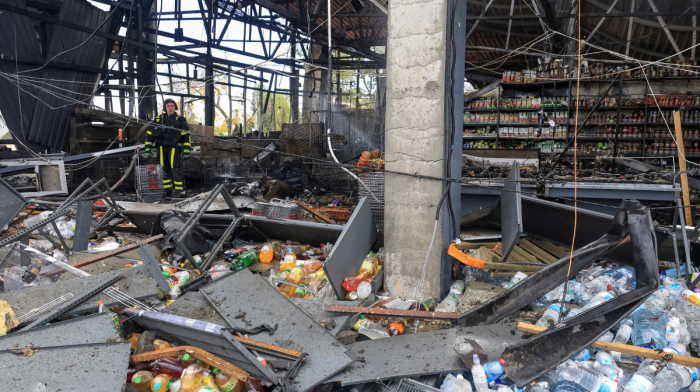
Significant volumes of Russian and Kazakh oil reach international markets through terminals around Novorossiysk. The Caspian Pipeline Consortium alone carries roughly 1.5mn barrels a day of predominantly Kazakh crude.
A sustained attack on terminals, infrastructure damage, tighter sanctions or simply reluctance among tanker operators to load there could quickly affect Mediterranean refiners.
And much of the oil and petroleum products leaving the Black Sea must subsequently pass through the Turkish Straits.
This makes Türkiye far more than an energy importer.
It is one of the switching stations of Eurasian energy.
A serious Black Sea escalation would therefore be simultaneously a foreign-policy crisis, an energy-security crisis and a maritime-security crisis for Ankara.
But there is another consequence which deserves considerably greater attention.
It increases the strategic value of Azerbaijan.
Azerbaijan is becoming an energy bridge of first resort
For many years the Baku-Tbilisi-Ceyhan pipeline was described primarily as a triumph of post-Soviet energy diplomacy.
That description is now too narrow.
BTC increasingly looks like strategic insurance.
It gives Caspian crude access to the Mediterranean without crossing Russian territory, the Black Sea or the Turkish Straits. In a world in which Novorossiysk is vulnerable, Russian routes face sanctions and maritime chokepoints are becoming progressively less reliable, that geography acquires a new premium.
The pipeline's importance could increase further if larger quantities of Kazakh crude can move westwards across the Caspian and enter the Azerbaijan-Georgia-Türkiye corridor.
This is no longer simply about Azerbaijani barrels.
It is about creating an alternative Caspian export architecture.
Kazakhstan has every reason to diversify away from excessive dependence on the CPC-Novorossiysk system. Azerbaijan has the infrastructure, commercial relationships and geography to become the principal bridge. Türkiye supplies the Mediterranean outlet at Ceyhan.
The result could be a much more consequential Caspian-Mediterranean energy corridor.
There is also an important political economy behind it.
SOCAR is no longer merely Azerbaijan's national oil company. It has developed into a producer, transporter, trader and substantial international investor. Türkiye has become one of the most important destinations for Azerbaijani capital, while Azerbaijani gas already travels through the Southern Gas Corridor into European markets.
The next stage should connect these pieces more deliberately: oil, gas, electricity, renewable energy, trading, storage, petrochemicals and potentially critical minerals.
In other words, Azerbaijan should not be viewed merely as another supplier.
It is increasingly part of the infrastructure through which Eurasian energy risk can be diversified.
Ceyhan could become much more important
Türkiye should recognise the opportunity.
Ceyhan has for years possessed the geography to become one of the Mediterranean's great energy hubs without fully achieving that potential.
The emerging disruption creates another opportunity.
Iraqi crude from the south and north, Azerbaijani oil through BTC, increasing volumes of Kazakh crude across the Caspian, and potentially other regional flows could eventually converge into a much more diversified eastern Mediterranean export and trading system.
That would not eliminate Hormuz risk.
But every barrel that can reach international markets without passing through Hormuz, Bab el-Mandeb, the Black Sea or Russian territory increases the resilience of the global system.
This is where Azerbaijan and Türkiye have a common strategic interest extending well beyond the familiar slogan of brotherhood.
Their energy partnership is becoming a piece of international economic security.
Then comes Malacca
The largest systemic danger lies further east.
Roughly 16.6mn barrels a day of oil and petroleum products passed through the Strait of Malacca in the second quarter of 2026 - around four times the flow through the Turkish Straits.
China has worried about its 'Malacca dilemma' for decades.
Much of the oil arriving by sea must cross the Indian Ocean and pass through a narrow maritime corridor in an environment where US naval power remains formidable.
But there is another dimension.
Inventories.
Suppose Beijing concludes that disruption around Hormuz, Bab el-Mandeb and the Black Sea is not temporary and decides to accelerate the replenishment of strategic and commercial stocks.
The world's largest crude importer would then add substantial precautionary demand to a market already suffering from constrained supply.
Prices would rise not simply because barrels had disappeared.
They would rise because governments had started competing for security.
That distinction could produce a much more violent price cycle.
The nightmare combination is therefore not difficult to imagine: constrained Hormuz flows; insecurity in Bab el-Mandeb; disruption in the Black Sea; accelerated Chinese stock-building; and then any military or shipping incident around Malacca.
We are closer to such a world than policymakers should be comfortable admitting.
Türkiye needs resilience, not another oil-price forecast
For Türkiye, attempting to predict whether oil will peak at $117, $132 or $148 is the wrong intellectual exercise.
The right question is simpler:
Can the Turkish economy continue functioning normally if oil reaches $150 and remains there?
That requires a different energy-security doctrine.
Domestic oil and gas production should clearly be accelerated, including exploration in the Black Sea and south-east Türkiye.
But domestic exploration alone is insufficient.
Türkiye should increasingly behave like other serious energy-consuming powers and acquire equity positions in producing assets abroad - in Azerbaijan, Iraq, Kazakhstan, Africa and elsewhere.
Buying a cargo is not the same thing as owning part of the reservoir.
Strategic inventories also deserve reconsideration. The traditional benchmark of roughly 90 days of net imports should increasingly be regarded as a floor rather than a ceiling for a country as exposed as Türkiye.
A 120-day strategic buffer deserves serious examination.
And reserves should not consist solely of crude oil.
Dedicated stocks of diesel and jet fuel are increasingly essential because a country may theoretically have access to crude during a crisis while lacking refining capacity, tankers, insurance or the appropriate product mix.
Finally, Ankara should work with Baku and Astana on a much more ambitious Caspian energy-security strategy.
More Kazakh crude across the Caspian. Greater utilisation and, where commercially justified, expansion of westbound infrastructure. Stronger Ceyhan storage and trading capacity. Deeper SOCAR-Turkish integration. Electricity connections across the Caspian and through the Caucasus. And a coordinated effort to turn the Middle Corridor into an energy corridor as well as a transport corridor.
That would be strategically more valuable than another declaration about becoming an 'energy hub'.
The objective is not cheap oil. It is survivability.
Energy policy was once built largely around efficiency and price.
The new world requires a third criterion: resilience.
The cheapest barrel is not necessarily the most valuable barrel if it must cross three geopolitical fault lines before reaching your refinery.
A slightly more expensive barrel arriving through a politically reliable and diversified corridor may carry an insurance value that conventional economic models fail to capture.
This is why Azerbaijan's position deserves reassessment.
Thirty years ago, Baku-Tbilisi-Ceyhan was about bringing Caspian oil to world markets.
Today it is becoming something larger: part of the strategic redundancy of the international energy system.
The next great energy shock may not begin because the world runs out of oil.
It could begin because oil is in the wrong place, ships cannot move it, insurers will not cover it, banks hesitate to finance it and governments start hoarding it.
If Hormuz, Bab el-Mandeb, the Black Sea and Malacca are all trembling at once, we are no longer discussing an oil-market problem.
We are discussing the cardiovascular system of the global economy.
For Türkiye and Azerbaijan, that is both a warning and an opportunity.
The countries that matter most in the coming energy order may not simply be those possessing the largest reserves.
They may be those capable of keeping the arteries open when everybody else's begin to narrow.











What is your opinion on this topic?
Leave the first comment