The Iranian Army has again struck at U.S. bases in Kuwait and the United Arab Emirates in retaliation for U.S. attacks on southern and western parts of Iran late on Tuesday, which reportedly killed 18 people and injured more than 100 others.
The strikes came less than a day after the retaliatory ballistic missile attacks by Iran’s Revolutionary Guards (IRGC) against multiple U.S. bases in the region on Wednesday, the Army said in a statement.
The Army’s drones and missiles targeted satellite communications facilities, equipment warehouses and fighter jet hangars at Ahmed Al Jaber Air Base in Kuwait in the early hours of Thursday, according to the Defa Press website, which covers Iran’s armed forces.
Quoting an Army statement, Defa Press said the troop deployment zones and radar systems of the U.S. military at Al Minhad Air Base near Dubai in the UAE were also hit and heavily destroyed.
Strategic targets
According to Defa Press, Al Jaber Air Base plays a key role in the logistics and support of U.S. forces in West Asia, as well as in aerial and surveillance operations. Al Minhad Air Base, meanwhile, is an important centre for the support and air movement of foreign forces.
Tehran’s latest response came after U.S. strikes on southern and western parts of Iran late on Tuesday. It was the second such attack in three days and reportedly left 18 civilians dead and more than 100 wounded. Most of those killed were reportedly attending a wedding ceremony.
On Wednesday, the IRGC responded by striking U.S. bases in Bahrain, Jordan and Erbil in northern Iraq, which it said had been involved in the attacks. The casualties reportedly included a four-year-old child.
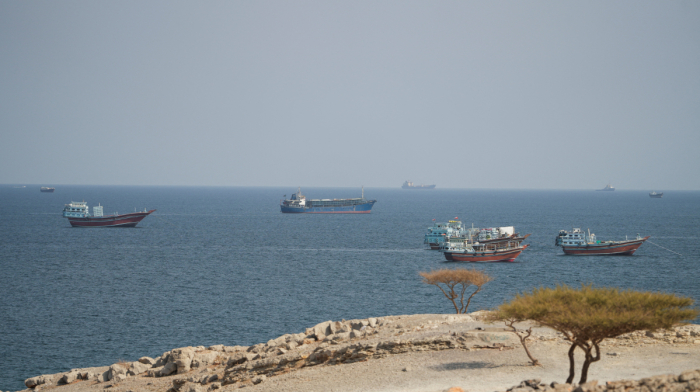
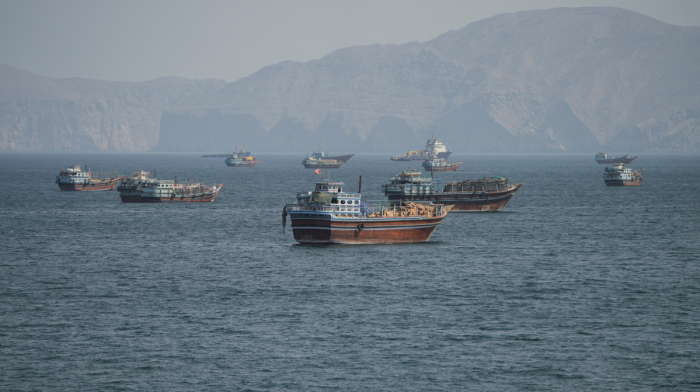
The force also announced that two supertankers intending to pass through the Strait of Hormuz under a U.S. Navy escort had been hit by sea mines.
Iran condemns U.S. attacks
Foreign Ministry spokesperson Esmaeil Baghaei condemned the U.S. air raids as a “war crime” and a sign of “moral decay”, vowing to respond in accordance with Iran’s internationally acknowledged and “inherent right of self-defense”.
In New York, Gholamhossein Darzi, Iran’s Chargé d’Affaires to the United Nations, sent a letter to the UN Secretary-General and Security Council strongly condemning the U.S. attacks, which he said had targeted and killed civilians, including children. He called the strikes a gross violation of the fundamental rules of international humanitarian law and said they constituted a war crime.
“In exercising its inherent right of self-defense, the Islamic Republic of Iran will take all necessary and proportionate measures to protect its people, sovereignty, and territorial integrity, and will respond decisively to any act of military aggression, in accordance with the Charter of the United Nations and applicable international law,” the letter said.
Read more:







What is your opinion on this topic?
Leave the first comment