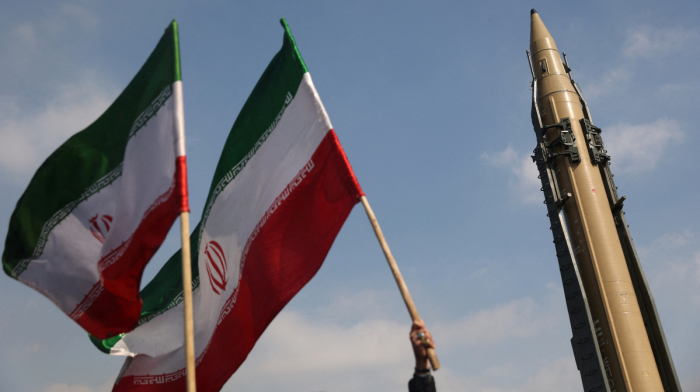
The United States and Iran clashed at the United Nations on Monday over Tehran's nuclear programme and its selection to be one of dozens of vice presidents at a month-long conference to review the nuclear Non-Proliferation Treaty (NPT).
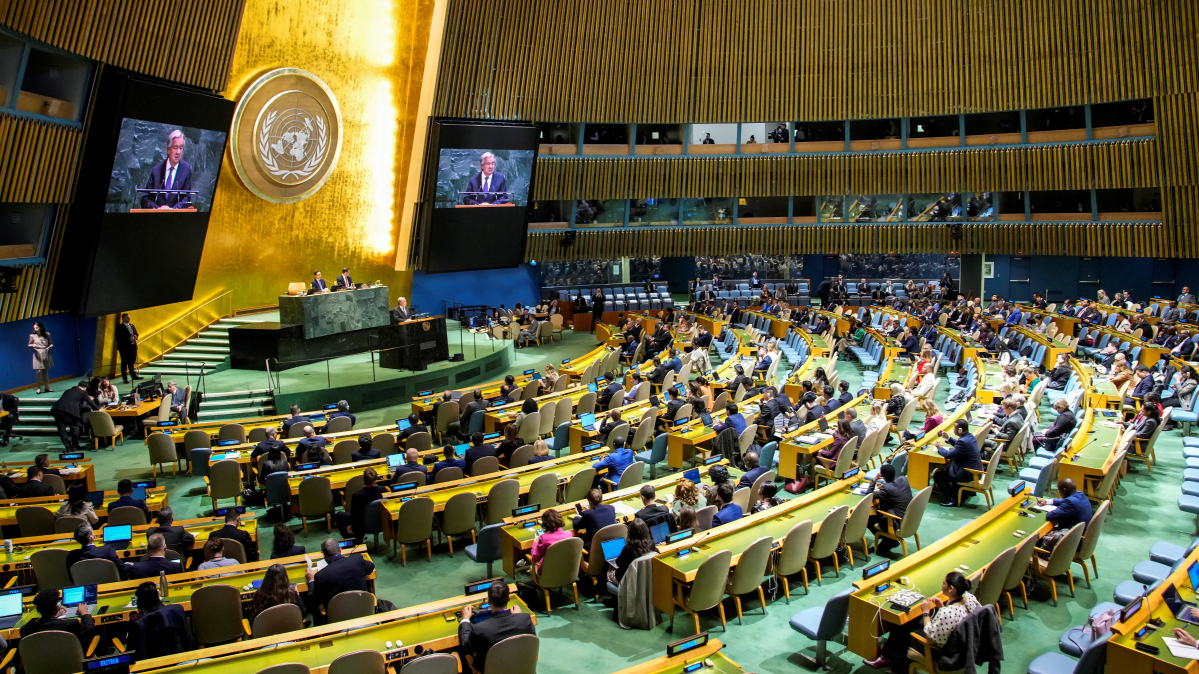
The 11th conference to review implementation of the NPT, which came into force in 1970, began on Monday at the United Nations in New York. Different groups nominated 34 conference vice presidents, and the conference chair, Vietnam's U.N. ambassador Do Hung Viet, said Iran was picked by "the group of non-aligned and other states."
Christopher Yeaw, Assistant Secretary for the U.S. Bureau of Arms Control and Nonproliferation, told the conference that Iran's selection was an "affront" to the NPT.
He said it was "indisputable that Iran has long demonstrated its contempt for the non-proliferation commitments of the NPT," and had refused to cooperate with the UN nuclear watchdog to resolve questions about its programme.
He called Iran's selection "beyond shameful and an embarrassment to the credibility of this conference."
Reza Najafi, who serves as Tehran's ambassador to the International Atomic Energy Agency (AEA), rejected the U.S. statement as "baseless and politically motivated."
"It is indefensible that United States, as the only state ever to have used nuclear weapons, and the one that continues to expand and modernise its nuclear arsenal... seeks to position itself as an arbitrator of the compliance," he told the meeting.
In his opening speech, UN Secretary-General Antonio Guterres warned that the NPT is "eroding."
"The global goal of eliminating nuclear weapons stretches back to the UN General Assembly, the very first resolution in 1946. But sadly, people's memories are short," Guterres said to the audience in the UN headquarters' General Assembly Hall.
"Today, a state of collective amnesia has taken hold. Nuclear sabers rattle once more. Mistrust rules the day. Hard-won norms are eroding. Arms control is dying," he added.
“Excellencies, ladies and gentlemen, outside this (General Assembly) Hall today, brave survivors of the atomic bombings of Hiroshima and Nagasaki - the hibakusha - have organised a stirring exhibition to remind leaders of their responsibilities. But this is more than an exhibition. This is an alarm reminding us of the cost of nuclear warfare.”
The nuclear issue has been at the heart of the two-month war between Iran and the United States and Israel, with U.S. President Donald Trump reiterating on Sunday (26 April) that Iran can never have a nuclear weapon.
Iran has long demanded Washington acknowledge its right to enrich uranium, which Tehran says it only seeks for peaceful purposes, but which Western powers say could be used to make nuclear weapons.
Iran has insisted it does not seek nuclear weapons. But the International Atomic Energy Agency (IAEA) and the U.S. intelligence community separately assessed that Tehran had a nuclear weapons development programme that it shuttered in 2003.
On Monday, Iranian sources disclosed Tehran's latest proposal to end the conflict, which would set aside discussion of Tehran's nuclear programme until the war is ended and disputes over shipping from the Gulf are resolved.
Trump and his top national security aides met to discuss the conflict on Monday and White House spokeswoman Karoline Leavitt told reporters "the president's red lines with respect to Iran have been made very, very clear, not just to the American public, but also to them as well."








What is your opinion on this topic?
Leave the first comment