Commander of Pakistan’s Army Field Marshal Asim Munir is visiting Tehran for high-level talks as Islamabad steps up mediation efforts to host renewed de-escalation talks between Iran and the U.S.
Pakistan's Army said in a short statement issued in Islamabad on Wednesday (15 April) that the visit is a “continuation of mediation efforts”, while Prime Minister Shehbaz Sharif departed for Saudi Arabia for a two-day state visit.
Iranian Foreign Minister Abbas Araghchi who welcomed Pakistani Army Chief and was the first high-ranking Iranian official to hold a meeting with General Munir, said Tehran and Islamabad share the commitment to promote peace and stability in the region.
“I am very glad to welcome Field Marshal Munir to Iran. I sincerely appreciated Pakistan's generous hosting of the talks and emphasised that this action is a reflection of the depth and strength of our bilateral relations,” Iran’s top diplomat said in a post on X.
“Our commitment to promoting peace and stability in the region remains firm, and this commitment is shared between us.”
Pakistan’s top general is scheduled to meet Iranian leaders including Parliament Speaker Mohammad-Bagher Ghalibaf who led Iranian negotiators in Islamabad last Saturday.
Tehran talks to China and Japan
Meanwhile, Araghchi held phone calls with his Chinese counterpart Wang Yi and Japanese Foreign Minister Toshimitsu Motegi, according to official news media.
During the contact with the Chinese foreign minister, Araghchi discussed the latest developments in the region after the ceasefire was announced 7 April between Iran, the U.S. and Israel.
“He warned of the dangerous consequences of U.S. provocative positions and actions in the Persian Gulf and the Strait of Hormuz, which will lead to a more complicated situation in the region,” state-owned IRNA news agency quoted him saying.
And in the call with Japan’s top diplomat, Araghchi “referred to the fact that the insecurity in the Strait of Hormuz is a direct result of the war imposed by the United States and the Zionist regime of Israel against Iran”.
He urged all governments to adopt a responsible approach to prevent the current situation from further complications, Iran’s Foreign Ministry announced.
Stern warning against U.S. blockade
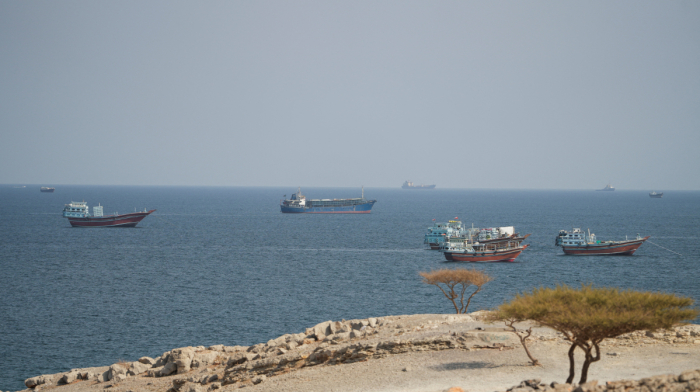
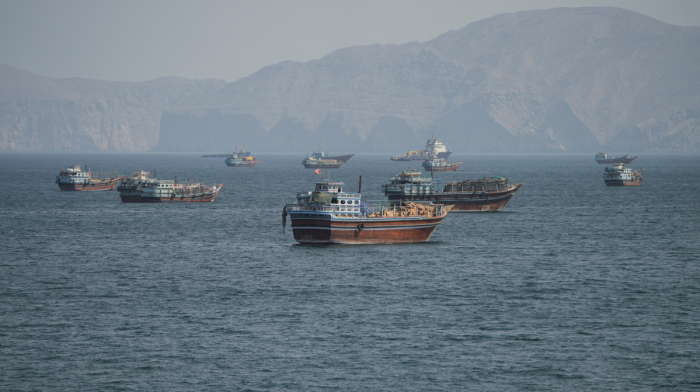
In the wake of the U.S. blockade of Iranian southern ports following failed negotiatoins in Pakistan last weekend, Commander of Khatam al-Anbiya Central Command Major General Ali Abdollahi issued a stern warning against the continued ban on Iran’s vessels.
“If the aggressive and terrorist America wants to continue its illegal action of imposing a naval blockade on the region and create insecurity for Iranian commercial ships and tankers, this American action will be a prelude to violating the ceasefire,” DefaPress website covering military news quoted the Iranian general stressing in a statement.
“Iran's powerful Armed Forces will not allow any exports or imports to continue in the Persian Gulf, the Sea of Oman, and the Red Sea,” Abdollahi added, “Iran will act forcefully to defend its national sovereignty and interests.”
Talks with UAE
Also in the first ever high-level contact between leaders of Iran and the United Arab Emirates in the wake of the Israeli-U.S. war on Iran since 28 February, Speaker Mohammad Bagher Ghalibaf held a phone call with the UAE Vice President and Deputy Premier Mansour bin Zayed.
They discussed “regional developments and ways to de-escalate tensions in the region,” according to Iranian local media quoting Emirates’ state-owned WAM news agency.
During the war, Iran targeted U.S. military bases and interests in regional countries which were used to attack the Islamic Republic - including in the UAE.









What is your opinion on this topic?
Leave the first comment