British Petroleum (bp) spent nearly $1.5 billion with suppliers and contractors across Azerbaijan, Georgia and Türkiye in the first nine months of 2026, highlighting the economic reach of major energy projects beyond oil and gas production.
According to bp Azerbaijan's third-quarter business update, released on 4 November, the spending involved 333 suppliers and contractors and accounted for 65 per cent of the company's total third-party expenditure. Small and medium-sized enterprises made up the largest group of suppliers, while joint ventures received the biggest share of spending.
The report also details progress on two major projects in Azerbaijan: the electrification of the Sangachal terminal and construction of the Shafag solar plant in Jabrayil. Together with continued offshore investment, they illustrate how the energy sector supports employment, local businesses and infrastructure development.
Where did the $1.49 billion go?
Joint ventures with national partners received $672.6 million, representing approximately 45 per cent of the reported expenditure.
Small and medium-sized enterprises accounted for 227 of the 333 suppliers, receiving $408.3 million. Another $360.9 million went towards in-country spending involving foreign suppliers, while state-owned companies received $48.1 million.
The figures show how large energy operations generate demand across different types of businesses, from smaller service providers to major industrial contractors.
However, the spending covers Azerbaijan, Georgia and Türkiye collectively and bp did not provide a country-by-country breakdown, so the entire amount cannot be attributed to Azerbaijan.
The figures also include subcontracted spending on national labour, services and materials through international contractors.
What does this mean for jobs in Azerbaijan?
The Shafag solar project in Jabrayil provides one example of how energy infrastructure investment translates into employment.
Construction currently involves 444 workers, including approximately 150 from Azerbaijan's liberated territories, according to bp.
That means roughly one in three workers comes from those areas.
By the end of September, installation of the plant's photovoltaic modules had reached 50 per cent, with major equipment delivered and electrical installation under way.
The project demonstrates how renewable energy development can generate construction jobs in regions undergoing reconstruction, although bp has not specified how many permanent positions will remain after completion.
Across its operations, bp employed 2,313 Azerbaijani nationals at the end of September, representing more than 90 per cent of its professional workforce in the country.
Why is Sangachal electrification important?
The Sangachal terminal, a major hub for Azerbaijan's oil and gas exports, is also undergoing significant infrastructure upgrades.
bp reported that its electrification project had reached 90 per cent completion by the end of the third quarter, with commissioning activities under way.
Upgrades to AzerEnerji's national electricity grid infrastructure outside the terminal have also been completed.
The project is designed to support the terminal's future electricity supply, linking one of Azerbaijan's most important industrial facilities more closely with the national power network.
During the first nine months of 2026, approximately 138 million barrels of oil and condensate and 20 billion cubic metres of Shah Deniz gas passed through Sangachal.
Oil and gas remain the investment backbone
Despite progress in solar power and electrification, conventional energy continues to account for substantial investment.
Capital expenditure at the Azeri-Chirag-Gunashli (ACG) oilfields reached $1.088 billion during the first nine months of 2026, while Shah Deniz recorded $1.078 billion, bringing combined spending to approximately $2.17 billion.
ACG produced an average of 320,000 barrels of oil per day, while Shah Deniz delivered approximately 20 billion cubic metres of natural gas.
bp also completed the Central Azeri Gas Expansion project, increasing gas reinjection capacity by 20 per cent, while work on Shah Deniz Compression advanced ahead of schedule.
These investments are intended to support existing production infrastructure alongside the development of newer energy projects.
Azerbaijan's offshore projects reach new milestones
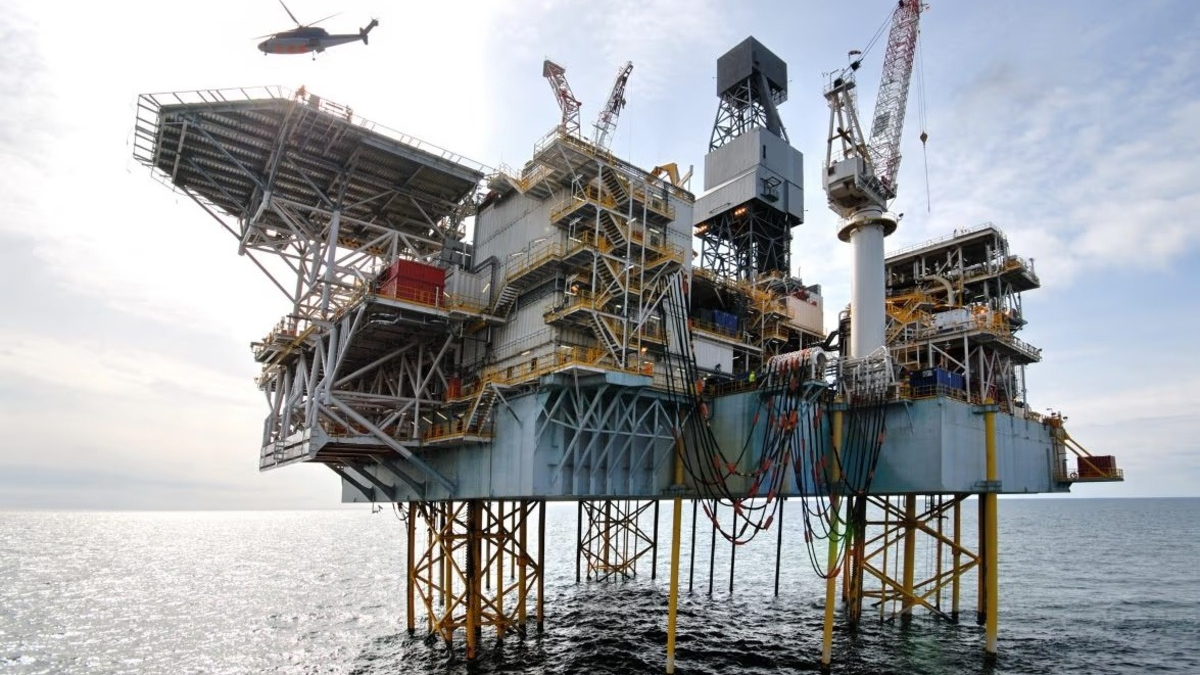
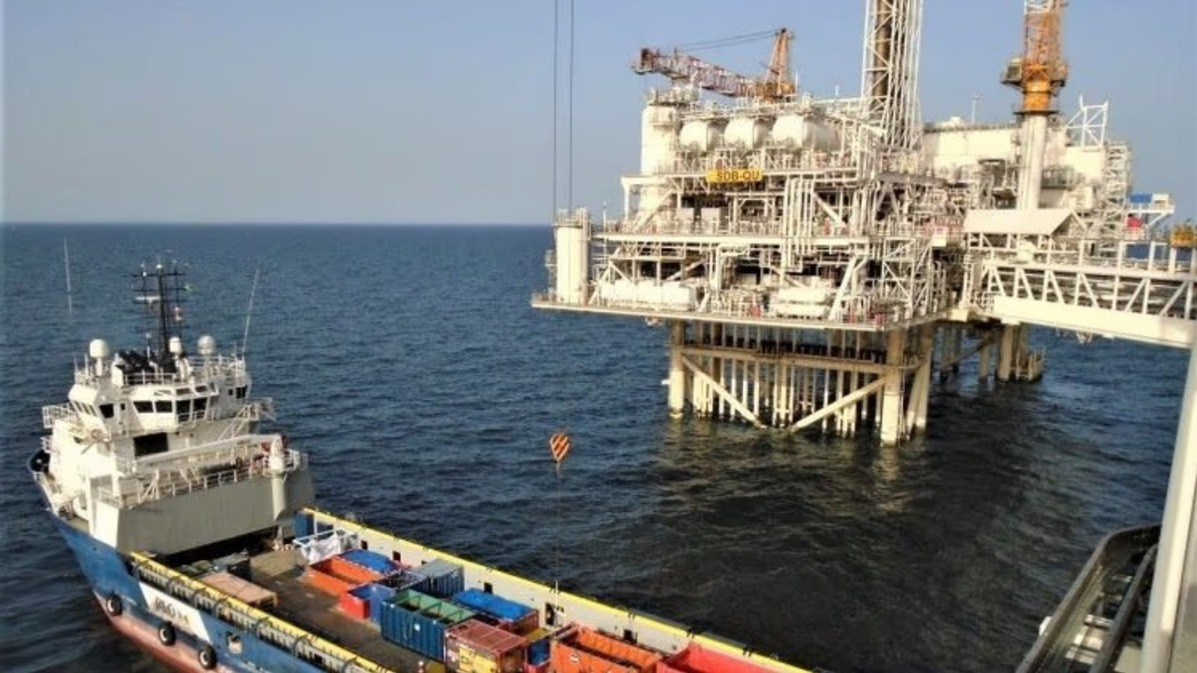
Beyond spending and employment, bp's latest report highlights new milestones at Azerbaijan's major offshore energy fields.
The Azeri-Chirag-Gunashli (ACG) development has produced approximately 4.7 billion barrels of oil since operations began, alongside 63 billion cubic metres of associated gas delivered to the Azerbaijani state.
During the first nine months of 2026, bp drilled and completed 17 wells at ACG, including 12 oil producers, three water injectors and two gas injectors.
The company also completed its longest reservoir-contact well at the field, extending more than 2,000 metres through the reservoir from the East Azeri platform.
At Shah Deniz, cumulative production reached approximately 284 billion cubic metres of natural gas and 55 million tonnes of condensate. The fourth well on the field's East North flank began production in September.
Meanwhile, bp is preparing further exploration activity. Planning continues for a well targeting the Lower Surakhany reservoir at Shafag-Asiman, while seismic data analysis is under way at the Karabagh field to support future development decisions.














What is your opinion on this topic?
Leave the first comment