U.S.-sanctioned supertankers enter Gulf despite blockade
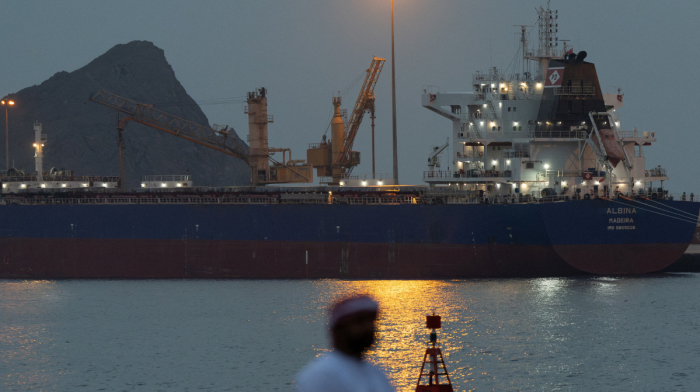
A second U.S.-sanctioned supertanker has entered the Gulf via the Strait of Hormuz, shipping data showed, despite a U.S. blockade on vessels visiting Iranian ports.
The U.S.-sanctioned tanker Rich Starry made its way back to the Strait of Hormuz on Wednesday after exiting the Gulf the day before, shipping data showed, failing to break through a U.S. blockade on vessels calling at Iranian ports.

Since Monday, Monday (13 April), America has blocked traffic entering and leaving Iran's ports, in an escalation of the conflict in the Middle East. The consequences of that will continue to impact the global oil supply.
Iran's ports were blocked by the U.S. military on Monday (13 April), President Donald Trump confirmed. Tehran has threatened to retaliate against its Gulf neighbours' ports and a U.S. official said there was continued engagement with Iran, and forward motion on trying to get to an agreement.
While a fragile ceasefire in the Iran war may deliver badly needed relief to economies battered by the world’s worst-ever energy crisis, hopes it will quickly restore normal oil and gas flows from the Middle East are almost certainly misplaced.
A fragile two-week ceasefire between the U.S. and Iran showed further strain on Friday, a day before they are to negotiate in Pakistan, as Washington accused Tehran of breaching promises on the Strait of Hormuz and Israel struck Lebanon with attacks that Iran has claimed violate the ceasefire.
Russia will see revenue from its biggest single oil tax double to $9 billion in April, driven by the oil and gas crisis triggered by the U.S. and Israeli attack on Iran, Reuters calculations showed on Thursday.
U.S. President Donald Trump threatened Iran's "whole civilisation" on Tuesday in a post on social media. Meanwhile, the UN failed to reach an agreemement on a resolution aimed at reopening the Strait of Hormuz, after China and Russia used their vetoes.
The shifting international landscape from a rigid, Western-oriented world order to a more flexible one has contributed to the rise of numerous countries, especially from the Global South to the status of emerging middle powers.
Iran has rejected a U.S.-backed ceasefire proposal, insisting any agreement must deliver a permanent end to the war, according to state media on Monday.
Oil prices fell in choppy trading on Monday as investors awaited clarity on talks between the U.S. and Iran and remained cautious about sustained supply losses caused by shipping disruptions.
Afghanistan’s Minister of Mines and Petroleum, Hedayatullah Badri, has invited Turkish companies to invest in the country’s oil, gas and mining sectors following talks in Kabul with Türkiye’s Chargé d’Affaires, Sadin Ayyıldız.
India has purchased crude oil from Iran for the first time in seven years, as supply disruptions in the Middle East threaten global energy markets.
President Donald Trump said the U.S. "hasn't even started destroying what's left in Iran", reiterating vows to increase the ferocity of attacks on its infrastructure, as dozens of countries sought ways to restart vital energy shipments through the Strait of Hormuz
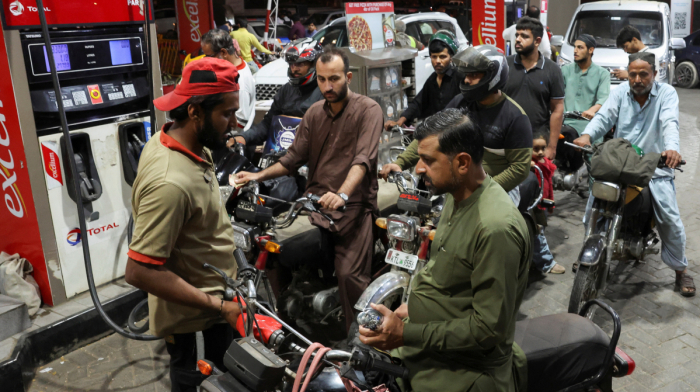
Residents in Pakistan say they are feeling "crushed" and have to put filling up the tank before putting food on the table. Diesel is set to rise by 55% and petrol 43% as the government hike prices for the second time in a month.
Britain will explore ways to reopen the Strait of Hormuz by hosting talks on Thursday (2 April) with 35 countries after President Donald Trump said securing the vital waterway was a problem for other nations to resolve.
A technical team from the United States Federal Bureau of Investigation (FBI) has touched down in Cuba this week to launch an "independent investigation" into a deadly maritime shootout that happened on 25 February.
Iran attacked and set ablaze a fully loaded crude oil tanker off Dubai on Monday, as President Donald Trump warned the U.S. would obliterate Iran's energy plants and oil wells if it does not open the Strait of Hormuz.
U.S. President Donald Trump said he had "no problem" with any country sending crude to Cuba as a Russian tanker neared a Cuban port with a badly needed shipment, signalling he was reversing course on blocking oil shipments to the country on Sunday.
The United Arab Emirates has told the U.S. and other Western allies that it is willing to participate in a multinational maritime taskforce aimed at reopening the Strait of Hormuz, the Financial Times reported on Friday, citing people familiar with the matter.
U.S. President Donald Trump said on Thursday he would pause attacks on Iran's energy plants for 10 days at Tehran's request and said talks with Iran were going "very well," although an Iranian official dismissed a U.S. proposal for ending nearly four weeks of fighting as "one-sided and unfair."
A flotilla carrying humanitarian aid arrived in Havana on Tuesday morning (24 March) amid a U.S. oil blockade that has dealt a major blow to the island's already ailing energy infrastructure.
U.S. President Donald Trump said the U.S. was talking to the right people in Iran to make a deal on Tuesday (24 March), as Pakistan's Prime Minister offered to host peace talks between the two countries to bring about an end to the conflict.
Traders placed more than $500 million in oil bets minutes before Donald Trump announced a delay to planned strikes on Iran, data shows, shortly before prices plunged.
You can download the AnewZ application from Play Store and the App Store.