AnewZ Morning Brief – 20 June 2026
Start your day informed with the AnewZ Morning Brief. Here are the top stories for 20 June, covering the latest developments you need to know.
Pakistan has emerged as a key intermediary in U.S.-Iran diplomacy after months of shuttle talks, draft revisions and regional coordination involving Gulf states and China. An interim understanding has been reached, but officials warn the most difficult phase of negotiations still lies ahead.
Israel and Hezbollah have agreed to a ceasefire, a senior U.S. official has said. Hezbollah has released a statement saying Israel must leave southern Lebanon. Israel has said it agrees to the ceasefire, but has said its armed forces won't leave Lebanon and will resume hostilities if attacked.
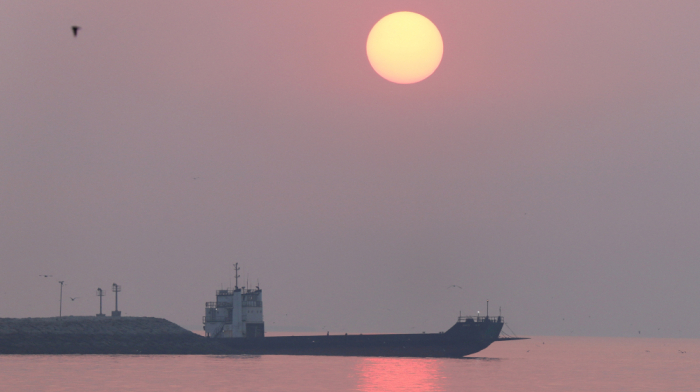
Iran will issue authorisations to merchant vessels passing through the Strait of Hormuz for the next 60 days, requiring ships to obtain permission from Iranian authorities under a new agreement with the U.S.
Israeli Foreign Minister Gideon Saar has said he is severing “all contact” with European Union foreign policy chief Kaja Kallas, following remarks attributed to her that reportedly compared Israel’s policies toward Palestinians to apartheid-era South Africa.
Oil tankers began moving through the Strait of Hormuz on Thursday as an interim agreement between the United States and Iran came into effect, marking a tentative de-escalation in a conflict that has disrupted global energy markets and heightened regional tensions.
U.S. President Donald Trump sought a deal with Iran "out of deperation," Iranian Supreme Leader Mojtaba Khamenei has said, in a statement on social media. Khamenei added that he himself "held a different view," to Trump, but allowed the agreement after receiving assurances from Iran's President.
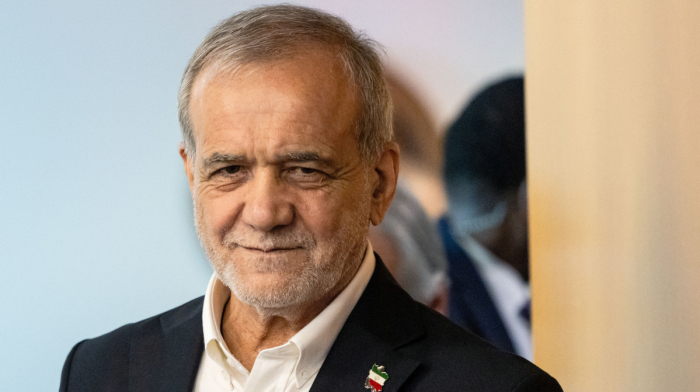
Iranian President Masoud Pezeshkian has remotely signed a memorandum of understanding (MoU) with the U.S., brokered by Pakistan, under which Tehran and Washington agreed to extend their ceasefire and begin negotiations towards a peace agreement.
Iran and the United States have signed a memorandum outlining a proposed 60-day ceasefire and a roadmap for negotiations on sanctions, nuclear restrictions and regional security issues.
UN Secretary-General António Guterres has warned that Israeli settler groups could be added to a global blacklist for violations against children if attacks on Palestinian minors continue at current levels.
Start your day informed with the AnewZ Morning Brief. Here are the top stories for 18 June, covering the latest developments you need to know.
Donald Trump has said the U.S. will resume bombing Iran if Tehran doesn't "behave," at the sidelines of the G7 summit in France. Earlier, the U.S. President criticised Israel for its tactics against Hezbollah, saying it was unnecessary to bomb entire apartment buildings to tackle militants.
Germany's failure to secure a United Nations Security Council seat has exposed growing questions about its diplomatic influence and moral authority, highlighting the challenges facing Chancellor Friedrich Merz as he seeks to redefine Berlin's role in an increasingly fragmented world.
U.S. President Donald Trump has warned that a preliminary agreement with Iran remains fragile, saying Washington could resume military action if Tehran fails to meet its commitments.
Start your day informed with the AnewZ Morning Brief. Here are the top stories for 17 June, covering the latest developments you need to know.
Israel has formally assumed planning and construction powers at one of the most sensitive religious sites in the West Bank, ending an arrangement that had been in place for nearly three decades.
Israel's Supreme Court has rejected an appeal seeking the release of prominent Palestinian doctor Hussam Abū Ṣafiyah, who has been held without charge since his detention in Gaza in late 2024.
Start your day informed with the AnewZ Morning Brief. Here are the top stories for 16 June, covering the latest developments you need to know.
Iran has said that reaching an agreement with the U.S. to end the war does not mean Tehran will overlook what it describes as war crimes committed against Iranians by Israel and the United States.
Fighting in southern Lebanon eased on Monday after a U.S.-Iran agreement aimed at ending months of regional conflict was announced, although uncertainty remained over how the deal would be implemented on the ground.
United Nations High Commissioner for Human Rights Volker Türk on Monday welcomed the newly announced peace agreement between the U.S. and Iran, urging all parties to exercise restraint and work towards a lasting settlement.
Israel expects to secure new contracts for its air and missile defence systems from European countries within weeks, as governments across the continent continue to strengthen their militaries amid security concerns linked to Russia's war in Ukraine.
A senior U.S. official said on Monday that the memorandum of understanding linked to the U.S.-Iran agreement had been signed by President Donald Trump, Vice President JD Vance and Iranian Parliament Speaker Mohammad Bagher Qalibaf.
Israeli Prime Minister Benjamin Netanyahu has told U.S. President Donald Trump that Israel does not consider itself bound by a Lebanon-related provision in an emerging agreement with Iran, according to Israeli officials.
You can download the AnewZ application from Play Store and the App Store.