More than 30 nations hold London talks on reopening Strait of Hormuz
MMilitary planners from more than 30 countries are holding two-day talks in London from Wednesday to advance plans to reopen the Strait of Hormuz.
The Iranian missions in London and Vienna strongly condemned the remarks by the European Union Foreign Policy Chief Kaja Kallas on the imposition of further sanctions on Tehran as a “highway of hypocrisy,” amid the Israeli-U.S. war on the Islamic Republic.
The European Commission is set to outline new measures to ease pressure on households and businesses as Europe faces a new energy crisis linked to the conflict in Iran.
U.S. President Donald Trump said he would indefinitely extend the ceasefire with Iran to allow for further peace talks, although it was not clear on Wednesday (22 April) if Iran or Israel, the U.S. ally in the two-month war, would agree.
Rising tensions around the Strait of Hormuz are reshaping geopolitical calculations and global shipping, with analysts warning of prolonged disruption even if a ceasefire is reached. Experts say the crisis is driven as much by strategic messaging as by economic risks.
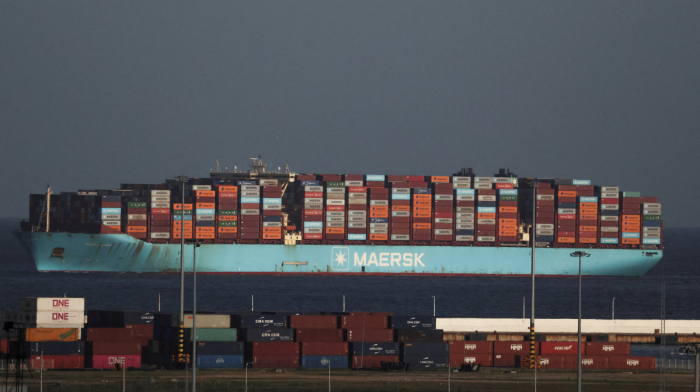
The Iranian-flagged container ship Touska, which was boarded and seized by U.S. forces on Sunday (18 April), is likely to have what Washington deems dual-use items that could be used by the military onboard, maritime security sources said on Monday.
Iran accuses the United States of breaching a ceasefire after a commercial ship was seized in the Gulf of Oman, vowing retaliation, as Israel warns south Lebanon residents to avoid restricted areas.
Iran’s Khatam al-Anbiya Central Headquarters warned on Monday it would “soon respond” to what it described as “armed maritime piracy” after the U.S. Navy fired on an Iranian cargo ship in the Gulf of Oman on Sunday, according to local media.
Efforts to ease tensions between the United States and Iran continue as a fragile ceasefire risks collapsing after the U.S. seized a boat bound for Iran at the weekend and Tehran closes the Strait of Hormuz. Meanwhile Tehran has refused to attend a new round of peace talks in Pakistan.
Start your day informed with AnewZ Morning Brief. Here are the top news stories for the 20th of April, covering the latest developments you need to know.
Tensions in the Strait of Hormuz are rising as a ceasefire nears expiry with no agreement in place, amid reported attacks on vessels that have heightened fears of renewed conflict and disruption to global oil supplies.
Iran’s top negotiator has said recent talks with the United States have shown progress, but that major differences remain over nuclear issues and the Strait of Hormuz, as diplomatic efforts continue alongside escalating regional instability.
The U.S. Navy has forcibly intercepted and boarded the Iranian cargo ship TOUSKA in the Gulf of Oman after it attempted to breach the ongoing naval blockade. President Trump confirmed that the vessel was neutralised and seized by Marines following a direct strike on its engine room.
Two Indian-flagged ships were shot at in the Strait of Hormuz on Saturday, India's Foreign Ministry said, as Iran closed the Strait of Hormuz again, less than 24 hours after reopening the 167km long sea passage, which is essential for global trade.
Global shipping through the Strait of Hormuz has shown signs of partial recovery after Iran announced it was open to commercial vessels during a limited ceasefire, though uncertainty remains over security conditions and compliance rules.
Leaders from across Europe and beyond gathered in Paris on Friday for a summit aimed at managing the global impact of the Middle East conflict.
European leaders have set out plans for a coordinated defensive mission to restore freedom of navigation in the Strait of Hormuz, once security conditions allow, following talks involving more than 40 countries.
The Strait of Hormuz has reopened, Iran’s Foreign Minister Abbas Araghchi and U.S. President Donald Trump said on Friday (17 April), although Washington warned its naval blockade on Iran would remain until a peace deal is reached.
Start your day informed with AnewZ Morning Brief. Here are the top news stories for the 17th of April, covering the latest developments you need to know.
The collapse of the Islamabad meeting now appears less definitive than initially reported. New information suggests what was widely framed as failure may instead have been a premature political interpretation of an ongoing negotiation process.
RRussian Foreign Minister Sergey Lavrov’s visit to Beijing is placing China’s diplomacy under closer scrutiny, as it balances its partnership with Moscow against strained relations with the U.S.
South Korea will import 18 million barrels of Kazakh oil via routes bypassing the Strait of Hormuz, as it seeks to shield its energy supply from mounting instability in the Middle East.
Britain and France will co-host virtual talks on Friday (17 April) to ease tensions and restore safe passage through the Strait of Hormuz, one of the world’s most critical shipping routes.
The United States has expanded its naval blockade on Iran, allowing forces to stop, search and seize vessels suspected of carrying “contraband”, as Defence Secretary Pete Hegseth warned U.S. forces are ready to resume combat if no deal is reached.
You can download the AnewZ application from Play Store and the App Store.