Armenia’s EU shift: The gains and risks of breaking with Russia
For about three decades after the Soviet collapse, Armenia anchored its foreign and security policy to Moscow.
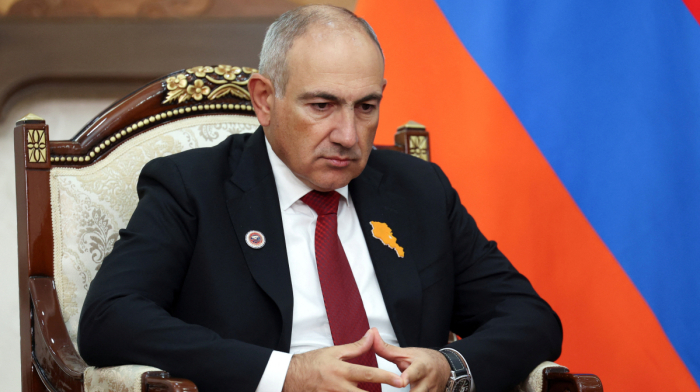
Armenian authorities arrested six candidates from the pro-Russian Strong Armenia bloc on Saturday, one day before voters were due to take part in parliamentary elections.
Ukrainian Deputy Prime Minister Oleksiy Kuleba said Russian forces attacked two civilian search and rescue vessels operating in Ukrainian waters on Saturday, leaving several people injured.
An ageing, poorly insured shadow armada now accounts for around one-sixth of the world's tanker fleet. Hidden by design and fraught with risk, it operates beyond conventional oversight. A maritime law expert explains how it works, who profits, and why much of the world looks the other way.
U.S. President Donald Trump said he sees progress between Israel and Lebanon after talks with Netanyahu, while Hezbollah has rejected a new ceasefire proposal and Israel has ruled out a troop withdrawal.
For much of the post-Soviet era, Russia and Kazakhstan have maintained one of Eurasia’s most stable bilateral relationships. Deep economic ties, shared history and strategic geography continue to bind the two neighbours together, but Astana is increasingly pursuing a more independent path.
Ukrainian President Volodymyr Zelenskyy has publicly invited Russian President Vladimir Putin to meet for direct talks aimed at ending the war between their countries, saying Ukraine remains ready for peace but will continue fighting if no agreement can be reached.
The U.S. House of Representatives has approved legislation that would provide new aid to Ukraine and impose additional sanctions on Russia, marking the latest instance of Republican lawmakers breaking ranks with President Donald Trump and party leaders.
Disruptions to global energy routes have transformed energy security from an economic concern into a matter of national security, Turkish President Recep Tayyip Erdoğan said on Wednesday.
Armenia is set to receive a support package worth more than €50 million ($58.2 million) from the European Union (EU) after Russia, its largest trading partner, imposed restrictions on a range of Armenian exports.
Russia wants Armenian Prime Minister Nikol Pashinyan to lose the upcoming election due to his increasing engagement with Washington, U.S. Secretary of State Marco Rubio has said.
As geopolitical alignments across Eurasia continue to evolve, U.S. engagement in the South Caucasus is once again drawing attention, particularly in relation to Azerbaijan, Armenia, and the broader regional peace process.
Start your day informed with the AnewZ Morning Brief. Here are the top stories for the 4 June, covering the latest developments you need to know.
Three people have been killed and seven injured in Ukrainian strikes on Russia-annexed Crimea, according to Kremlin officials in the peninsula, as fighting between Russia and Ukraine continues.
As Armenia approaches parliamentary elections, Russia appears to be increasing political and economic pressure on Yerevan, signalling that closer integration with the EU could lead to significant changes in labour, transport and energy arrangements between the two countries.
Armenia’s parliamentary election comes at a defining moment for the South Caucasus, a region reshaped by the Garabagh conflict and broader shifts in Russia-West relations. The outcome is increasingly seen as a signal of Armenia’s future foreign policy direction and the regional balance of power.
Unsealed records from the U.S. Department of Justice have renewed scrutiny of lawyer Robert Amsterdam after documents revealed communications between his law firm and Jeffrey Epstein's office. The disclosures have drawn attention because of Amsterdam's prominent role in Armenia.
Russia's Foreign Ministry spokeswoman Maria Zakharova praised Georgia for resisting Western pressure (30 May), defending its national interests and pursuing a "multi-vector foreign policy" - language that closely mirrors the rhetoric of the ruling Georgian Dream party.
Ukrainian drones struck targets across several Russian regions overnight, including an oil pipeline pumping station, a refinery and a fuel depot, Russian and Ukrainian authorities said on Sunday.
On 28 May, the EU's foreign policy chief called for Russian troops to leave Georgia and Moldova. By the end of the same day, both Tbilisi and Moscow had dismissed her. The symmetry tells a story of its own.
Russia has recalled its ambassador to Armenia for consultations, citing Yerevan's growing rapprochement with the European Union. The move is seen as the latest sign of deteriorating relations between the longtime allies ahead of Armenia's parliamentary election on 7 June.
The United Nations (UN) added Israel and Russia to a blacklist of parties suspected of committing conflict-related sexual violence on Friday (29 May). The move prompted Israel to announce it would sever ties with UN Secretary-General Antonio Guterres.
NATO member Romania reported on Friday that a Russian drone injured two people in the southeastern city of Galati during an overnight attack on neighbouring Ukraine. The incident marks the first time in the war that a drone has struck a densely populated area in Romania and caused injuries.
Start your day informed with the AnewZ Morning Brief. Here are the top stories for 29 May, covering the latest developments you need to know.
You can download the AnewZ application from Play Store and the App Store.